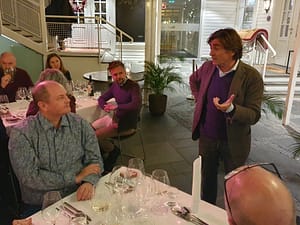
An armada of Spanish producers visited Stavanger, Norway this last Tuesday with their importer Moestue Grape Selections. I participated at the following dinner at Matbaren Renaa.
Visiting from Spain were Telmo Rodríguez, Fernando García (Comando G) and Carlos “Curro” Bareño (Fedellos and Vinícola Mentridiana). Pedro Parra from Itata, Chile should have been there, but was left somewhere in Europe with covid.
Paired with the restaurant’s lobster, lamb and quail dishes were seven wines. The fino Caberrubia Saca VI from Luís Pérez was a welcome drink, a natural sherry from pago Balbaína outside Jerez. It’s a grapey, salty and fresh sherry with no added alcohol.
Telmo Rodríguez introduced his white Branco de Santa Cruz 2020 from Valdeorras. He tells that this is one of the places he spends most time nowadays. It’s made from that premium northern grape godello, with some treixadura, doña blanca and palomino, all found in a mixed vineyard together with red varieties, and matured in used oak vats. It’s a super elegant wine with good volume, textured, and a complex aroma of citrus, herbs, a touch of menthol and a stony minerality.
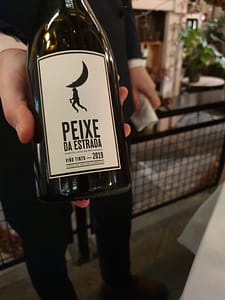
Fedellos started as Fedellos do Couto because they were based in that village. Now they have moved. They make wines from the Bibei valley. Peixeda Estrada2019 is a village wine from Viana do Bolo outside both Valdeorras and Ribeira Sacra designated areas, a field blend of 60-80 year old vines with predominantly mencía made with whole bunches in partially used barrels, steel, concrete and/or fiberglass tanks. Long maceration time and light extractions. It’s a fresh, delicate wine with aromas of red and dark fruits along with herbs and some balsamic.
Pedro Parra couldn’t attend as he was sick with covid and stuck somewhere in Europe. But his wines made it to Norway. Pedro is a leading figure in the new terroir-focused Chilean wave, concentrating on cinsault on granite soils. He tries to make his wines in a reductive way, at present with 20 days skin-contact.
Trane was obviously (?) dedicated to John Coltrane, an innovator and creative jazz musician. It’s a single-vineyard cinsault from a plot of highly decomposed granite soils. It fermented in concrete with indigenous yeasts and some 30% full clusters and matured in big oak vats for 11 months. It’s a light wine, but also structured. The fruit is both dark and red, with hints of flowers, anise and smoke.
Fernando García represented Comando G, that has contributed to putting the Gredos mountains on the wine map. They were also on this trip promoting the book Calicata, about the wine region. The English edition was released a few months ago, and Moestue sells it on the Norwegian market. In fact I was visiting Fernando at his table when another wine was passed around. I didn’t realize this in time, but my fiancée gave me a few drops to taste. It had a strong signature of a Gredos garnacha, ruby red, ethereal, with red fruits (raspberry), flowers and smoke – in a way light, but intensely full of flavours. It turned out to be Las Iruelas 2019, a parcel wine from El Tiemblo in the Ávila province. It was earlier made by the Jiménez-Landi family winery, but is now labelled Comando G.
The last wine was a lovely rioja from the new wave, that I advocate, Telmo’s Tabuérniga 2019. It comes from a cool vineyard in the village of Labastida, planted with old tempranillo vines, some graciano, mazuelo, garnacha and garnacha blanca. The soil is shallow and calcareous. It’s a serious wine; somewhat austere and maybe a little closed, but underneath are red and wild berries waiting to burst; it’s full of fruit and the tannins are elegant. It’s a wine that invites you to meet again, so let’s remember it and follow. A wonderful evidence that a wine does not need to be oaky to be complex nor ageworthy.
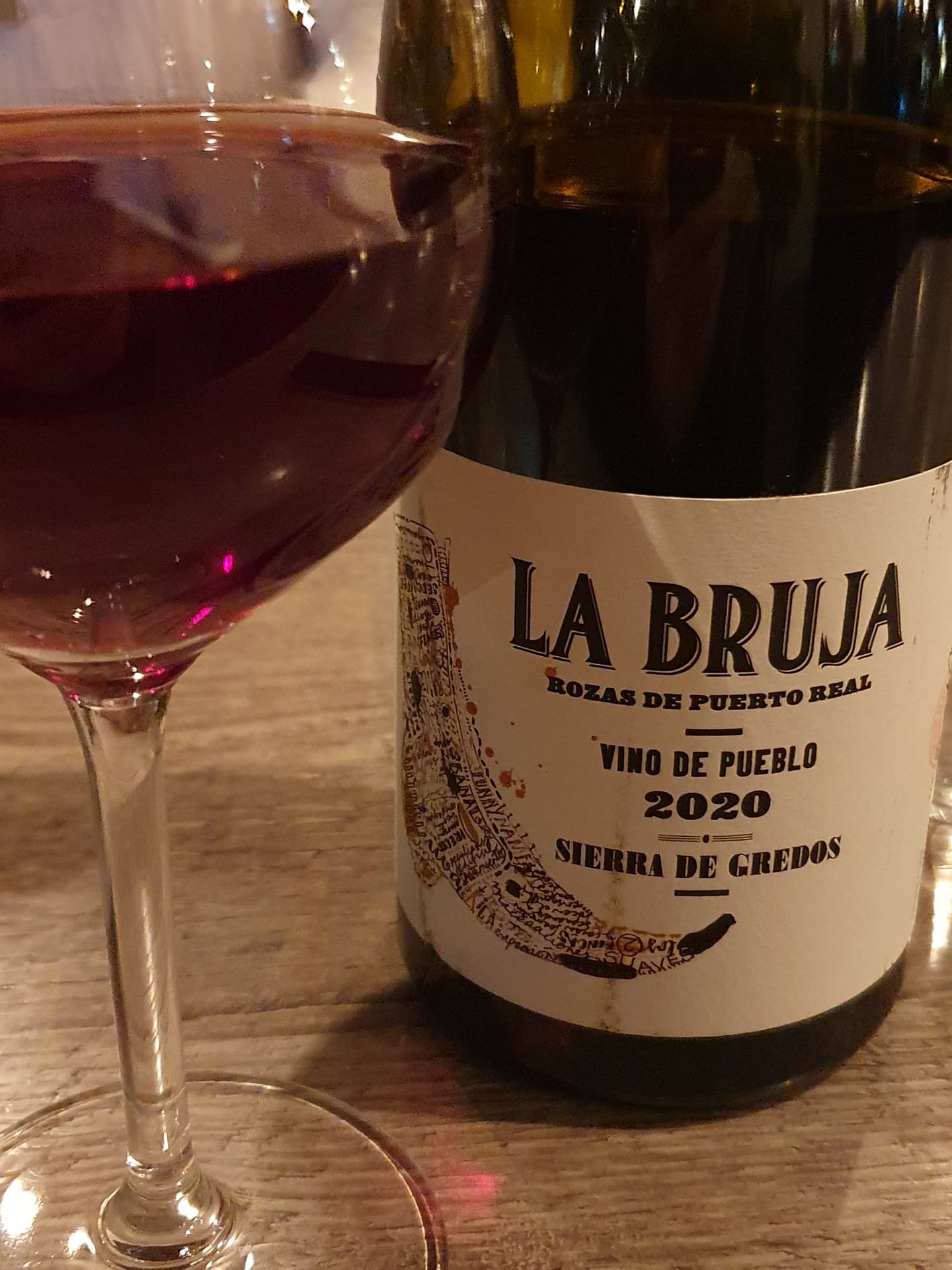
La Bruja de Rozas is Comando G’s entry level wine. It’s a village wine from several plots around Rozas de Puerto Real, in the western part of Madrid province. The vineyards are located around 850-900 meters above sea level, and the vines are 50-80 years old. Cultivation is organical and according to biodynamic principles. The grapes are spontaneously fermented with a large proportion of whole clusters in open vessels. Long and gentle maceration for 30-40 days. Maturation partly in large foudres of 3-6,000 litres, used 500-litre barrels and a small proportion in concrete. Unfined and unfiltered.
La Bruja de Rozas 2020(Comando G)
Ruby red. Aromatic with mature red fruits (raspberry), flowers, spices (cinnamon), smoke and a mineral layer behind. Energetic, with young tannins, fresh acidity. It’s in a way juicy and concentrated at the same time.
At home after two lovely days in Sierra de Gredos I was inspired to extend the trip a little. So I fetched a wine from the cellar. I had a couple of other quite recent vintages. But I chose the current, 2020, to be able to refill.
Daniel Jiménez-Landi is part of the dynamic duo Comando G. But his family has deep roots in the Toledo province, and this wine is from there, within the Méntrida denomination to be more exact.
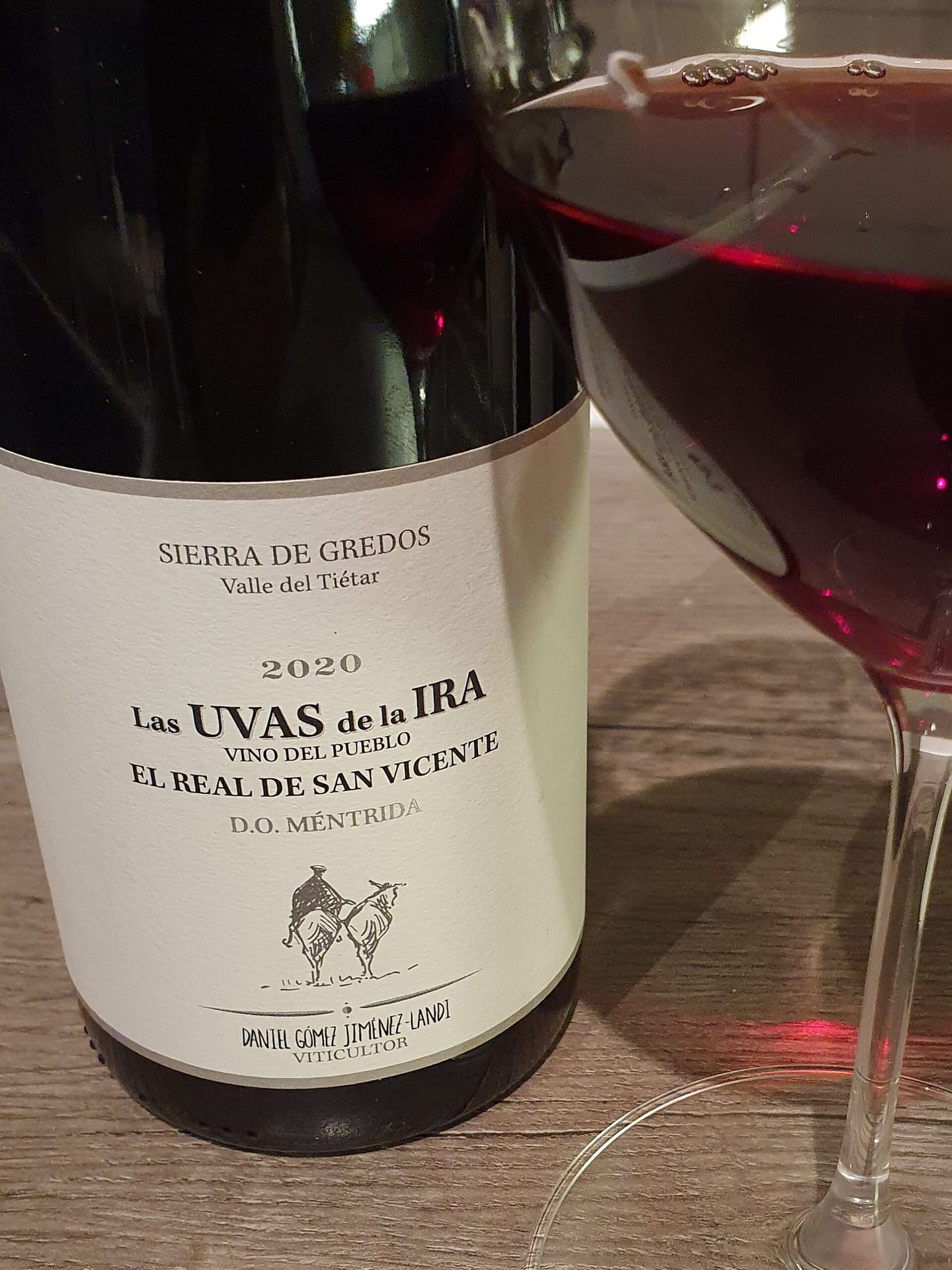
Las Uvas de la Ira, meaning The Grapes of Wrath, is a village wine made from old-vine garnacha in four different vineyards high up in El Real de San Vicente, Gredos.
Uvas de la Ira 2020 (D. Jiménez-Landi)
Ruby red, blueish hint. Red fruits (raspberry, strawberry), flowers, a layer of smoke and stone minerality. It’s youthful and a bit fleshy in the mouth, with young tannins and a fresh acidity. It’s quite concentrated, at the same time it has an ethereal quality typical of Gredos garnachas.
On thursday I was invited to lunch by my friend, natural wine maker Fabio Bartolomei, in his bodega. He is now making wines in the old cooperative of the town El Tiemblo, a building he shares with collegue Daniel Ramos.
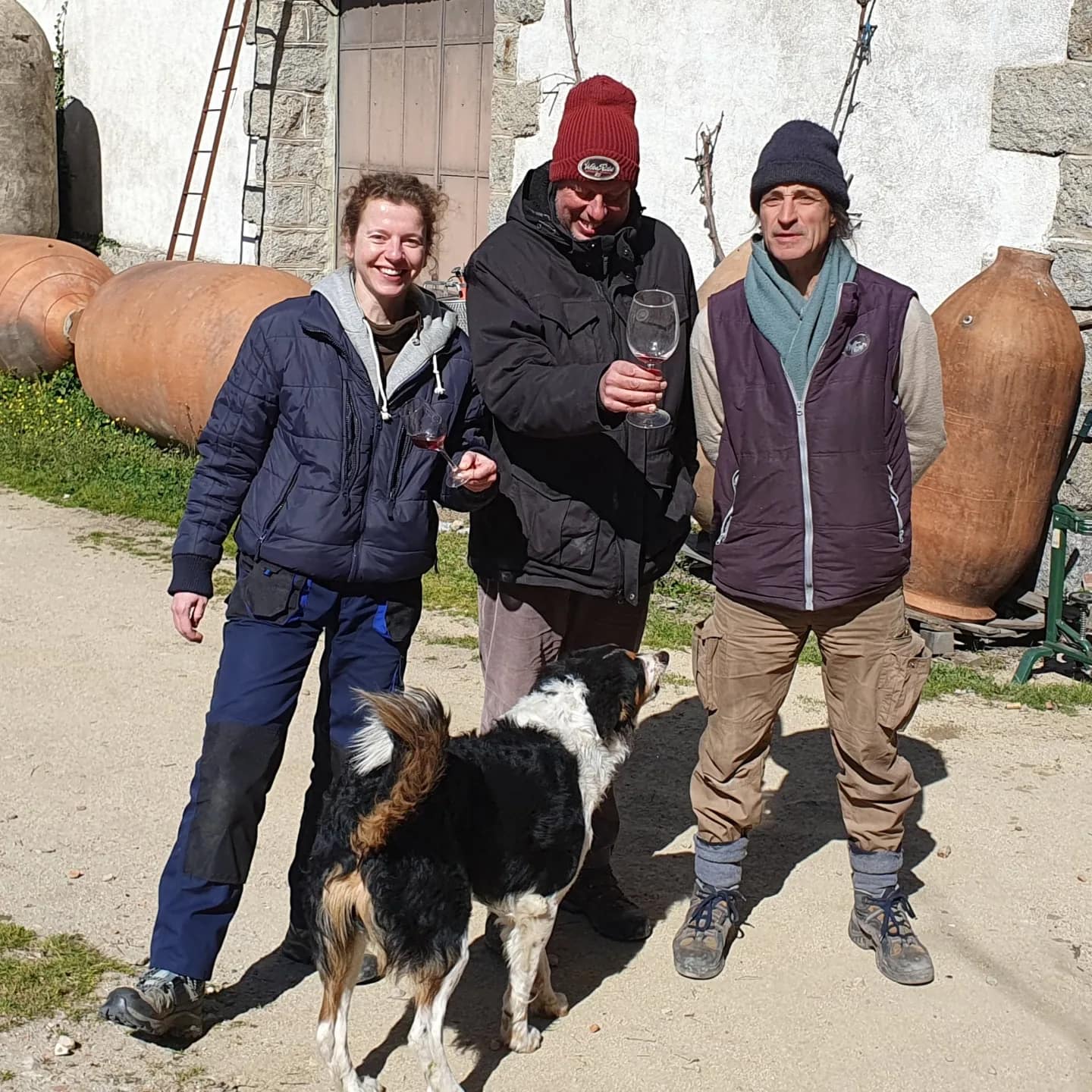
Fabio to the right, with Sinta Moreso and Daniel Ramos
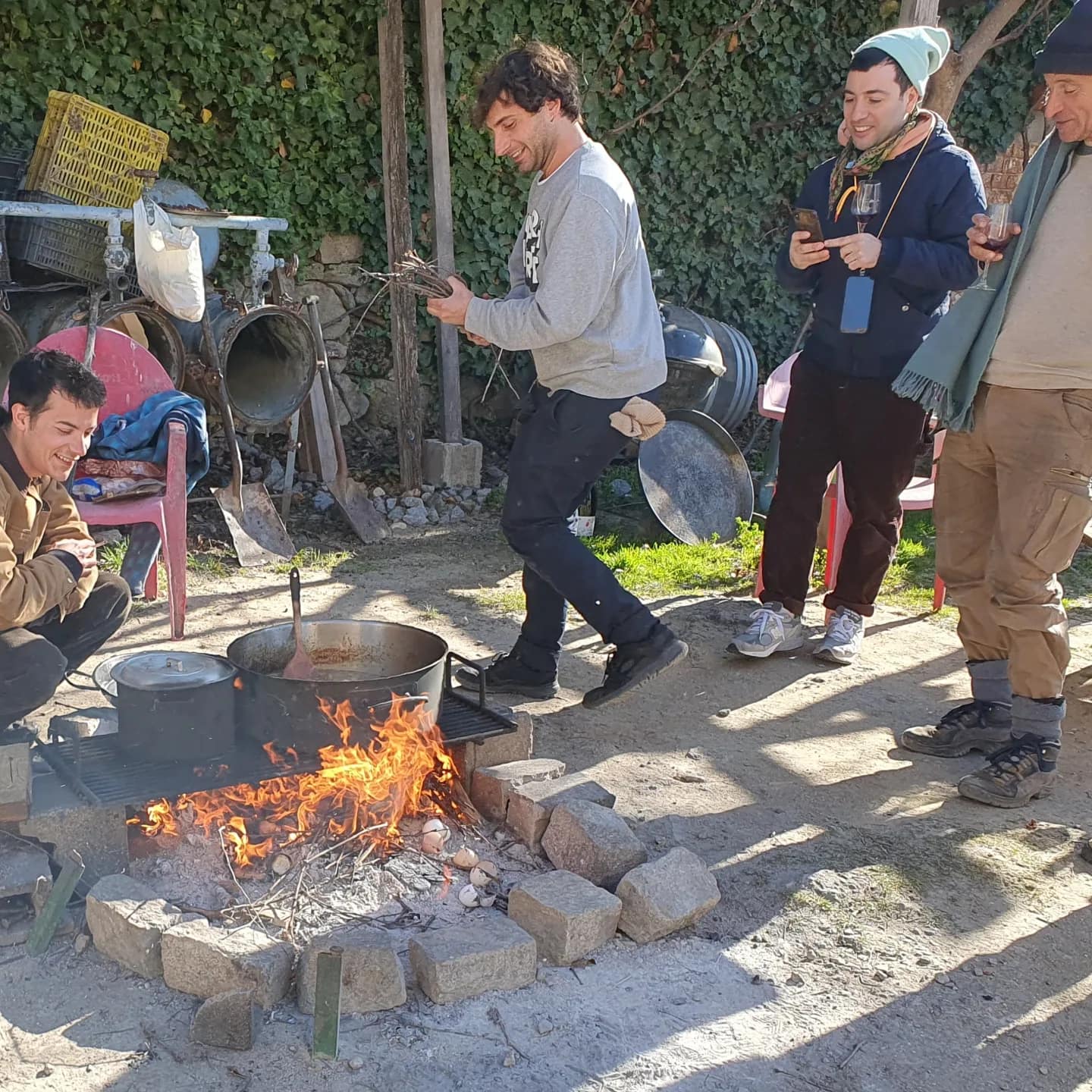
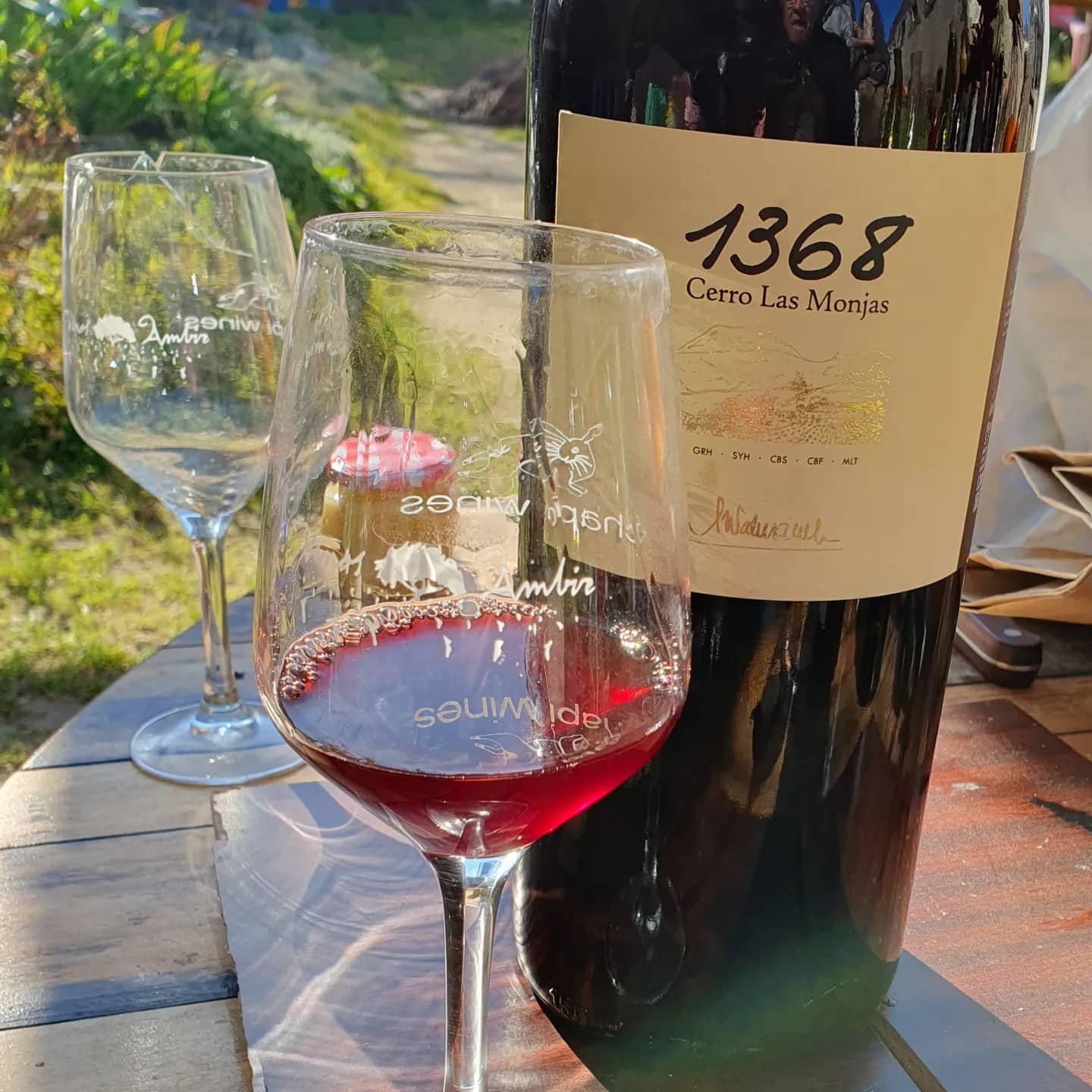
Daniel was there. So was natural wine maker Sinta Moreso from Tarragona. So was a group of young aspiring chefs from here and from San Sebastian, whom Fabio has been mentoring in their hobby winemaking projects. One of them, Fernando, will from next week join the crew of star restaurant Maaemo of Oslo, by the way. The lunch went on without a strict program, people came and left. But the lunch was eventually served, and it was delicious. There was some wine tasting, of Fabio’s wines -mostly originating from El Tiemblo (Sierra de Gredos), various projects of the participants, and someone even brought a magnum of Granada producer Barranco Oscuro’s wine called 1368 in the 2003 vintage. This was another proof that natural wines can age.
Before I left Fabio and I tasted a few more wines from his cellar. Fabio’s starting point is healthy grapes, free of chemicals. Experience and experimentation tells him how to proceed in making balanced wines that are true to their terroir and that suit Fabio’s taste.
A twenty years old natural wine from Barranco Oscuro of Granada
Fabio Bartolomei was born in Scotland to Italian immigrant parents. There he studied accounting and finance. In 2001 he decided to move to Spain to make wine. For many years he also worked as a translator. It was not until 2019 that he became a full time winemaker.
Fabio knew from the start that he didn’t want to use pesticides or additives. But he didn’t know that natural wine was an expression for that kind of wines. Since 2014 he has used the old cooperative building in El Tiemblo as his winery.
Here you can read a short piece about yesterday’s lunch in that bodega.
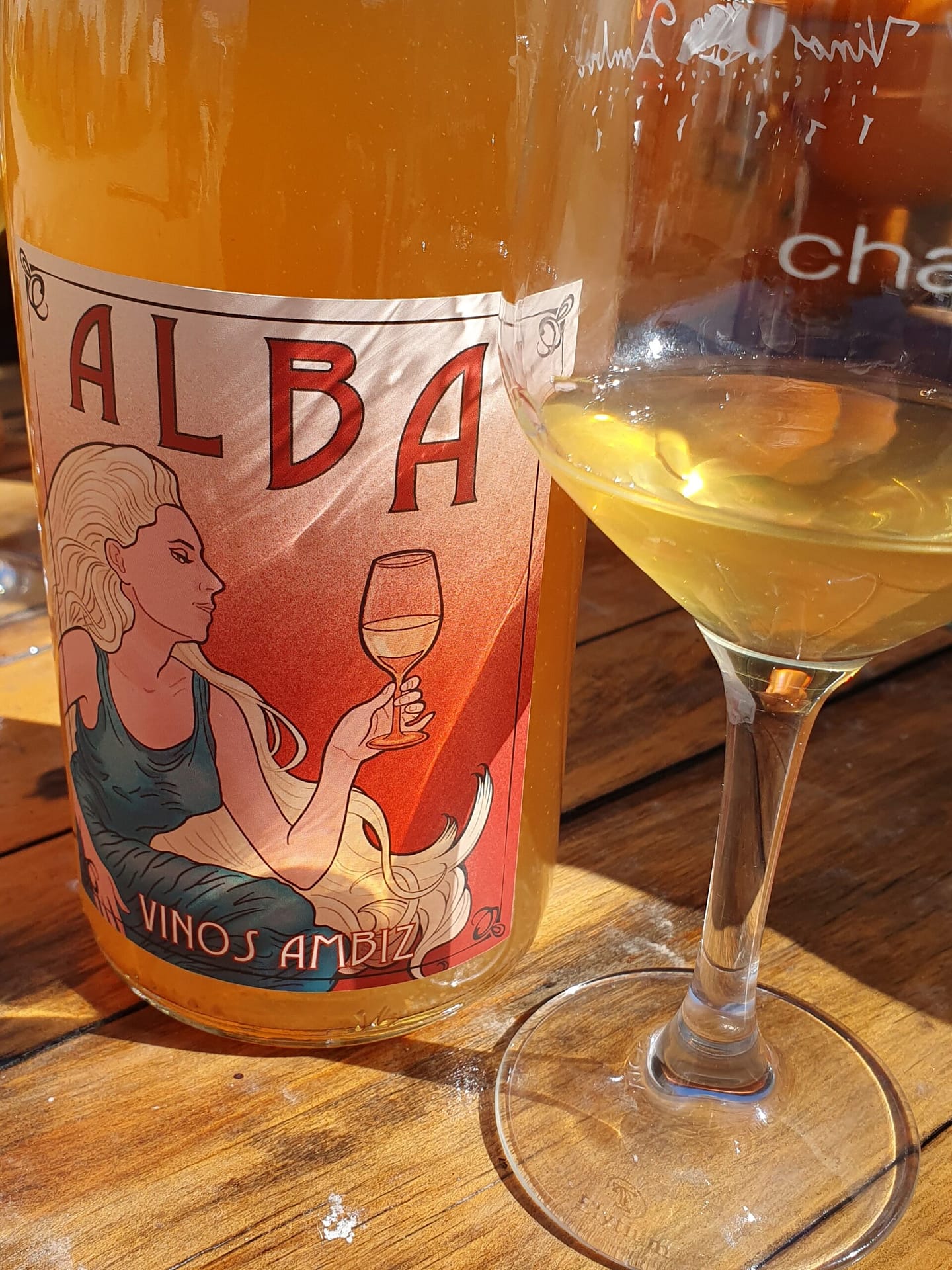
Alba is an orange wine made with albillo real grapes. The grape was fermented with native yeasts with the skins, then pressed and finished in stainless steel. It was transferred to clay amphoras and matured there for five months. Unclarified, unfiltered and without added sulphites.
Alba 2021(Vinos Ambiz)
Golden colour, hazy. Aromatic, with yellow apple, peach and flowers in front, then a layer of nuts with a touch of honey. Medium-bodied, luscious, drinkable and also quite long.
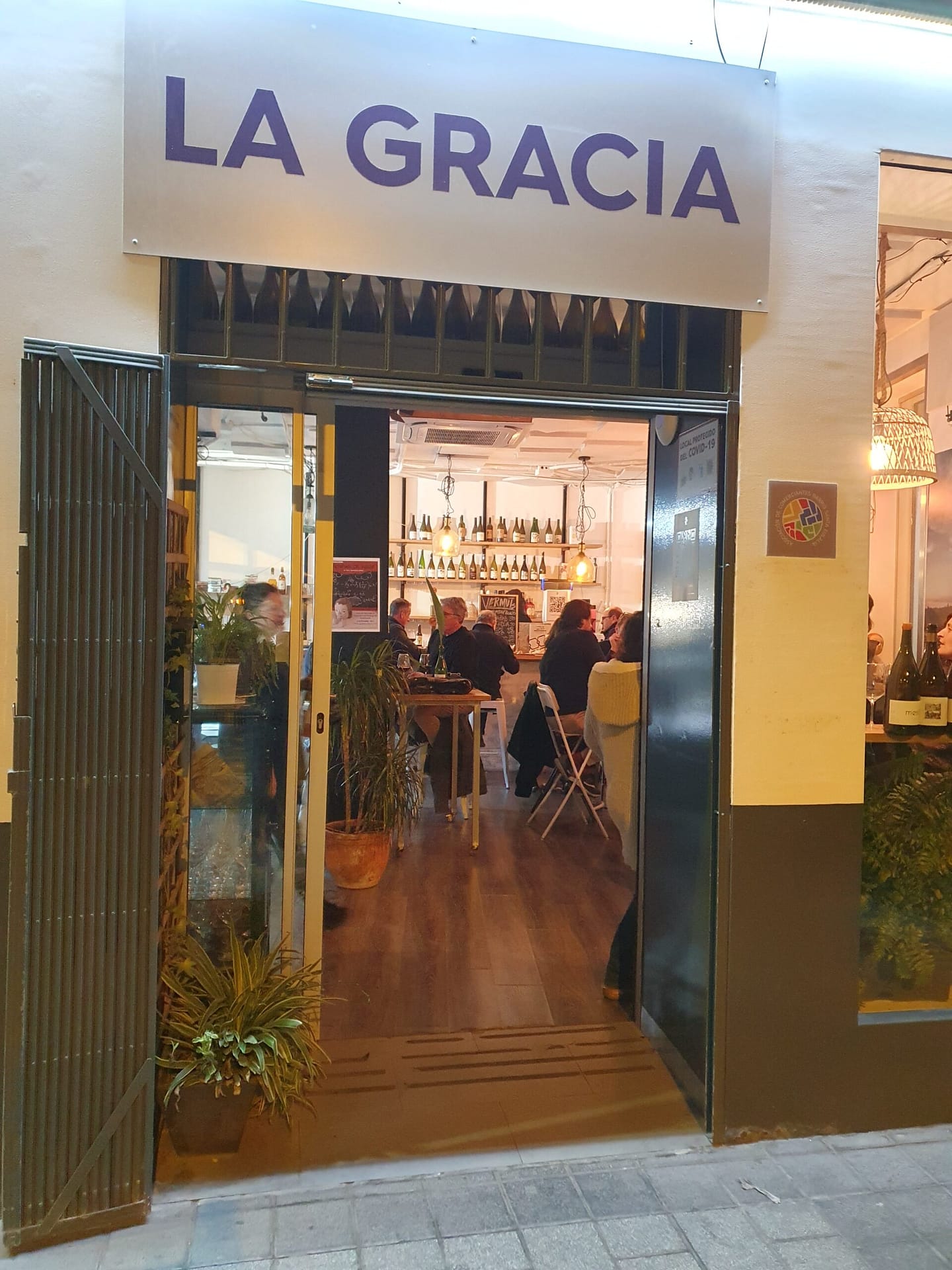
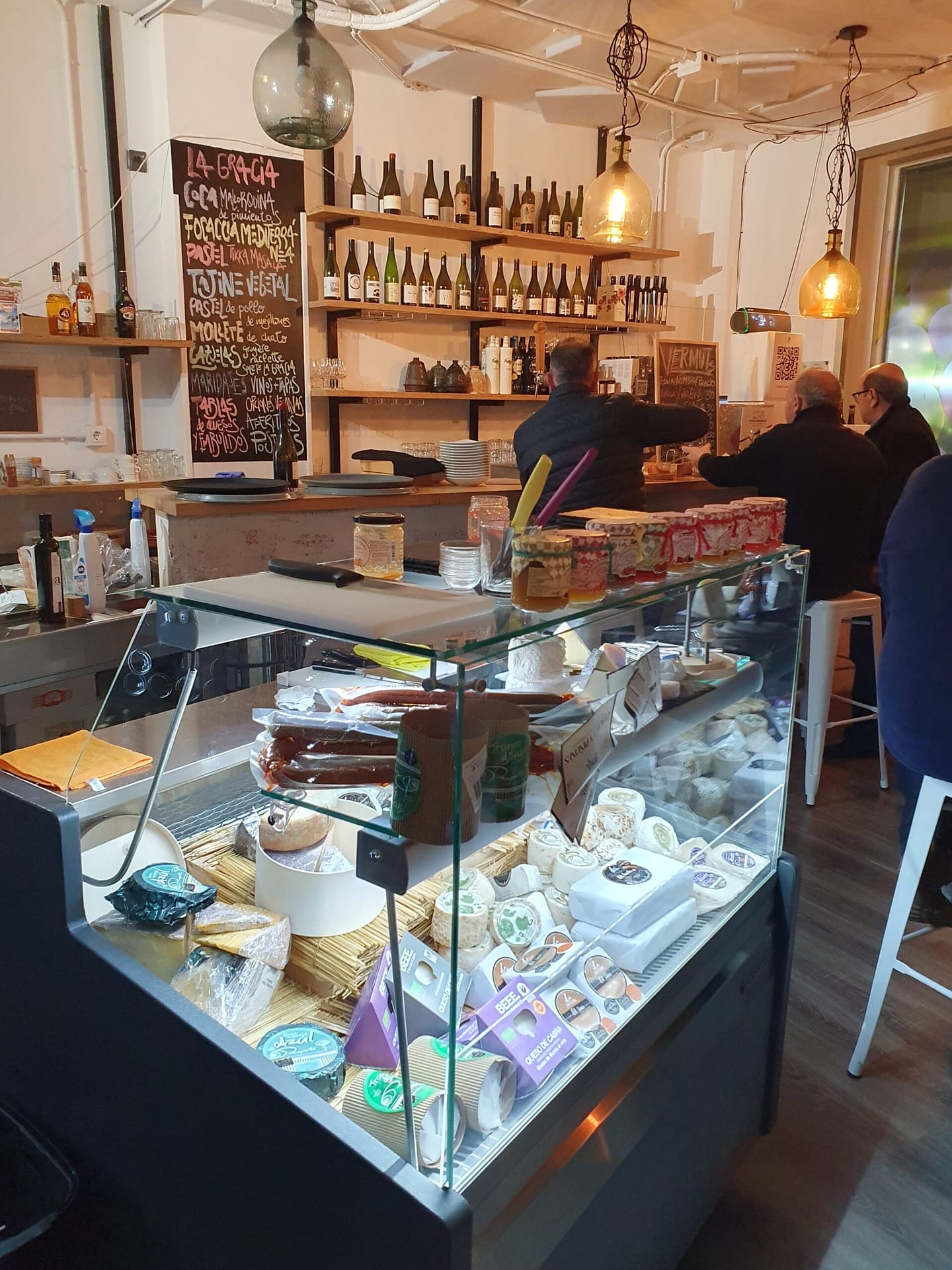
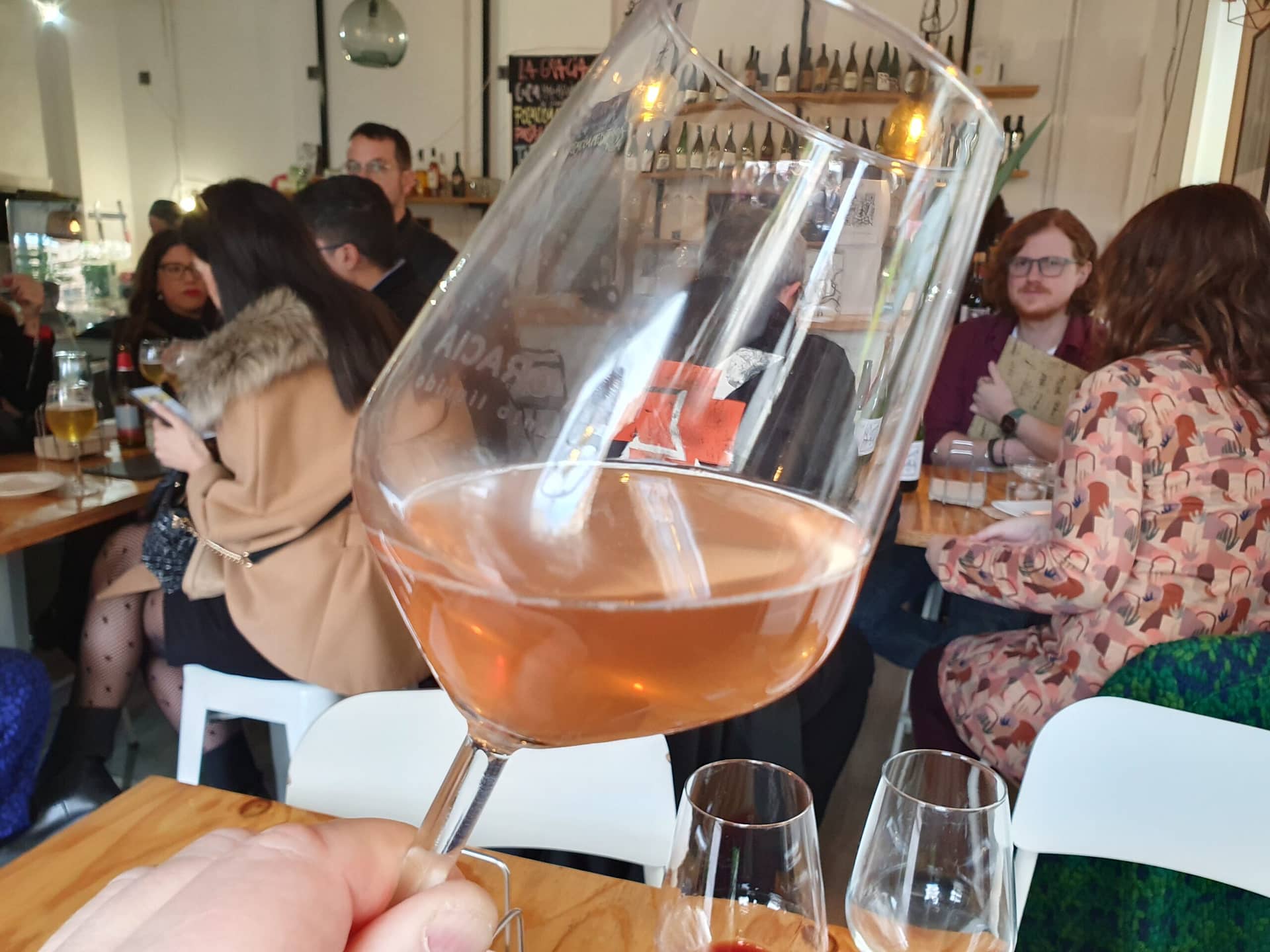
La Gracia is a small and cozy natural wine bar that opened in 2020, when the pandemic was at its height. It’s found in Murcia capital, Spain, in one of the narrow streets behind the city hall and the cathedral in the Santa Eulalia district. They work with artisan producers of wine, cheese and also beer and other products. The owners are Esperanza Pérez Andreo and Cristina Ramos Berna. They have strong ties with local and regional producers from whom they buy directly.
I was there twice at the end of the year, including New Year’s Eve. We sat on the “terrace” (i.e. the plaza behind the first street) near midnight, and then inside the bar around noon. We chose from the cold and the warm tapas menues, and from the by-the-glass wine selection, that counts on around 30 references.
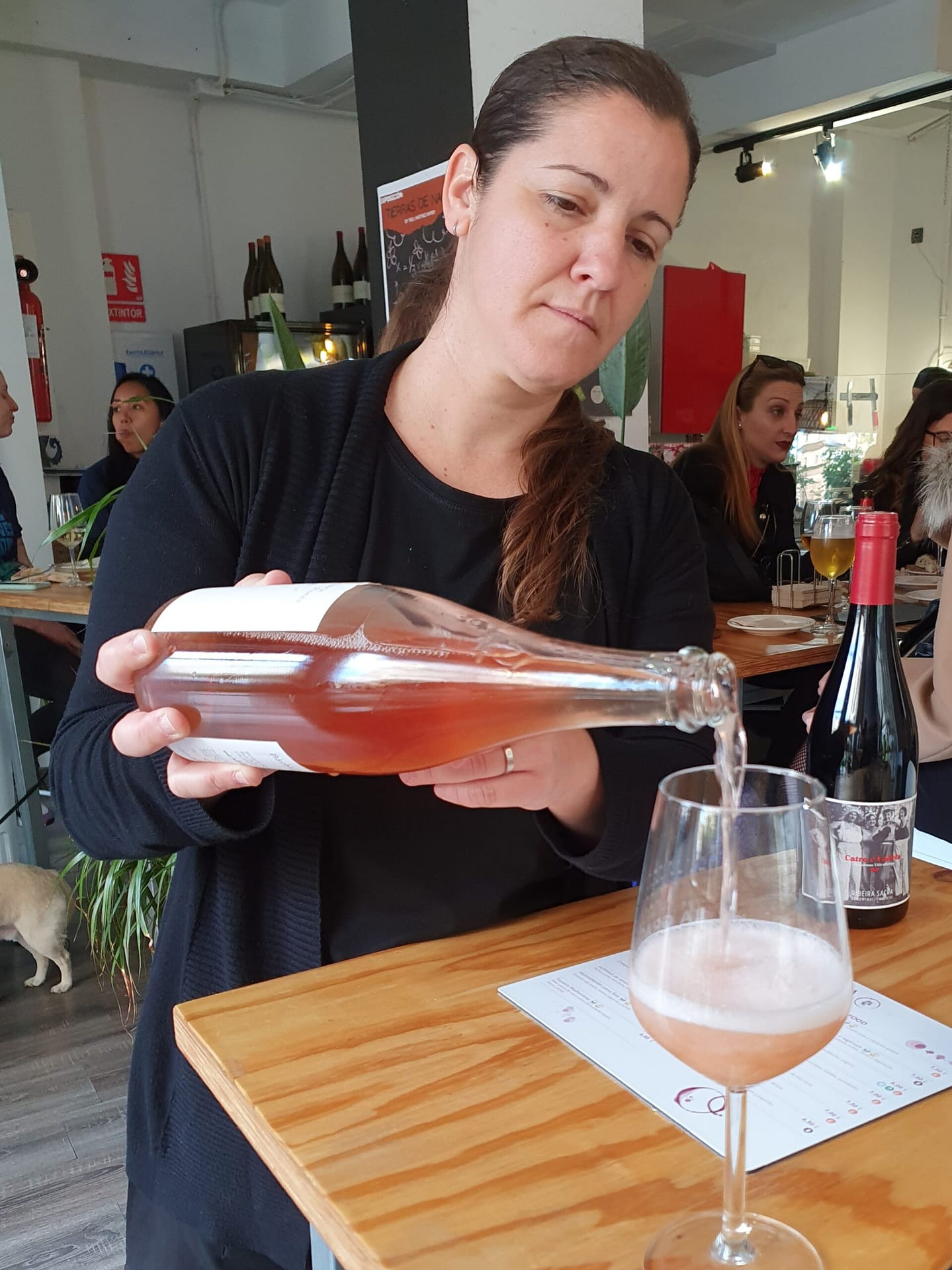
Esperanza Pérez, responsible for the wine selection
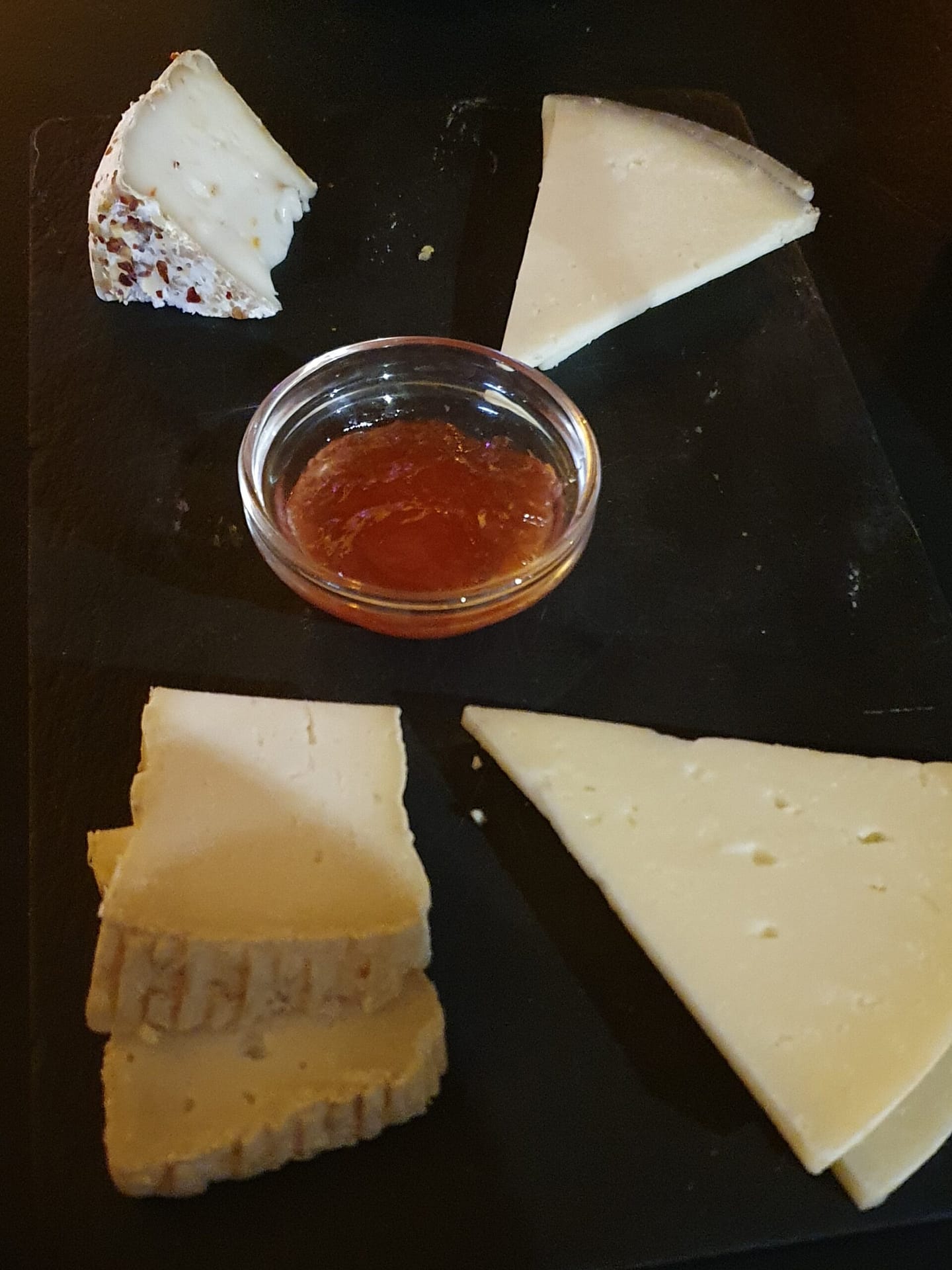
Among the small dishes we chose was a “cured” cheese selection. The first one was a young and fresh, but oh so tasty, cheese from Cartagena, then a 3-4 months cured goat’s cheese soaked in red wine, then a 9 months cured cheese from San Javier called ‘El Abuelo’ (the grandfather) and finally a wonderfully complex cheese from a mountain between Cartagena and Mazarrón. The watermelon marmelade was from coastal San Javier.
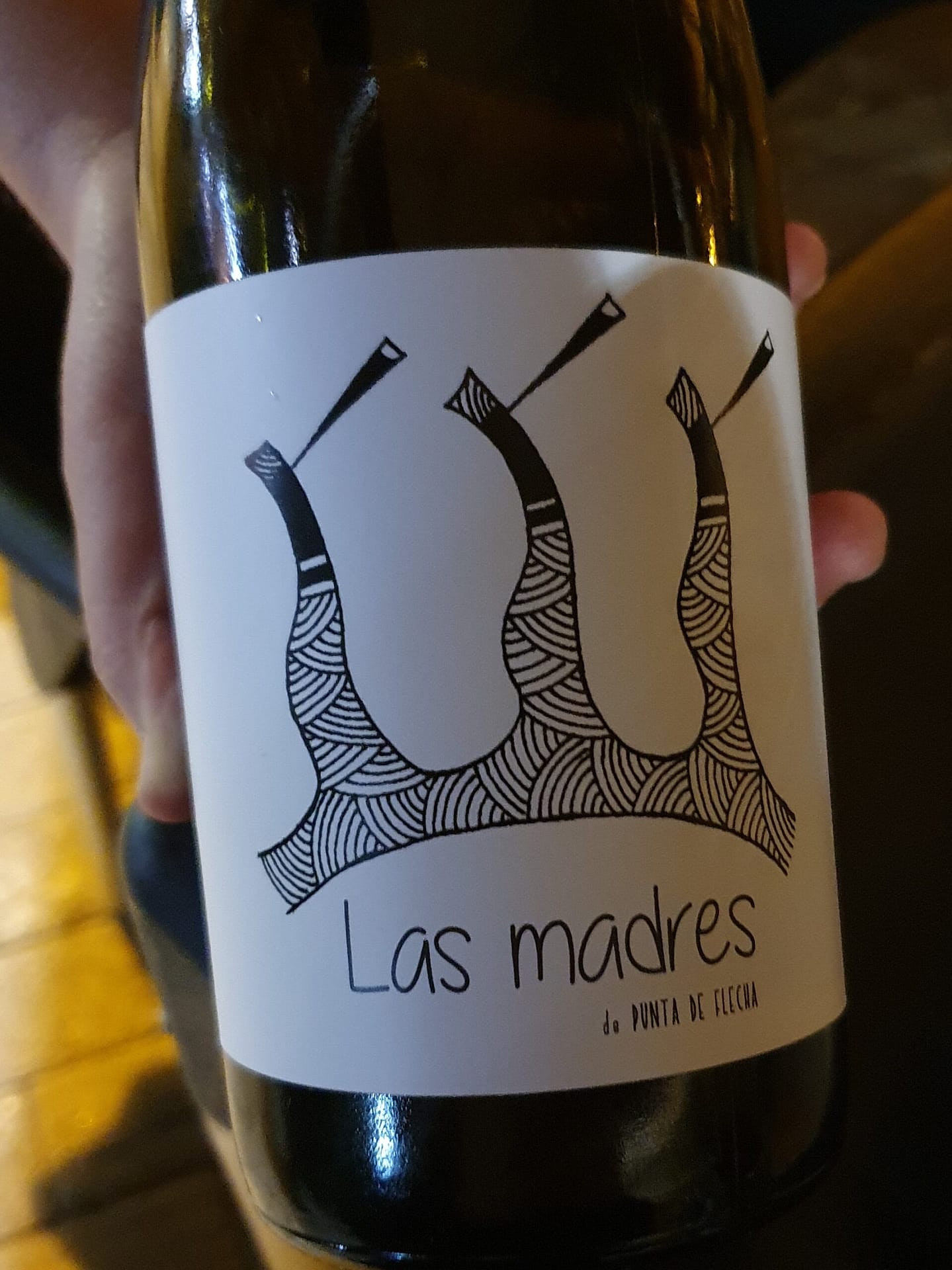
The wine list contains established and new natural wine stars from Murcia and elsewhere in Spain. We started with Las Madres 2020(Punta de Flecha), a light skin-contact white from the Madrid area. The grape is malvar, and like many other wines from that variety it is low on acidity but rather textured. Amber coloured and slightly fizzy, it had a nice aroma of flowers and orange peel.
Las Madres with chicken brioche
Viña Enebro is rather well-known in Spanish natural wine circles, and you can read about a visit in Bullas here. El Yesar 2020 is a white wine made from the red grape forcallat. Hence it has a little blush of red. It’s round and tasty, and the aroma includes traces of citrus (clementine) and herbs.
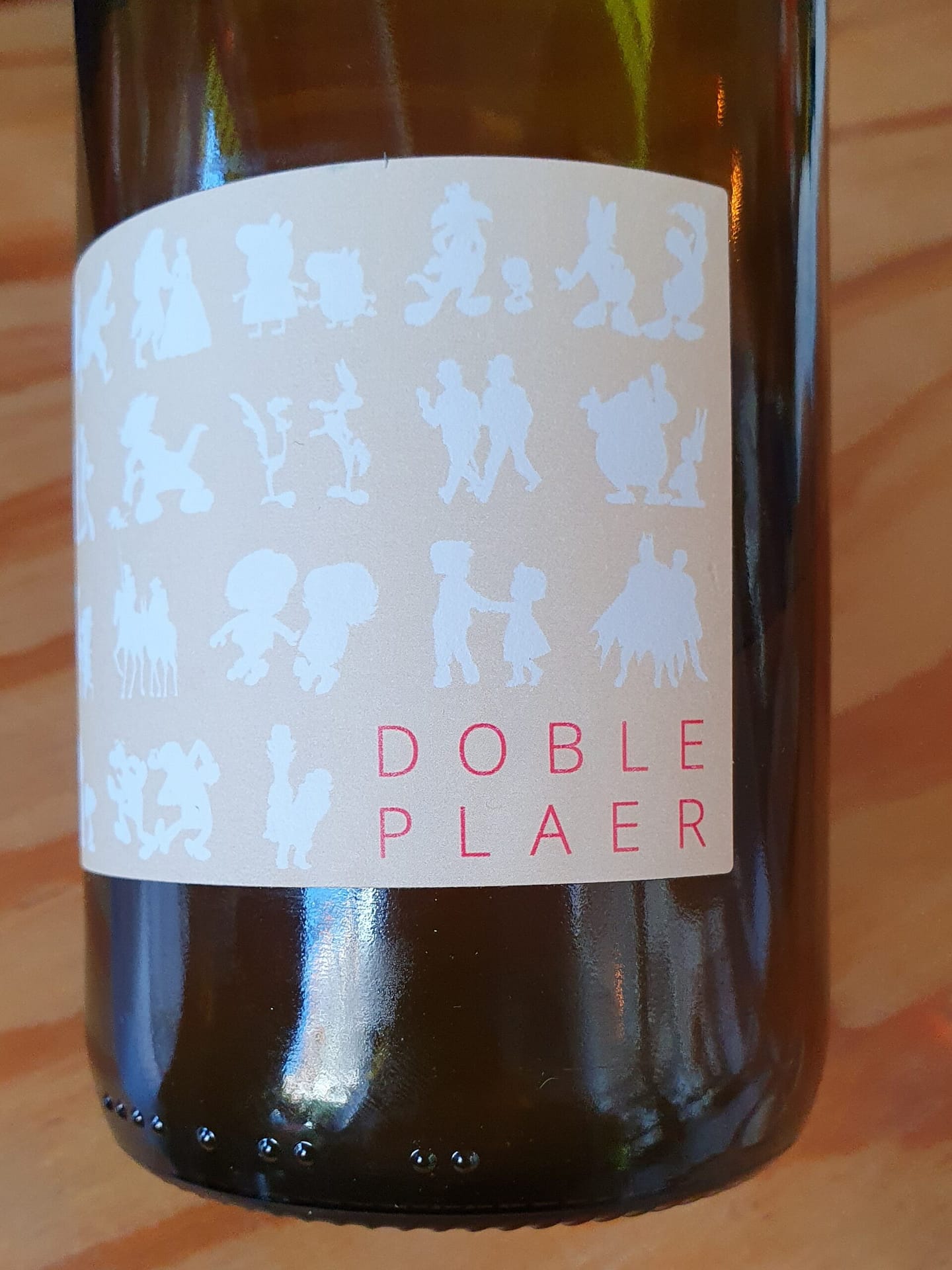
At the second day I asked for whatever white wine and was served Doble Plaer 2020 from Vinyes Singulars (with collaboration from Toni Osorio) It turned to be a wonderful wine with a phenomenal acidity, almost electric. It has a good body too. Light orange in colour, and somewhat cloudy, with an aroma of citrus peel (lemon) and flowers over black tea. Long aftertaste where the citric notes linger. The grapes are malvasía de Sitges and parellada.
The two first reds were revelations from the Murcia region. Negrete 2021 from Negrete Blue is a monastrell/garnacha tintorera from no less than 1.373 meters of altitude in the Bullas denomination. It was a fresh and juicy, berry-dominated, young wine, with blackberry and blueberry in front.
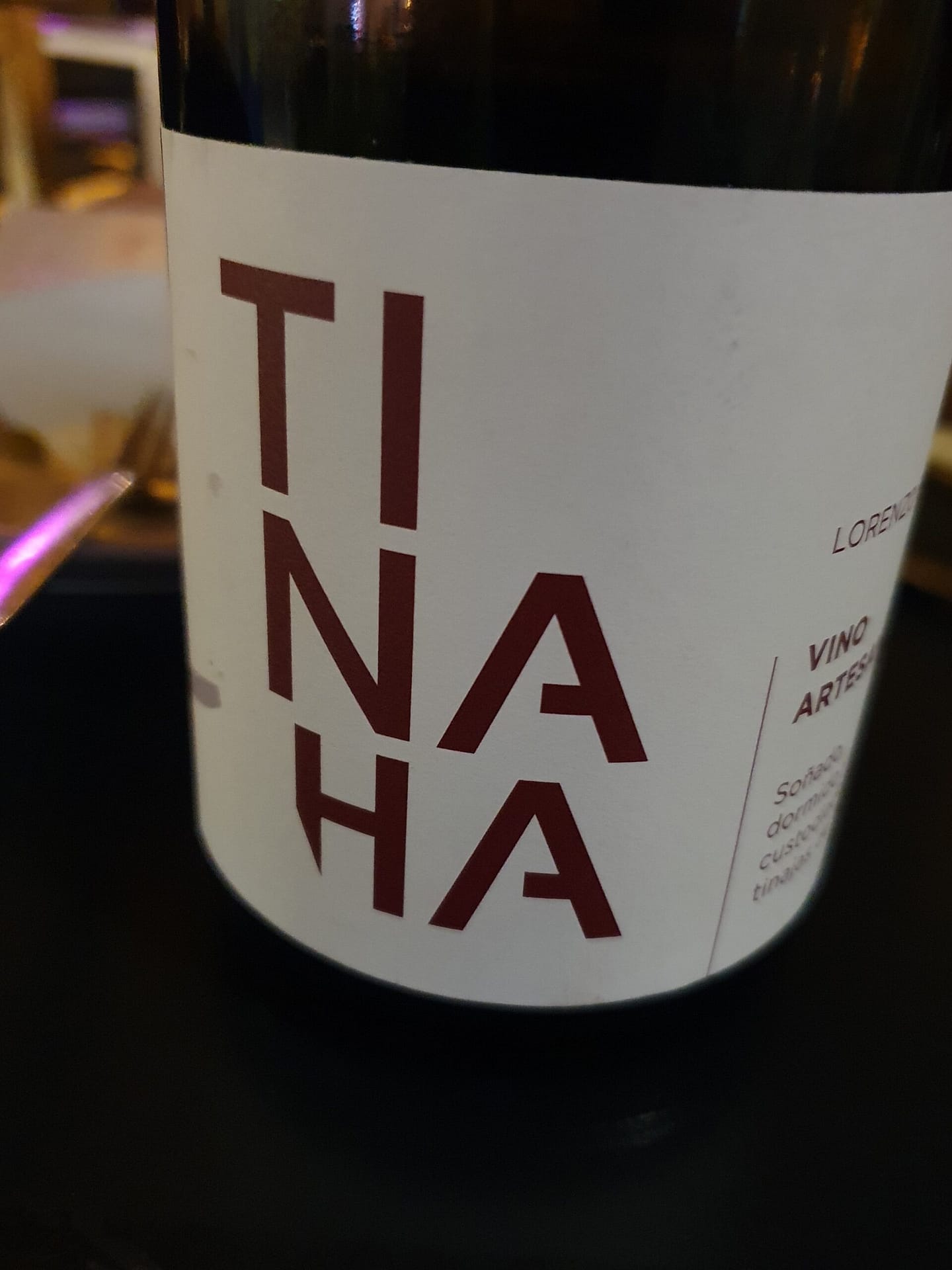
Tinaha 2020 comes from the bodega of the same name. It’s found between Molino de Segura and Jumilla to the north of the regional capital. As the name implies they believe in ageing in clay (tinajas). The varieties are a local field blend, and so monastrell should be among the suspects. The wine had red berry notes, but was more dominated by a clay minerality with flowers, and had a juicy taste with a long aftertaste, and especially for the region, good acidity.
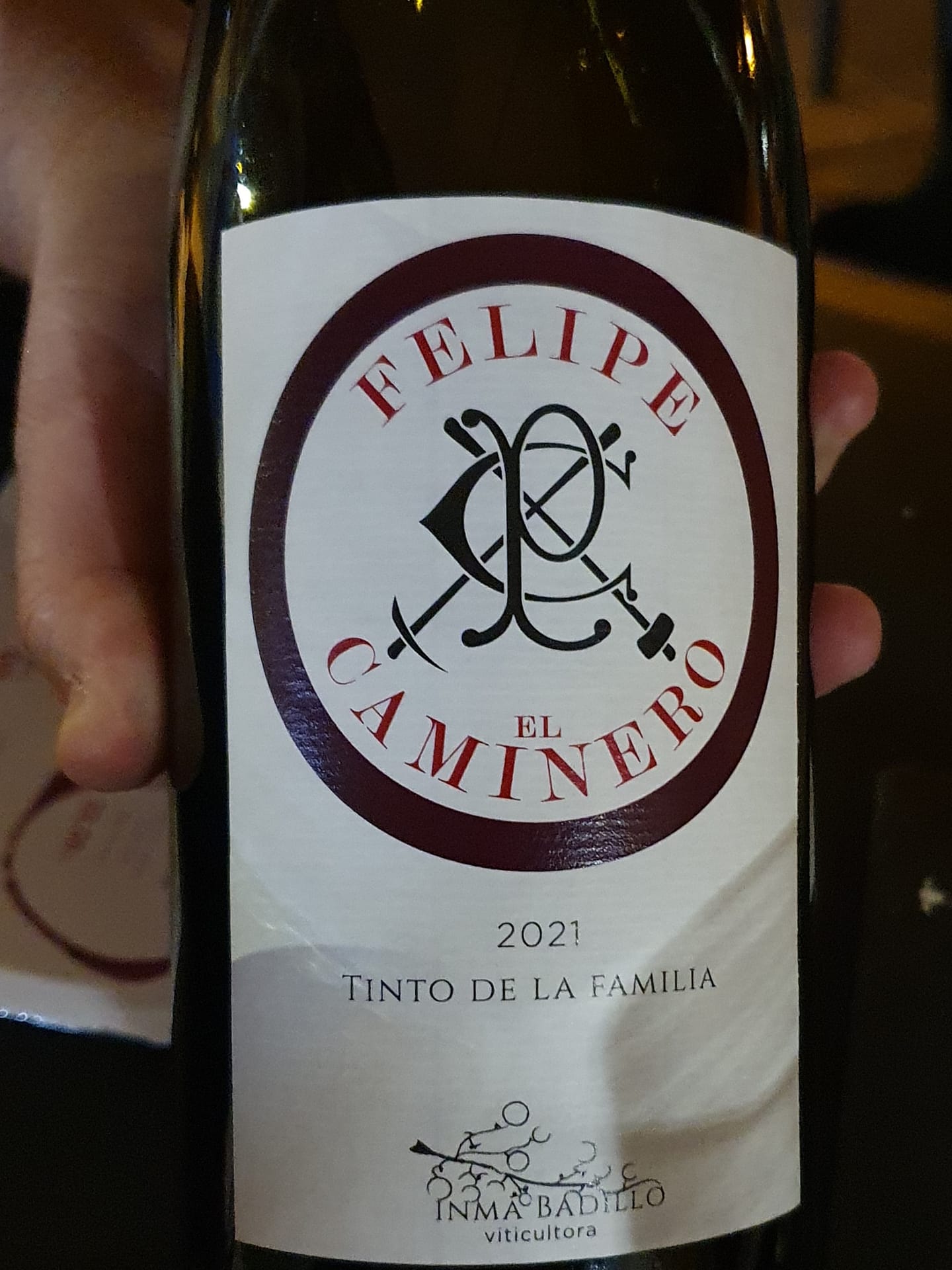
We tasted two reds from Castilla. Felipe el Caminero 2021(Inma Badillo) is a fresh tempranillo/ juan garcía/bruñal blend from Arribes del Duero, close to the Portuguese border (provinces Zamora and Salamanca). It’s a pure, very juicy and fruity wine with lots of berry character. La Payana 2020 (Cható Gañán) is completely different. Made from garnacha on granite soil in the Sierra de Gredos, it has a more serious air to it. It has some of the etheral character often associated with the Gredos garnachas, and some of the minerality behind the red fruits. The oak shows delicately on the palate.
Since I was back on New Year’s Eve I took the opportunity to round off with a sparkling wine. The choice fell on En Moviment A 2020 (Bàrbara Forés) from Terra Alta, Catalunya, made from the local morenillo grape. The sparkling rosé smells of peach and grapefruit. There is an acidic attack in the mouth, the wine is slim in the middle, but the citrus acidity strikes back and gives it a lift towards the end.
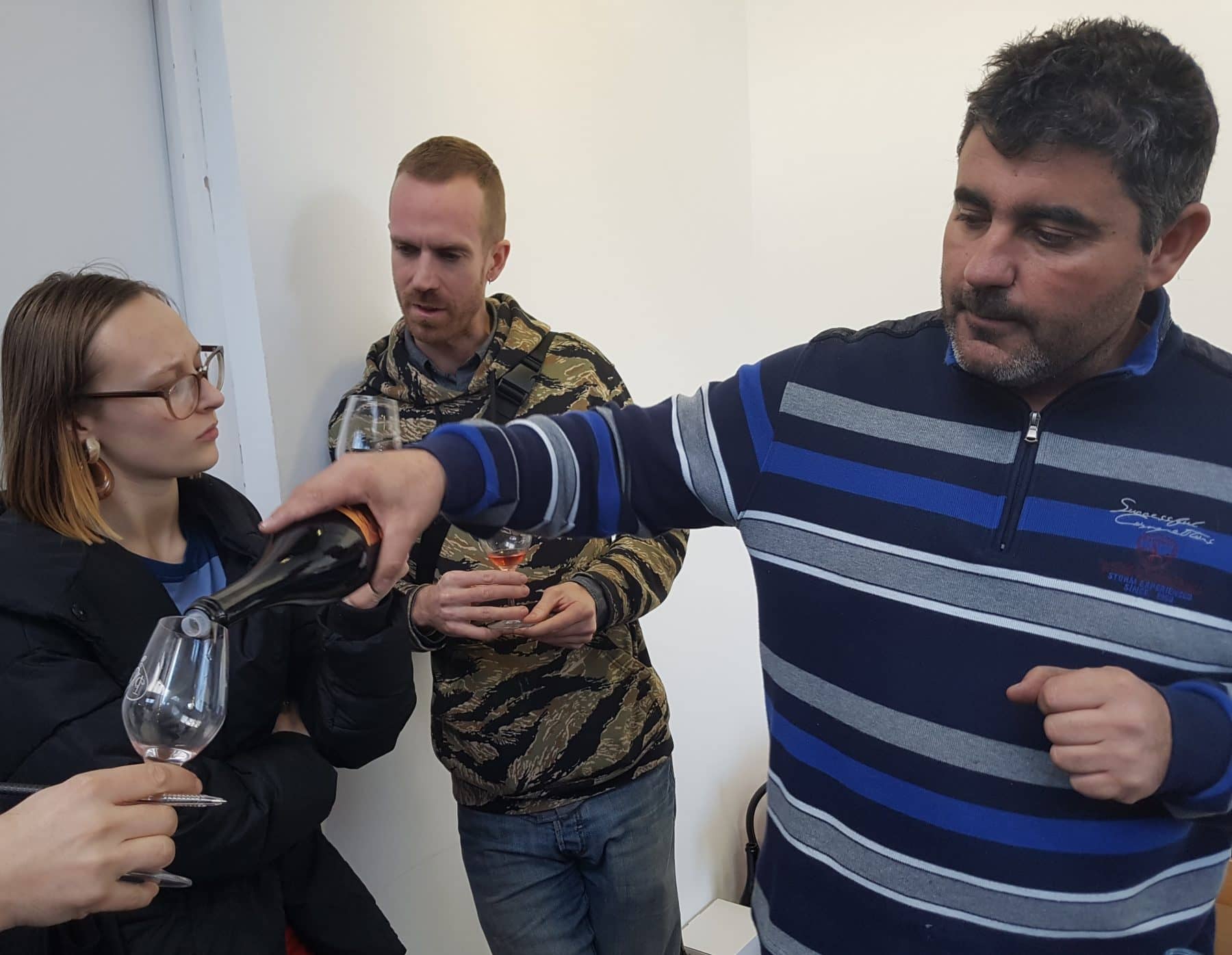
10th and 11th February there were two natural wine fairs in Barcelona. Both days the Saló de Vins Naturales (aka Vins Nus, meaning Naked Wines) was organized by the PVN (Productores de Vinos Naturales in Spain), while Monday 11th there was the Vella Terra, organized by Alejandra Delfino and Stefano Fraternali. Both fairs had guided tastings on the side, and there were parties in addition to the main fairs, and Barcelona was simply the place to be!
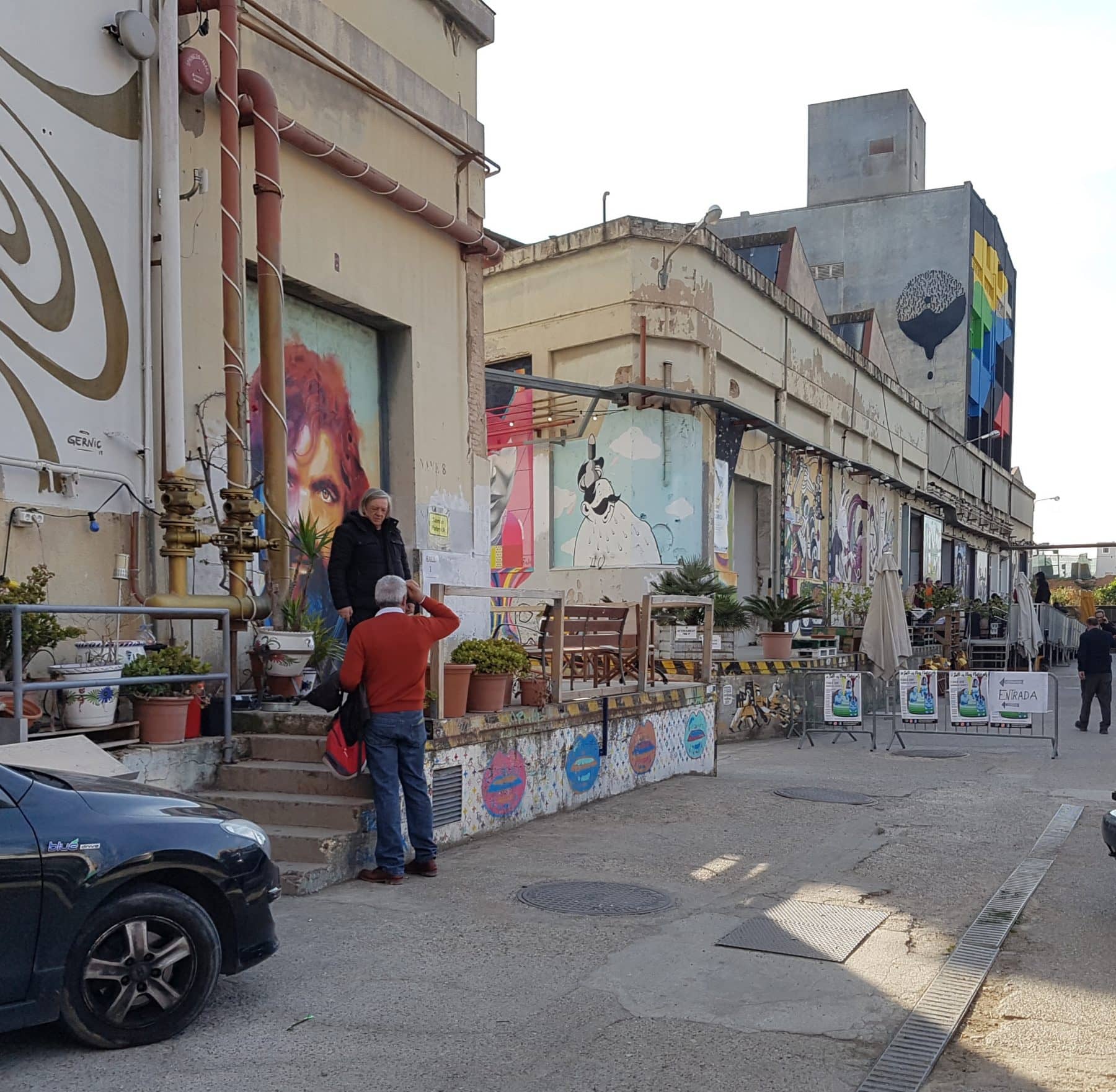
The 6th edition of the Vins Nus was held in the Nau Bostik building in the La Sagrera quarter, a place for cultural meetings. What place could better house the Vins Nus, that holds a position as the leading fair nationally for Spanish natural wines.
Most producers were Spanish, but there were also some from abroad, especially from France and Italy.
Here I met old friends and familiar producers. And there were some revelations too, of some I had only known the name or maybe tasted one wine.
In this post I can only mention some highlights. And I will try to limit myself to only one wine from each producer.
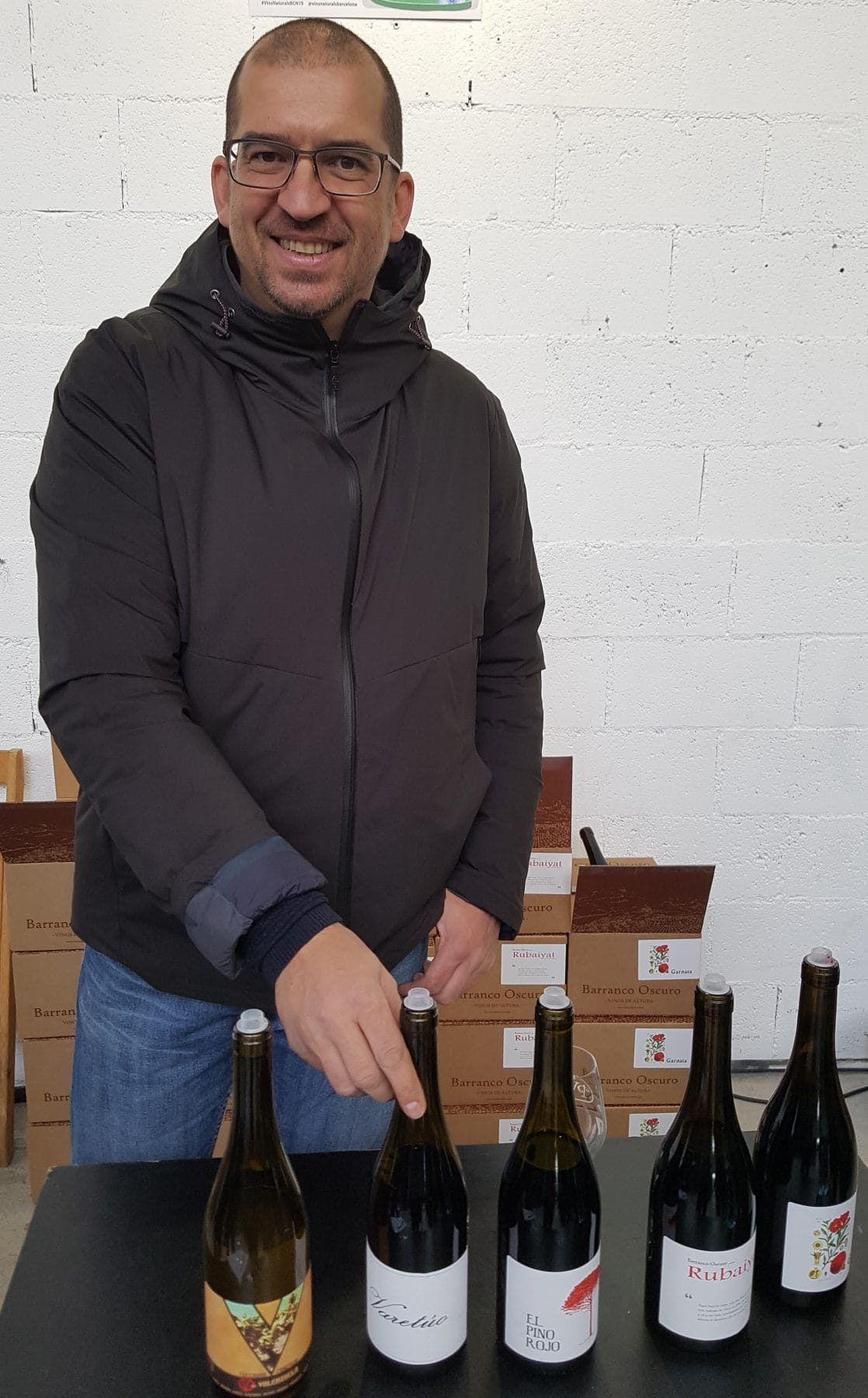
Lorenzo Valenzuela, Barranco Oscuro
Barranco Oscuro is a true classic on the Spanish natural wine scene, and has also been one of the founders and driving forces behind the PVN, who organizes this fair. From the high altitude vineyards in the Alpujarras of Granada they bring out one wine more inspiring than the other. One of my favourites has long since been the Garnata, a garnacha from the most elevated vineyards now in the 2014 vintage: Cherry red; very fresh, red fruits, clover, aromatic herbs; fleshy, tasty with a mineral finish.
Samuel Cano, Vinos Patio
This is a producer I have known for a long time. There is something intriguing about all the wines. It would be strange to call them cool, because they reflect the warmth of sunny La Mancha. This is Quijote’s land, near some old-fashioned windmills in the Cuenca province. Most wines have Patio in the name, such as the lovely white airén Aire en el Patio and the dark, raisiny dessert wine Al Sol del Patio. I also tasted four of Samuel’s wines at an arrangement at the bar Salvatge a couple of days before, so I limited myself to four wines at his table. A newcomer, or one I didn’t know before was Mic Mac, a delicious, flowery, super fruity blend of airén and moscatel.
This time I chose the white, or more accurately, rosé Atardecer en el Patio 2017 (from the red tinto velasco grape). It’s quite floral, with apple and peach. In the mouth it’s round and fruity, I reckon it must have some residual sugar, and would be perfect for an afternoon (atardecer) in the patio.
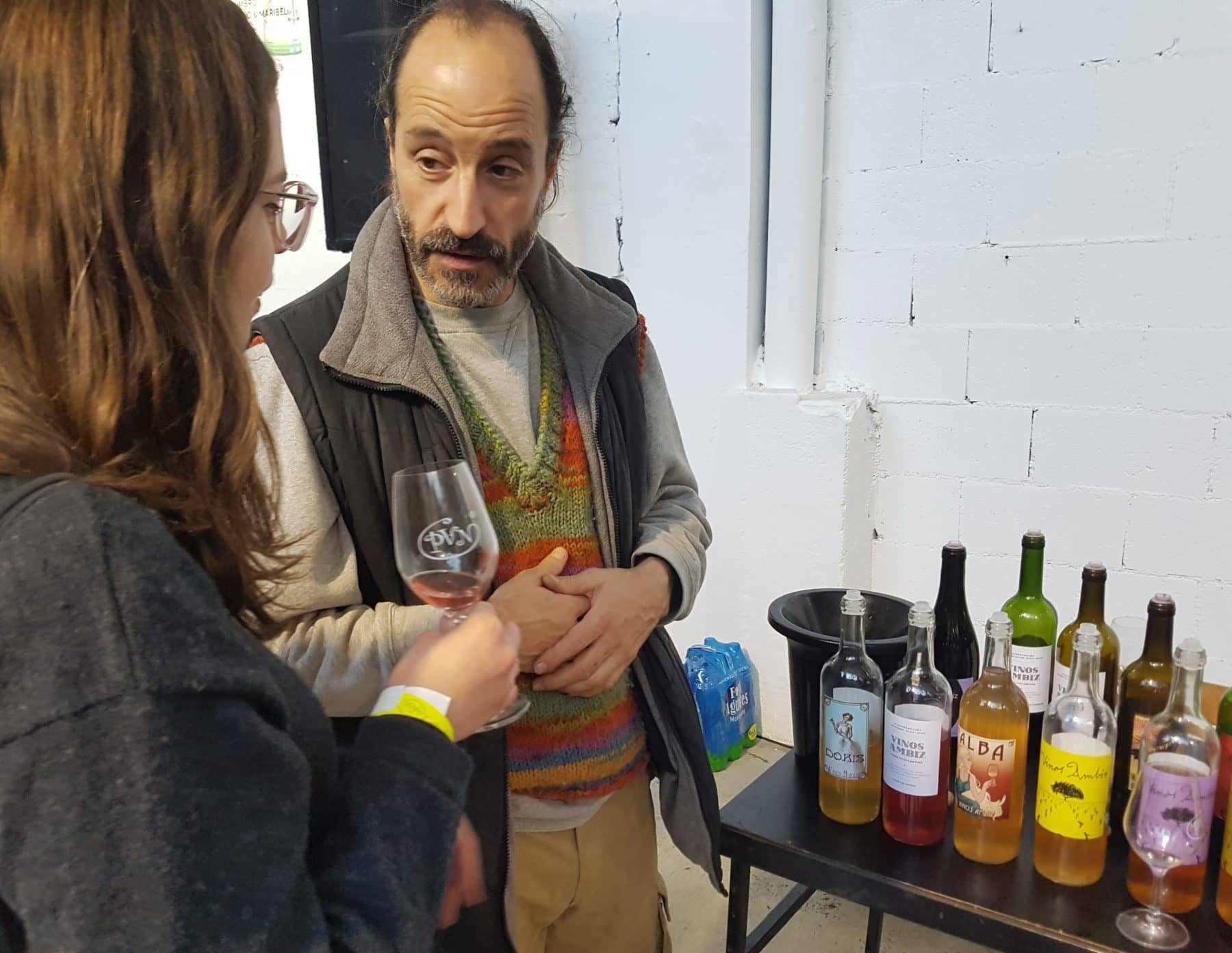
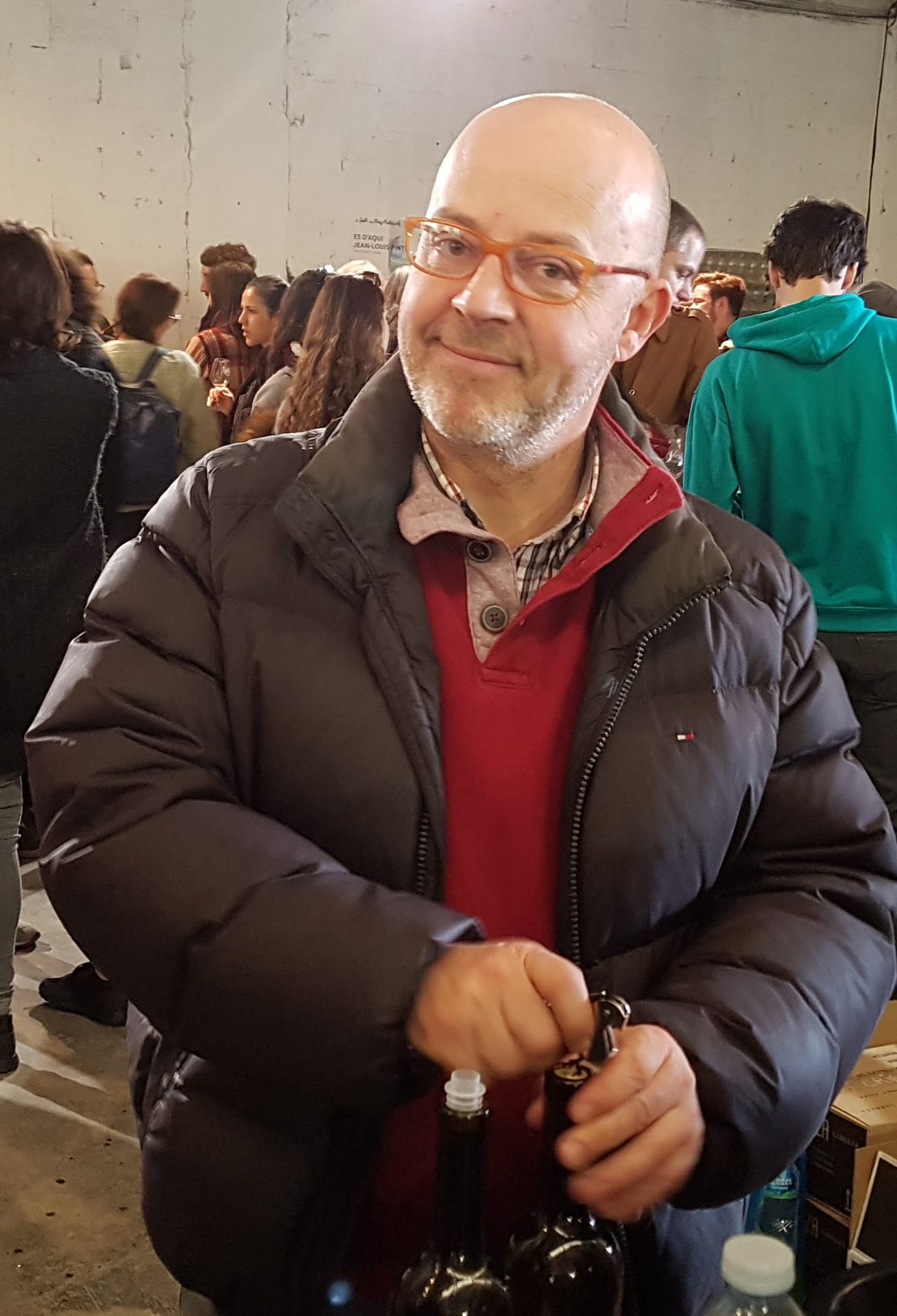
Fabio Bartolomei of Vinos Ambiz
I have met Italo-Scot Fabio, former translator, many times at fairs and visits to Madrid and Gredos. He makes many cuvées with variations in time of skin-contact, ageing (varying time and type of container) and so on. All the wines, how different they may be, carry his personal stamp. The focus has shifted from the the vineyards just outside the capital to the high sites of El Tiemblo (Ávila), Gredos, and we might be seeing the beginning of something great, and his albillo real wines from granite soil can be said to bear the torch here. Doré (a synonym of chasselas) is a grape that he has brought to the fore during the recent years. Now the wine comes under the name Doris. The 2018 is yellow-gold, slightly cloudy; smells of mature apples and is also flowery; quite full on the palate, grapey and sapid.
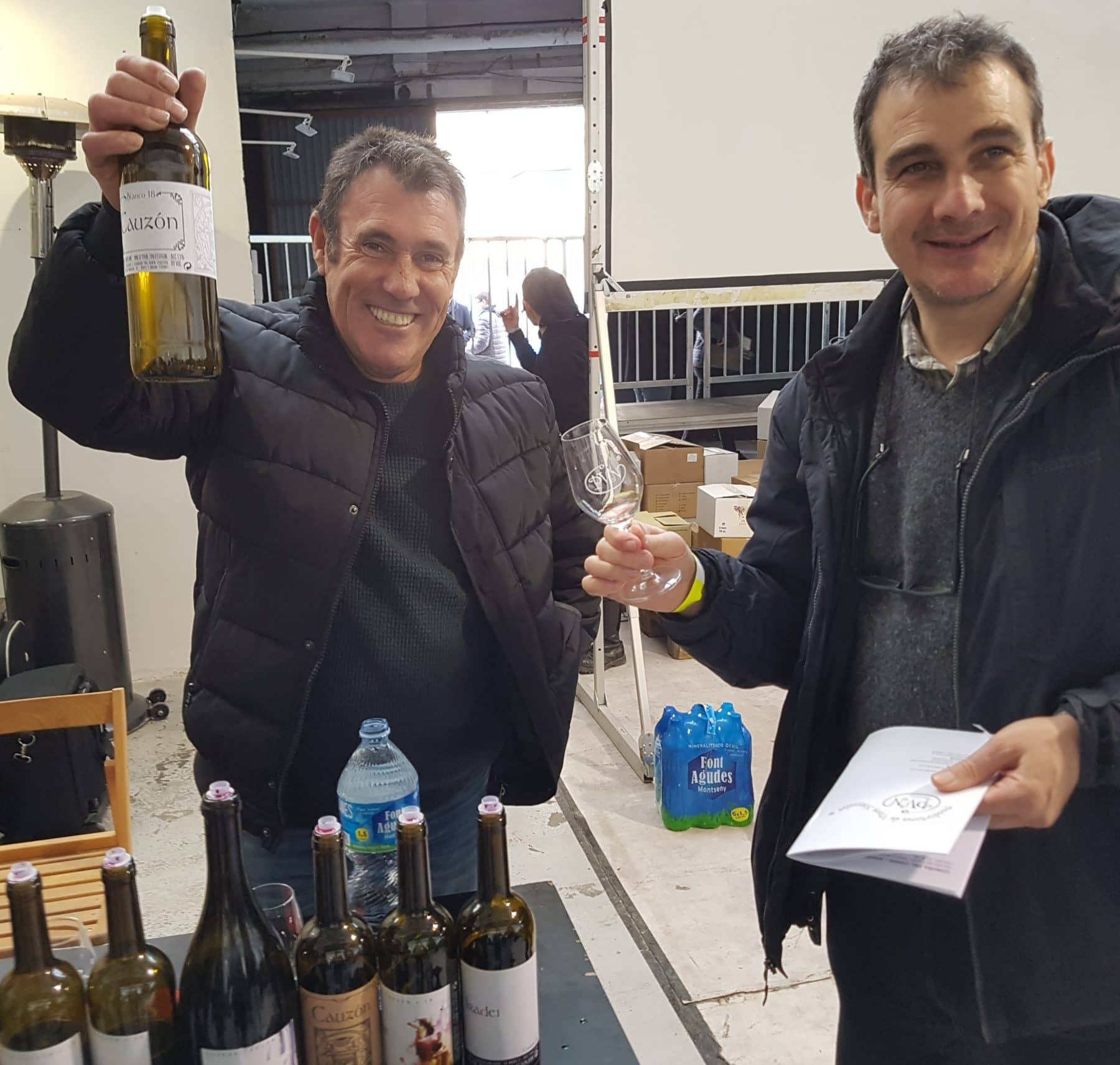
Ramón Saavedra of Cauzón (left)
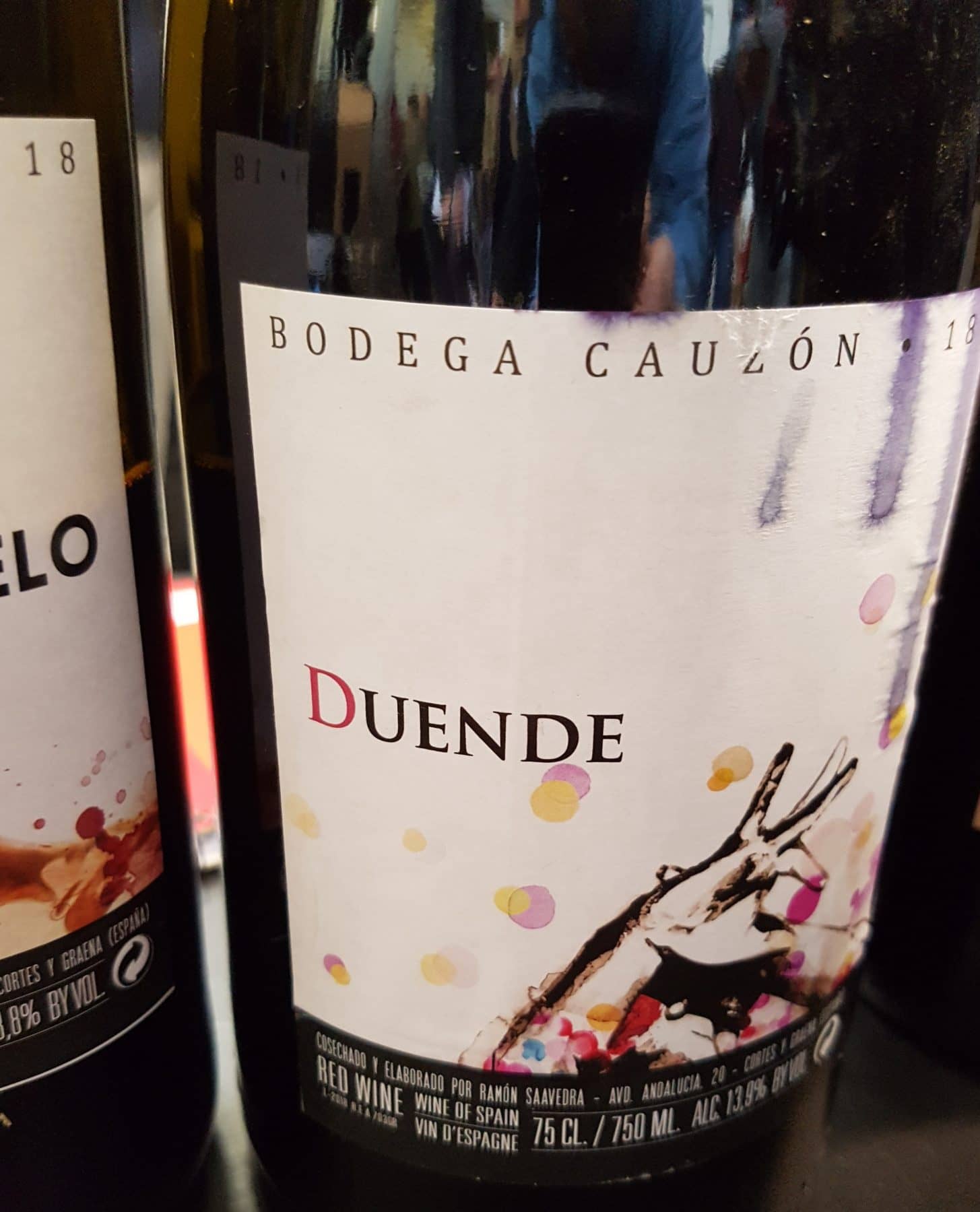
Ramón was enthusiastic and happy to show his 2018 vintage; the white Cauzón, a lovely strawberry-scented pinot rosé, the four grape Ira Dei and the Mozuelo, a red fruits luscious garnacha. I chose the Duende 2018, a wonderful syrah through several vintages: Dark cherry; fruity, earthy and slightly spicy; fleshy and tasty with young tannins.(Read more about his bodega and his wines in a post from 2017.)
Nacho González, La Perdida
La Perdida is a splendid producer in Valdeorras (Galicia). Nacho uses the traditional grapes godello, mencía and garnacha tintorera, but also palomino, and more unlikely varieties such as sumoll. I like his range on a general basis, such as the palomino skin-contact MalasUvas, the Proscrito, a reddish white from palomino and a small amount garnacha tintorera. The one that I chose for lunch that day was O Poulo 2018, a garnacha tintorera: Dark, fruity, with red berries, some green pepper, very clean and elegant with fruit all the way.
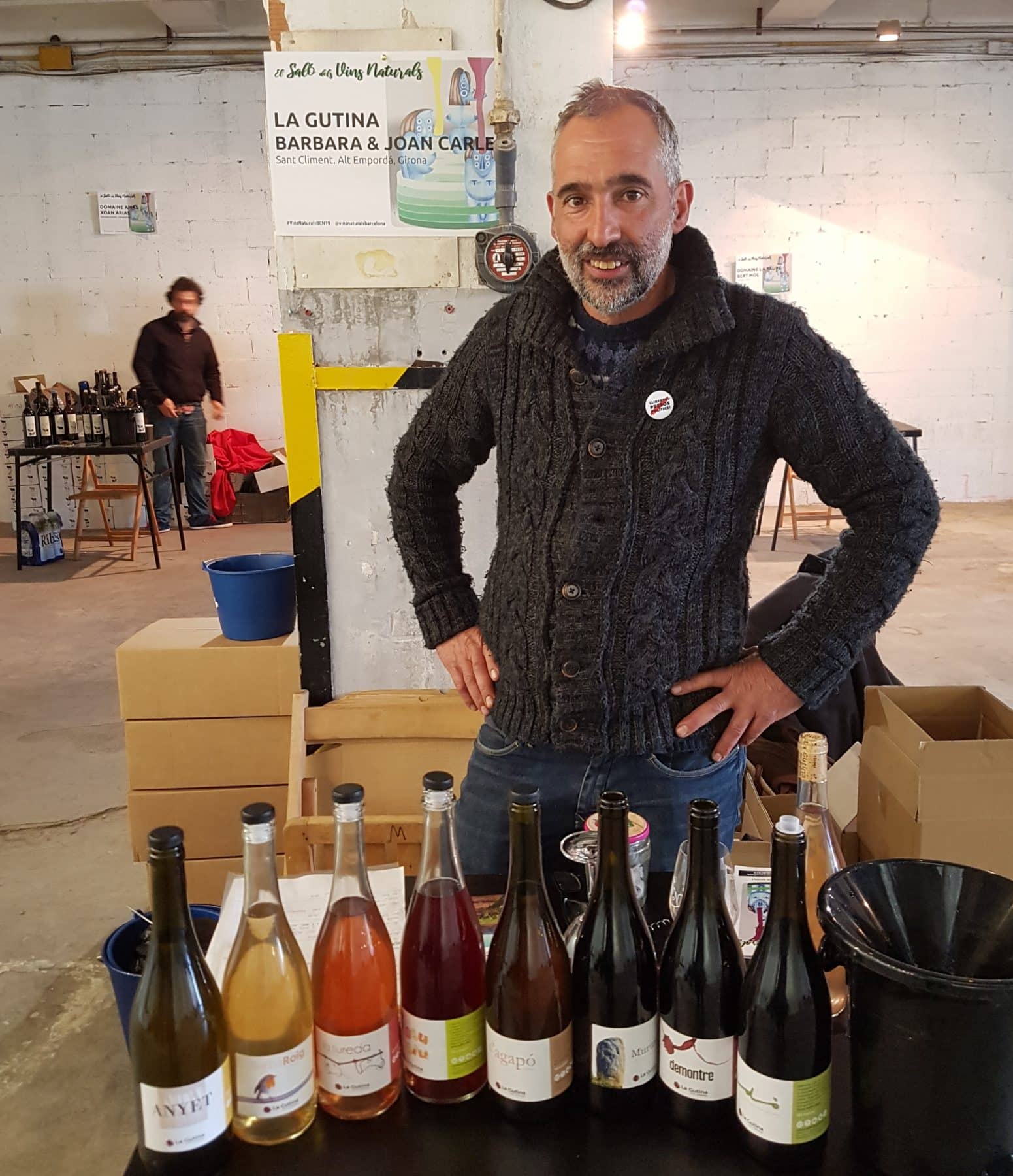
Joan Carles, La Gutina
I visited La Gutina of Empordà a couple of days before (a brief article from that visit to follow), so there was no need to taste the whole portfolio again. But a wine they didn’t present then was Gluglu 2018, a carbonic maceration garnacha, strawberry scented with good volume in the mouth, but also a fresh acidity. Fun and authentic.
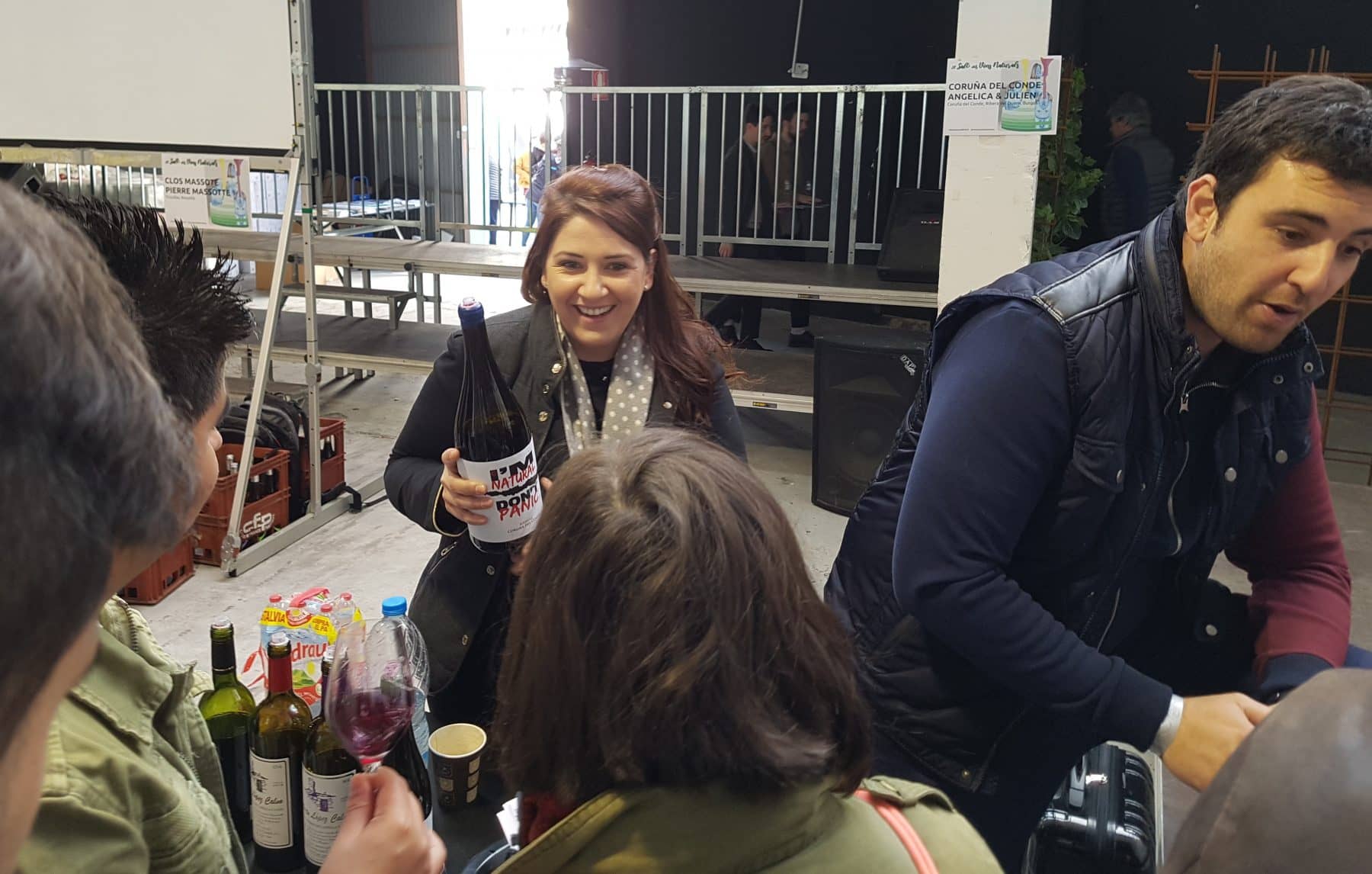
Angélica Amo López and Julien Ben Hamou, Coruña del Conde
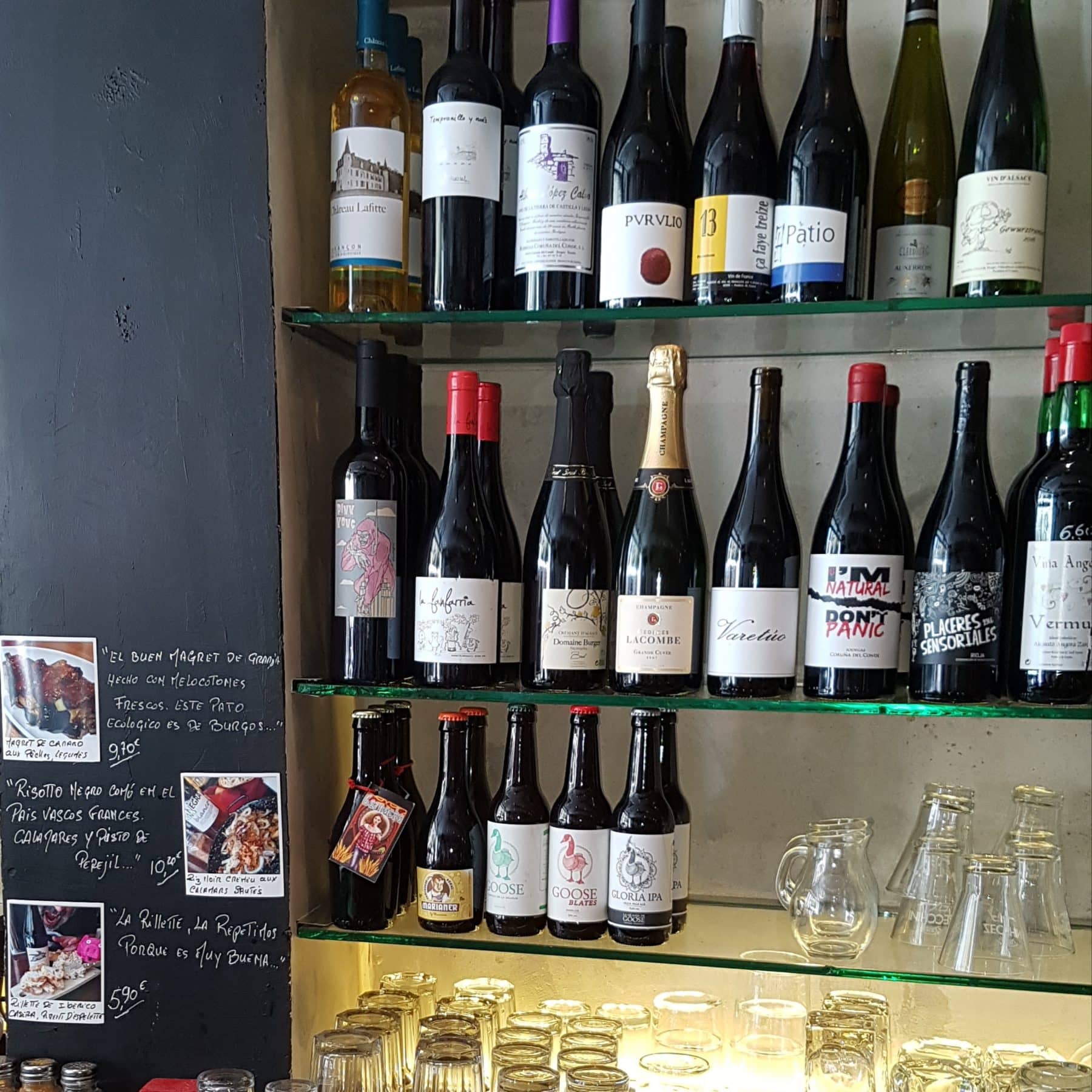
Ribera del Duero can not be called a stronghold for natural wines. But Coruña del Conde, a bodega in the settlement of the same name outside Aranda, is among the torchbearers. I came across the following wine at the Cascorrot Bistrot in Madrid (read about it here). The latest edition is Don’t panic I’m only natural 2018 #5: Dark, violet colour; fruity with red berries and blackberry; juicy, with smooth tannins.
Diego Losada, La Senda (picture taken the night before at bar Salvatge)
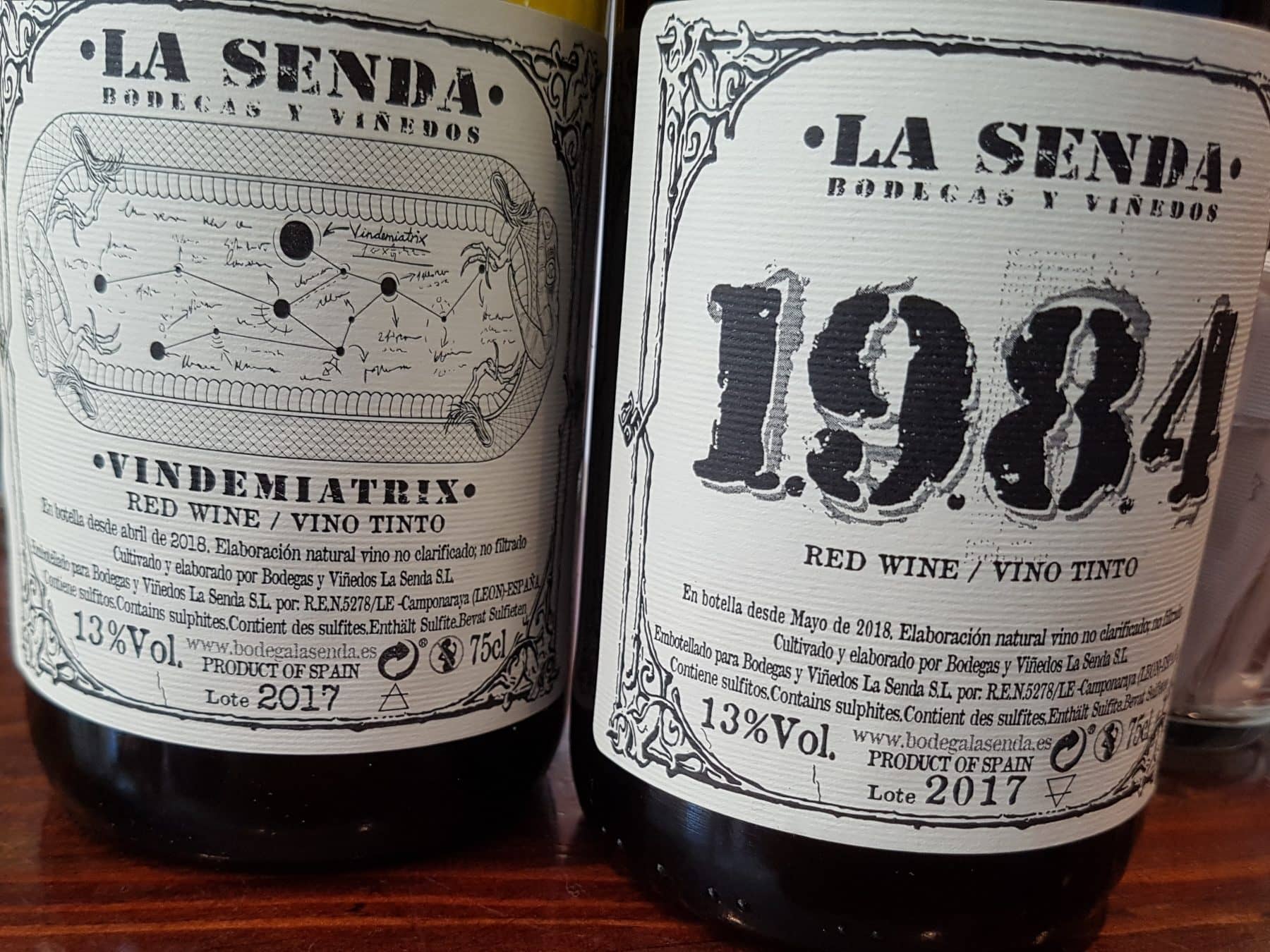
La Senda of Bierzo is another producer that I have been exposed to at Cascorro, Madrid. In my opinion everything from here is good, and I would be surprised if these wines will not be much more in demand in the future. La Senda white, red, all very clean, pure, the right amount of acidity, and with a sense of place. I chose La Senda “1984” 2017, the latter the vintage and the former a reference to Orwell’s novel. It’s cherry red, super fruity, with cherries, plums, medium body, and a lovely integrated natural acidity.
Torcuato Huertas, Purulio
Purulio is a neighbour of Cauzón in Guadix (Granada), except this is found even higher, at 1.200 meters, in the small settlement of Marchal. Most of the wines are interesting and good, marked both by the sunny south and the high elevation, though sometimes I’d wished the oak treatment had stopped just a little while before. The one I liked best this time was maybe the aromatic Purulio 2018 (sample, 5 months in oak), with its berry aromatics, flowery sensations and a quite cool acidity.
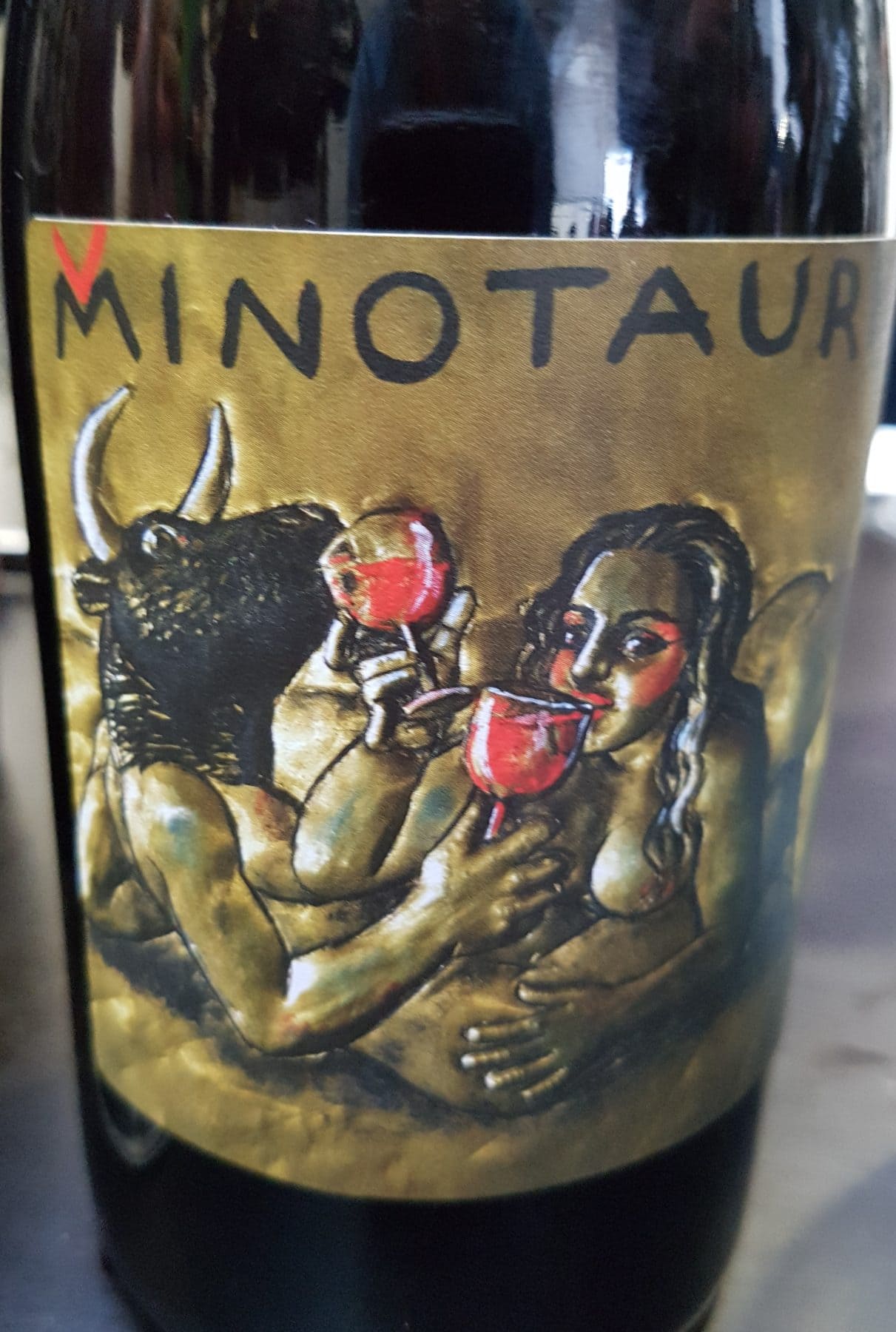
Vinotauro 2016, a pinot with the not-too-well hidden wordplay on the label
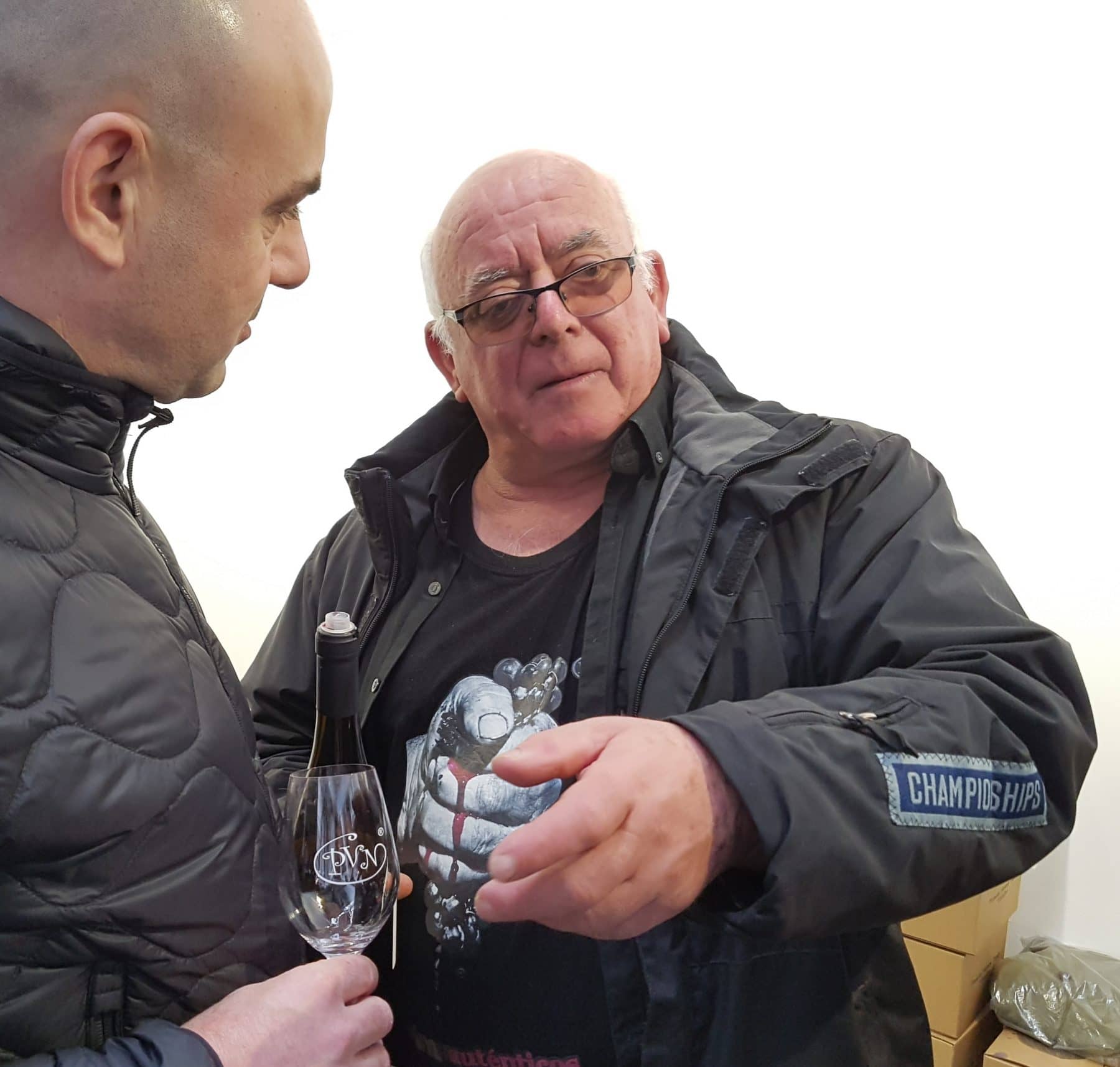
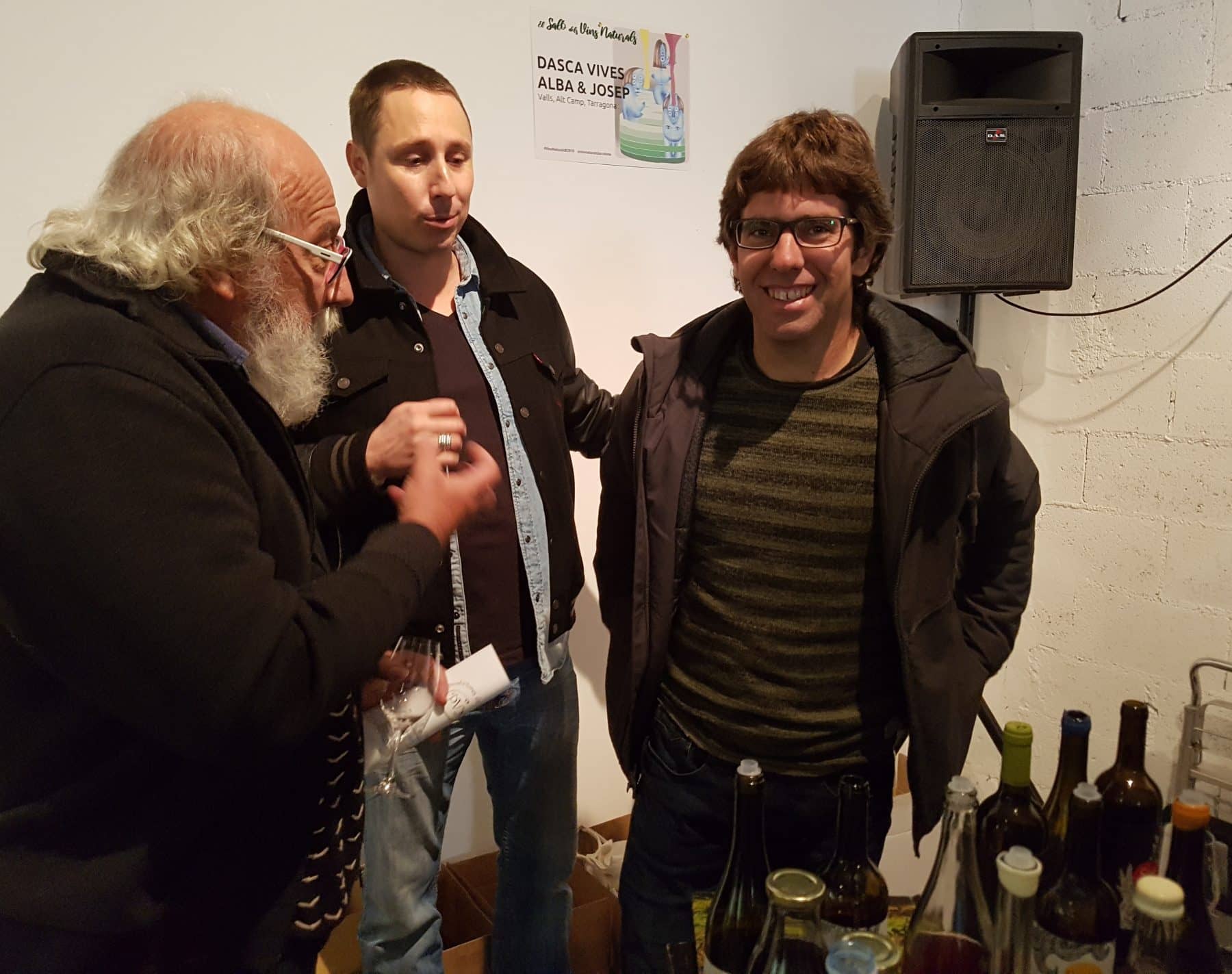
Josep Dasca (right), with Ludovic Darblade (co-owner of bar Salvatge in the middle)
Among this years’ revelations Dasca Vives presented some impressive and different wines from l’Alt Camp, Tarragona province. They work well with the maccabeu variety, that is also the one behind their rounded, maturely fruity Llunàtic and the Vi Ranci. Another speciality is the vinyater variety. (Read here about their wine from this interesting grape.)
Now back to the rancio. This is an oxidized wine, most often from the grenache/garnatxa, and it takes some 8-10 years before it’s “rancified”. This particular wine was made from white grapes though. Josep and Alba explain that some ten years ago they put white wine from the grape variety macabeu in a barrel with a some kind of “dense vi ranci”, that Josep’s father has in a very old and broken barrel. They also added a little of alcohol (it’s the only time that they had done so). Now they have started to sell it. Sometimes more white wine is added, but the barrel is never full, so the wine is always in contact with oxygene. The Vi Ranci had a mahogany colour, nutty aroma (almonds, hazelnut), notes of iodine, reminiscent of a relatively young amontillado sherry. In the mouth it was full and glyceric, with some tannin. My notes say nothing about how sweet it was; if my memory doesn’t fail me I think it was kind of off-dry, anyway there was nothing at all disturbing.
Maribel and Juanjo of Alumbro
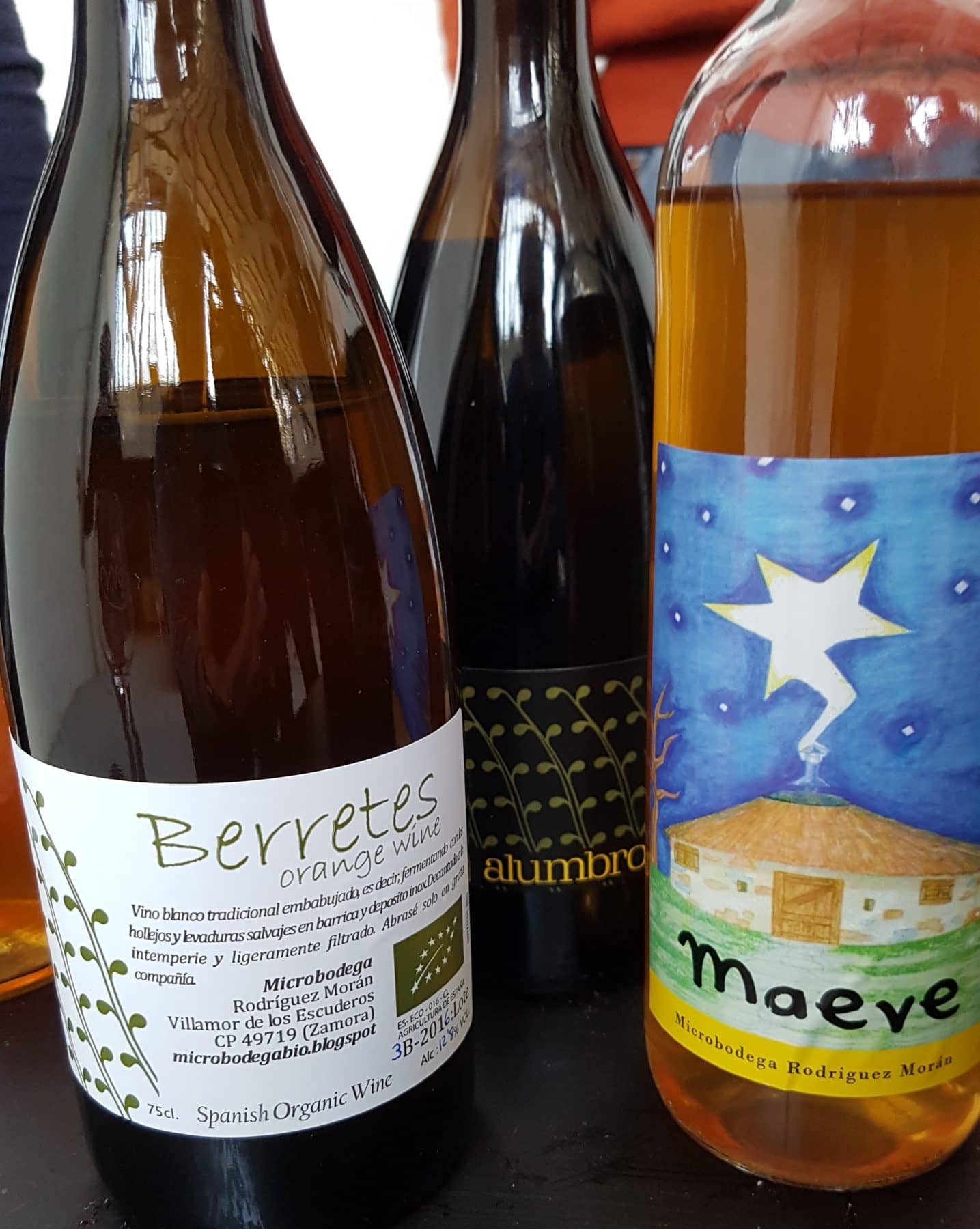
Alumbro of Zamora, Castilla y León was another discovery, with their wonderfully expressive wines, from the slightly turbid, fruity-grapey orange wine called Blanco 2016 (verdejo-godello-albillo), via the dark orange, perfumed moscatel Maeve 2018 to a couple of reds. Should I pick only one it could be the truly inspiring Berretes 2016 of albillo real/ godello 50/50: Orange, slightly cloudy; plums, apples, yellow tomatoes; some tannins. Linear, fruity.
Iker García of Hontza, Labraza (Rioja Alavesa) showed that he has something interesting going on. Another one to watch is La Zafra, of Monòver, Alicante.
I’m sorry for all the producers from abroad, that I had too little time for this Sunday. But we’ll meet again, I hope.
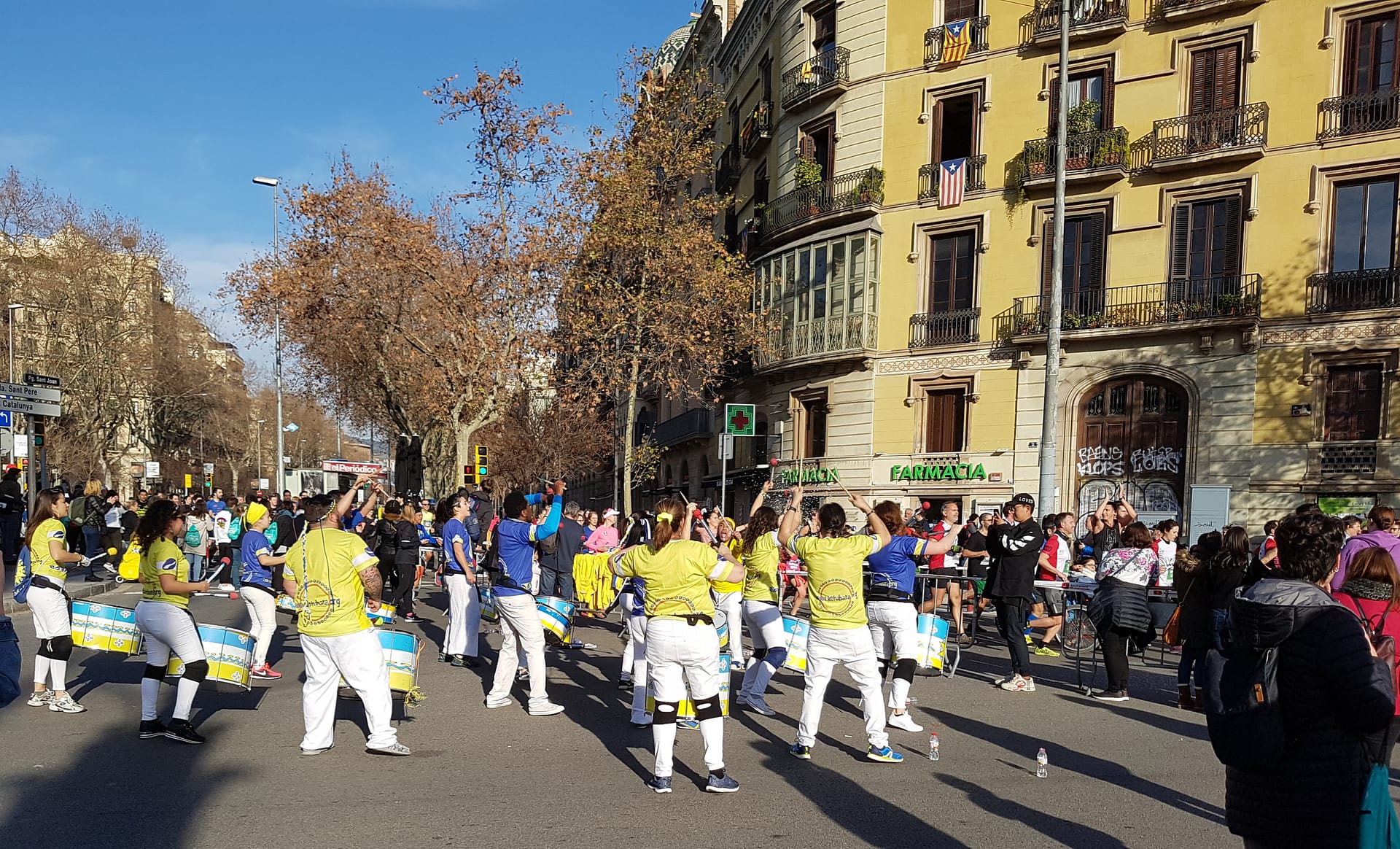
Greeted by a Brazilian style percussion band by the Arc de Triomf, on my way to the fair
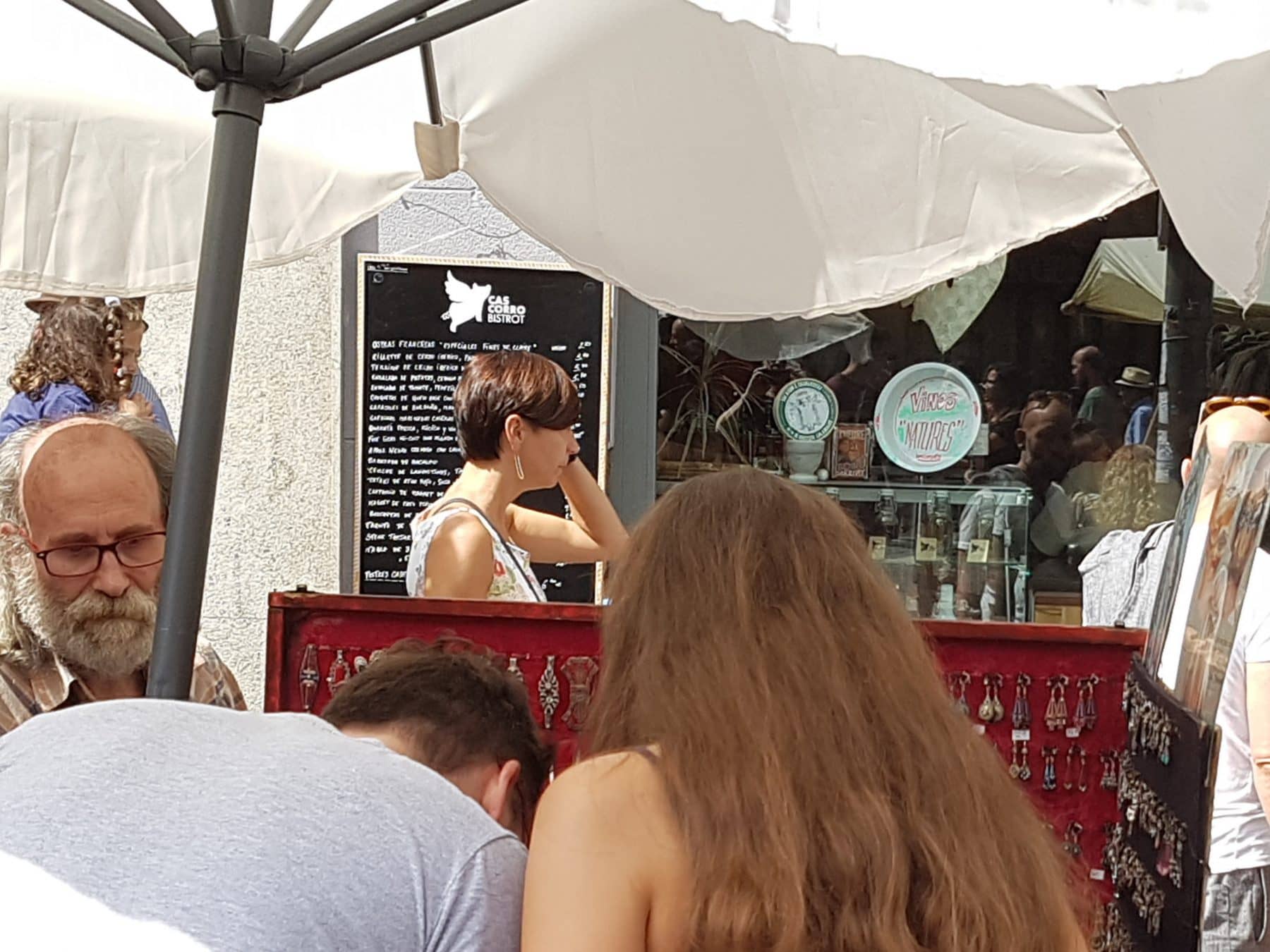
If there is one person that comes to mind when talking about natural wines in Madrid, it’s Carlos Campillo. I don’t know about everything he has done, but since I met him he has run Le Petit Bistrot in the old town, Solo de Uva, by the Berlin park north of the city centre, and now this wine bar at Plaza de Cascorro in the centric La Latina district. He has played a central role as regards numerous natural wine fairs in the city, and many of the names familiar for me now I have first been served by Carlos.
While we don’t forget the food, and the small dishes so well elaborated, it’s the wine that we concentrate on here.
Natural wines in Madrid has a name: Carlos Campillo
This particular time I had arrived from Rioja, and I brought a wine from Ojuel (the producer behind the magnificent sweet wine Supurao) that I wanted him to taste. So we opened it. The room was packed, so I was standing by the bar. Next to me an importer (of Champagne and other wines to Spain) heard what we were talking about, and joined both the conversation and the tasting. This is just that kind of bar; nothing complicated, the one next to you is your friend, join the fun!
None of us has yet mastered the art of taking selfies to perfection, but we managed to get both faces and the bottle inside the frame
Oxuel Salvaje 1 2016 (Ojuel)
This is a wine from the garnacha variety, grown in Sojuela village between the Najerilla and the Irégua valleys of La Rioja. Biodynamically treated, and fermented in used French oak. Purple colour; redcurrant and strawberry nose, a bit earthy with aromatic spices; sapid, with a refreshing acidity, a vibrant and long finish.
Here are a few of the other wines I tasted this time, and the next.
Bonny Giornata 2017(Vinos Ambiz)
Bonny means fine, nice or beautiful in Scottish, and giornata is day in Italian. This wine is made by Italo-Scot Fabio Bartolomei and Antonio Sicurezza, his Italian friend. This carbonic maceration wine is made near Albeche river in Sierra de Gredos at 750 meters of altitude. It’s a fresh and vibrant, red fruits dominated, low alcohol garnacha (12%) with medium body.
Torcuato Huertas makes wine in Marchal, municipality of Guadix, in the highlands east of Granada. His wine are marked both by high altitude (up to 1.200 meters) and southern geography. From just 3 hectares he grows more than 20 varieties.
Carlos poured just a sip of both, the multi-varieal Purulio Blanco 2016 was a tasty, robust wine with some skin-contact peel aromas from Torcuato’s lower plot (at “just” 900 meters), while the Jaral (2016 too, I think – my notes are not easy to read here) was made with red grapes from higher up. This was more fresh and elegant, with notes of blueberry, blackberry and just a bit leathery. Purulio Tinto 2016 is a mix between the two, and shows it, both in the fresh fruit and the rich mouthfeel.
Vinos Patio of Castilla-La Mancha is a long time favourite at Carlos’ restaurants. The Aire en el Patio 2016 is a skin-contact airén, very much alive, tasty, with a pure fruit, smooth texture and a round mouthfeel.
As I mentioned, this was not my latest visit to Carlos’ bar at Cascorro. I was there a short time ago, on a Sunday. If you have been a tourist to Madrid you know about the Rastro flee market. While I must admit I had my doubts if the people would be able to find his Solo de Uva, here we are in the midst of the Rastro. -Very good for the business, says Carlos. And let’s really hope that this will thrive and keep its position as the bastion of natural wine in Madrid. Today there are signs that something is on the move, with new bars and restaurants, and plans for more. But in difficult times it’s Carlos who has been holding the fort, almost alone.
From this last busy Sunday visit I will just mention three wines that Carlos poured in a hurry, all from the Castilla y León region. La Senda of Bierzo is a winery I must check out and come back to, because both wines were fabulous.
The Vindemiatrix 2017 was a dark violet, cherry and plums-scented wine with a pure taste, fine-grained tannins, and a really nice natural acidity. The cherry red “1984” 2017 showed super fruit, with cherries, plums, cloves and a lovely acidity. Both are wines to drink, but they are far away from simple.
Coruña del Conde is such a rare thing as a natural wine producer in Ribera del Duero. They are found near Aranda, so I’ll have to check it out next time in the area. The I’m Natural, Don’t Panic 2016 un-oaked tempranillo wine (with a small amount of albillo mayor) was dark violet of colour, with a good fruit, mature red berries and blackberry; fleshy and smooth in the mouth and with an inspiring acidity. Sincere, interesting.