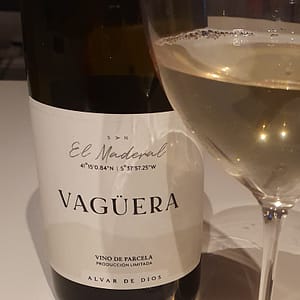
I say Toro, because wine lovers will know where it is. The wine is given the more generic designation Castilla y León though, but the label gives the exact address and also shows the coordinates.
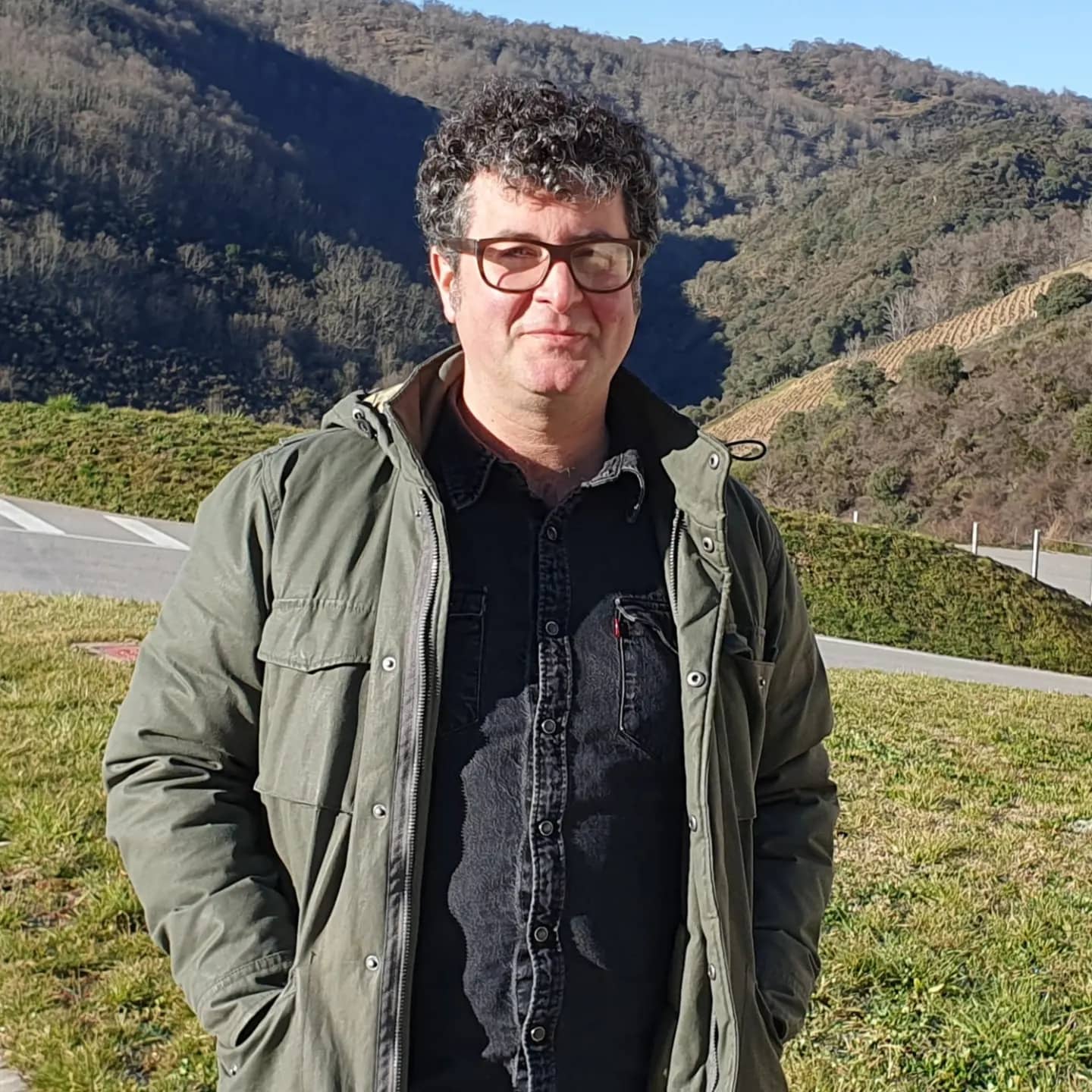
we are in the southern village of El Pego, where Álvar de Dios Hernández took over his grandfather’s century-old vineyards in 2008.
Vagüera comes from a single vineyard in El Maderal further north. It sits 950 metres above sea level and surrounded by an extensive cork oak forest that shields the vines from the sun. It’s made from doña blanca grapes planted in the 1920s. They were direct-pressed, barrel-fermented and aged at least 12 months in the same barrels. The wine is neither filtered nor clarified.
Vagüera 2018(Álvar de Dios)
Light yellow with green hints. Intense aroma with citrus (lime), green apples, white flowers. Tasty, with good volume and concentration, a refreshing acidity and good length. It’s direct, but it has also a deeper layer. No oakiness, except that it’s breathing well (from the microoxidation). Wonderful balance, and also ageing capacities.
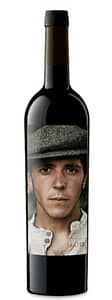
El Pícaro is a young red wine from the D.O. Toro made with tinta de toro (tempranillo) grapes from vines between 50 and 70 years old. It’s made by Bodega Matsu that work by minimal intervention, in the field according to organic and biodynamic principles. Matsu, meaning to wait in Japanese, is a project originated by the Riojan company Vintae.
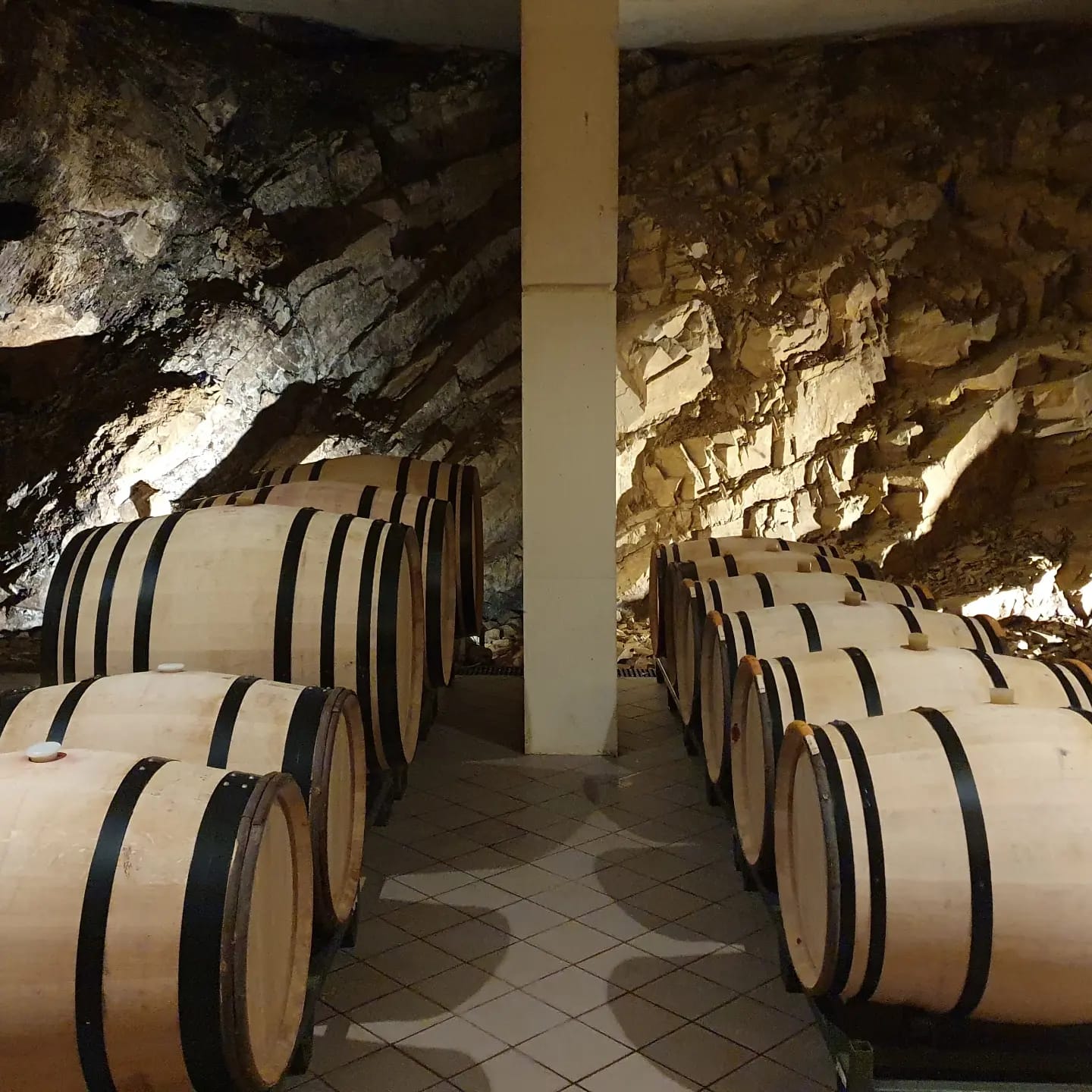
The harvest was carried out manually during the first half of October. Fermentation happened in concrete tanks at temperatures not exceeding 24ºC. Malolactic fermentation was done in French oak barrels. Then came a 3 month period in wood. Not filtered nor clarified.
The winemaking is done in the facilities that Matsu rents from the Covitoro cooperative.
El Pícaro 2022(Matsu)
Deep red with blue hint. Aroma of mature fruits, dark (blackberry, blueberry), eucalyptus and coffee. Medium-bodied, young tannins, mineral, powerful but also with a nice acidity.
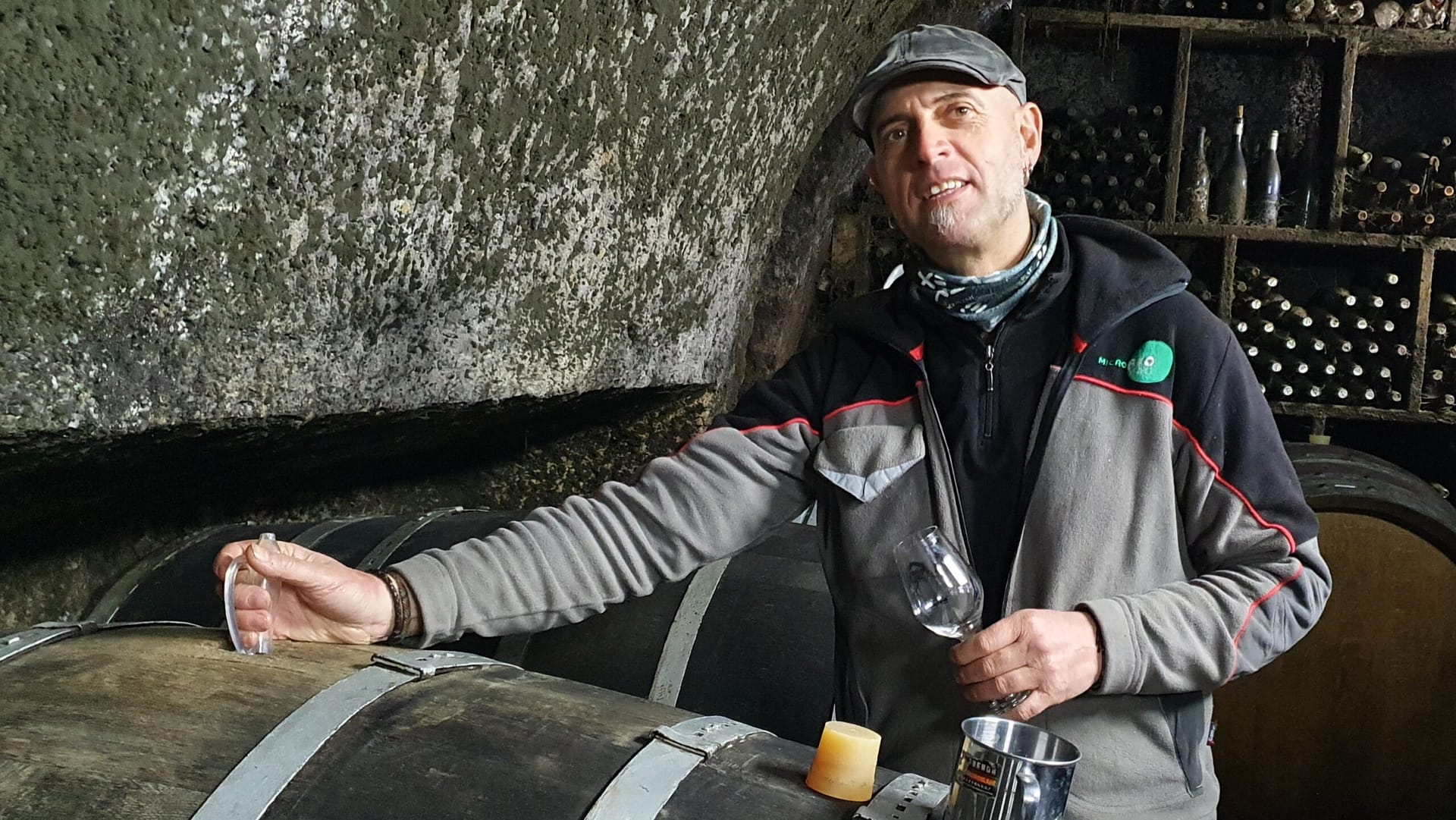
The local heroes this time are six winemakers from Castilla y León who all participated with their stand at the Raw Wine Fair in Copenhagen. They were Elisa de Frutos (Vinos Malaparte), Ismael Gozalo (Microbio), Jorge Vega (Puerta del Viento), Ricardo López (Vinos al Margen), Alfredo Maestro and Kiko Calvo (Bodegas Bigardo).
As seen from my chair, from left: Elisa, Ricardo, Alfredo, Isabelle, Jorge, Ismael and Kiko
Together with Raw Wine’s founder Isabelle Legeron, they talked loosely around today’s theme, based around the six wines offered by the producers. The focus was on local grape varieties. Why do they matter? What happen to the grape varieties when the climate changes? Should we climb higher, pick earlier, or do we need to replace the variety with another?
We got to taste Jorge Vega’s Extinto made by the nearly extinct panycarne variety. We experienced verdejos in a white version made from centennial vineyards by Ismael Gozalo – and as a skin-contact orange wine from Malaparte. There was a delicate light-extraction rufete from Vinos al Margen and a fresh, fruity tinta de toro from Bodegas Bigastro, obviously a Toro wine, but not as much marked by its 16° alcohol as one could expect. Alfredo Maestro brought a wonderful tempranillo-based blend; one part tempranillo and the rest a veritable “de toda la vida” blend. [These wine descriptions will be updated.]
Castilla y León is a huge region with all the wine styles that one can imagine. I never get tired of it, and there is always something new to discover.
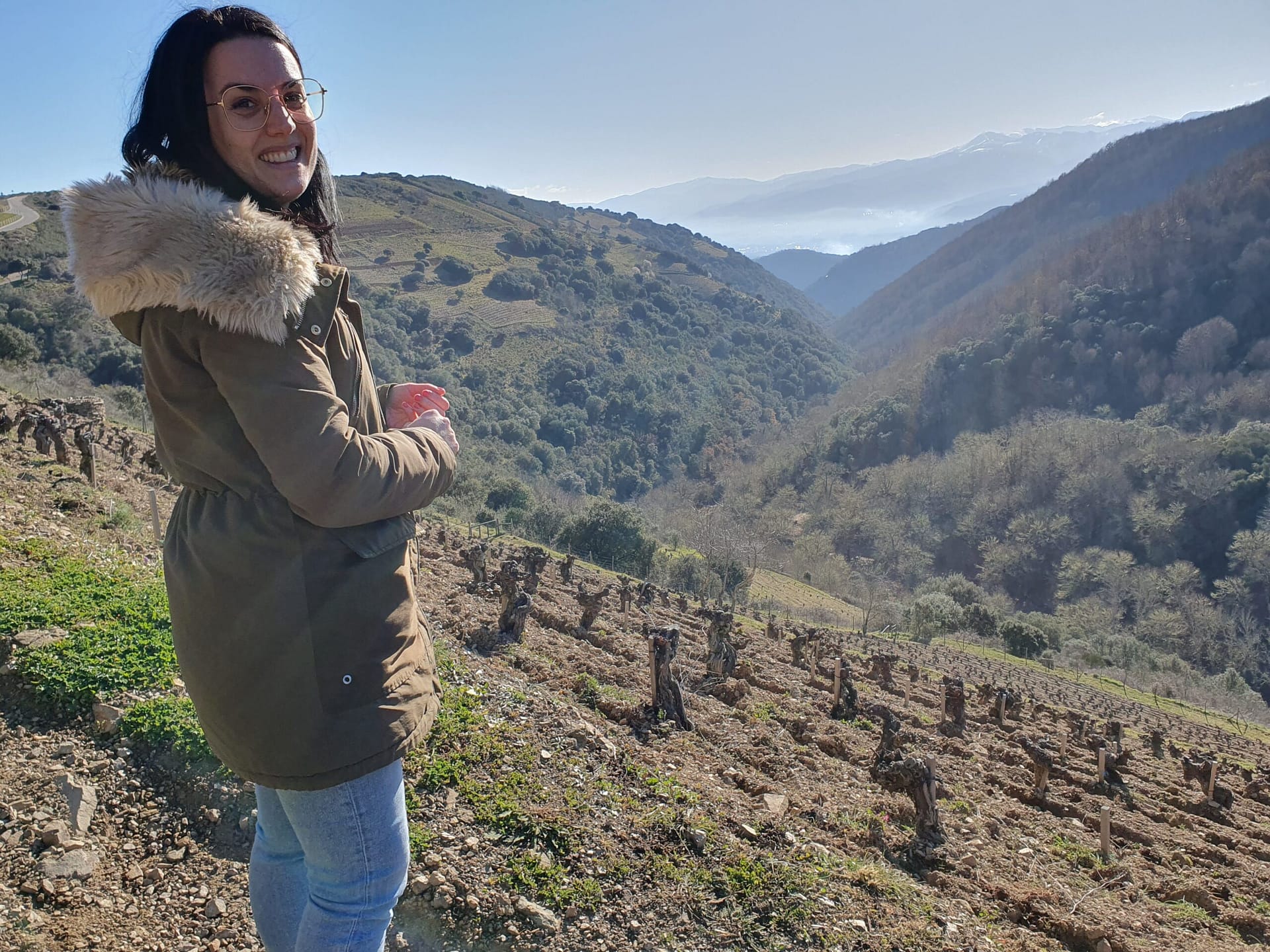
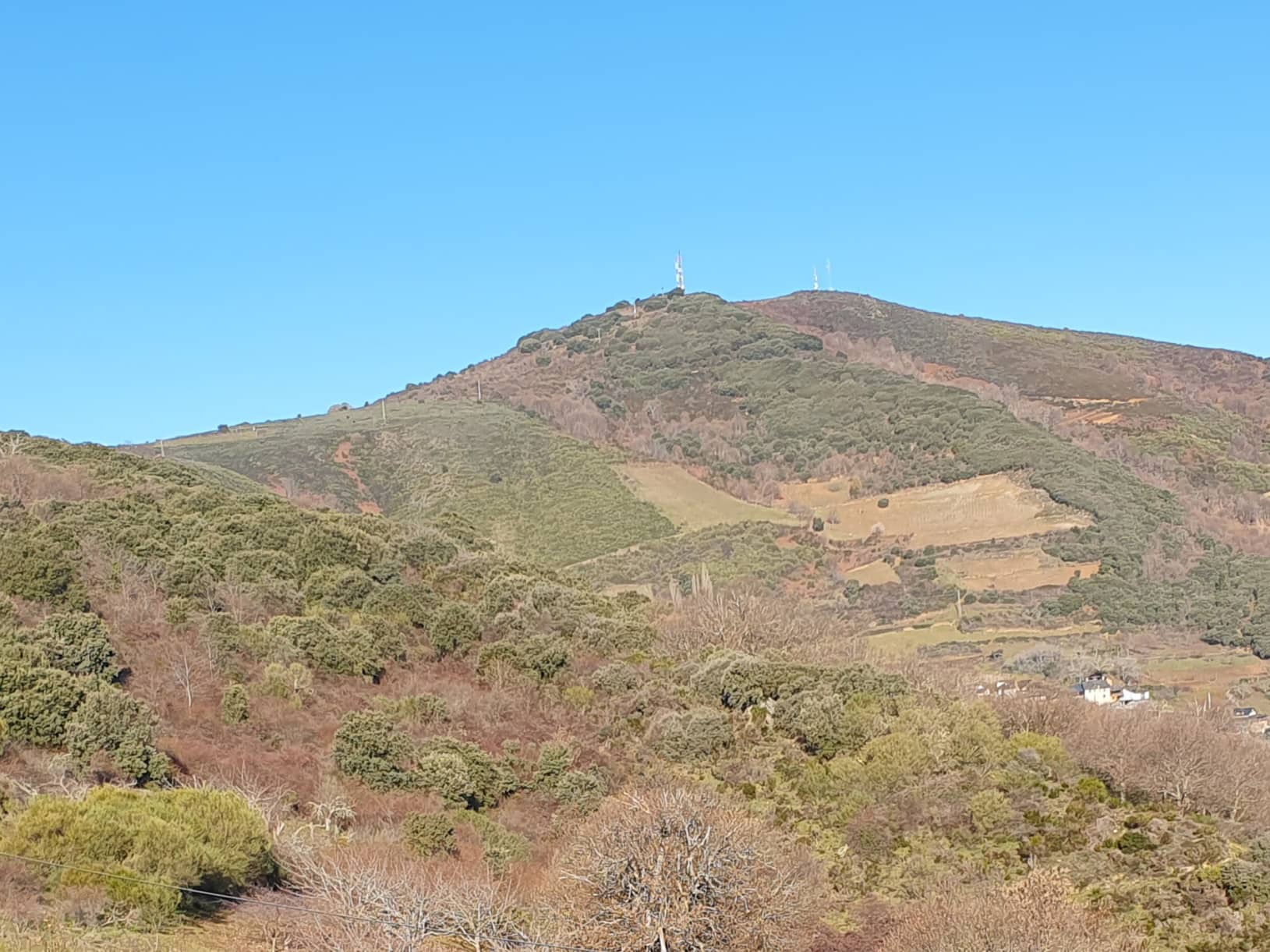
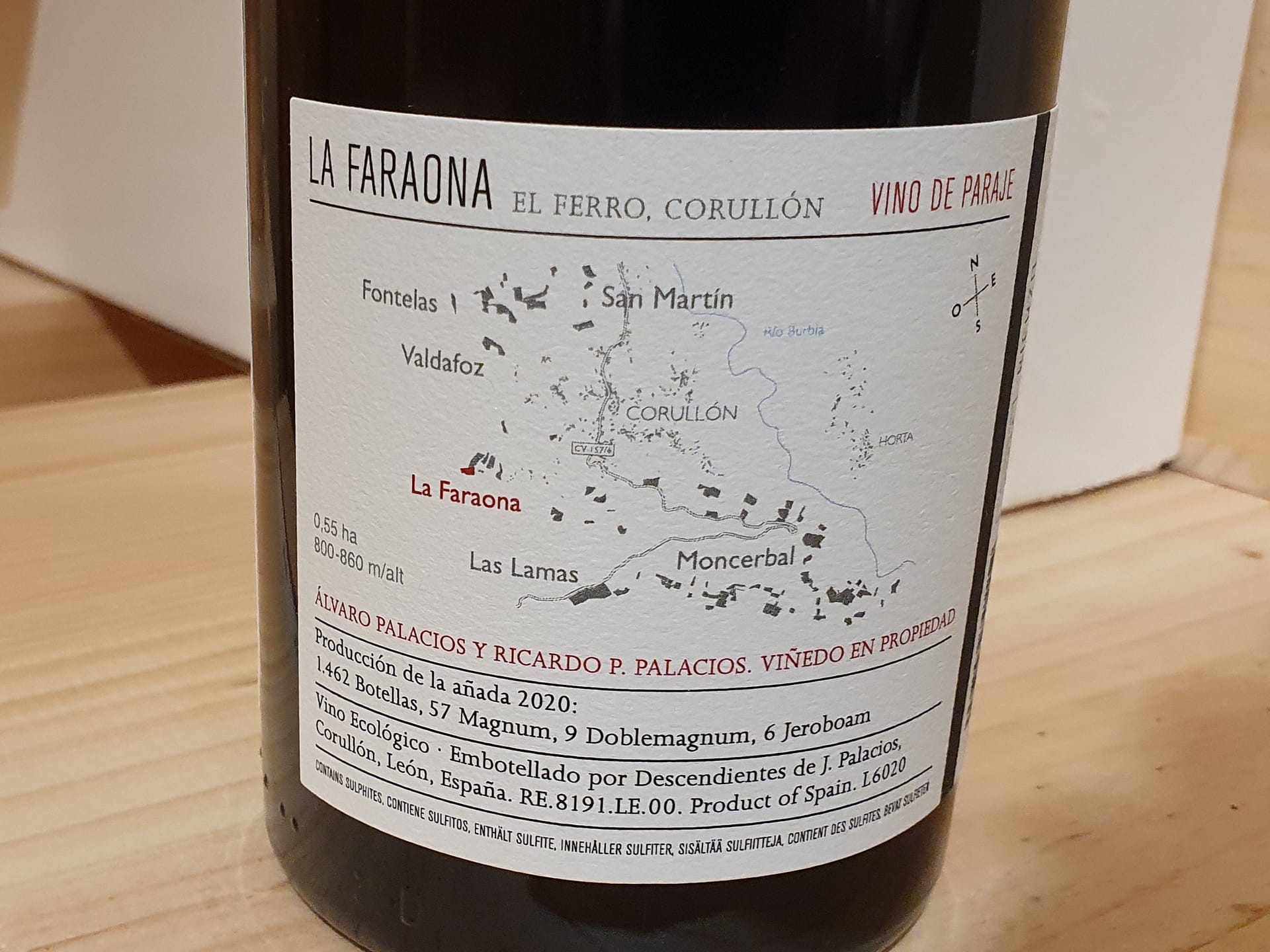
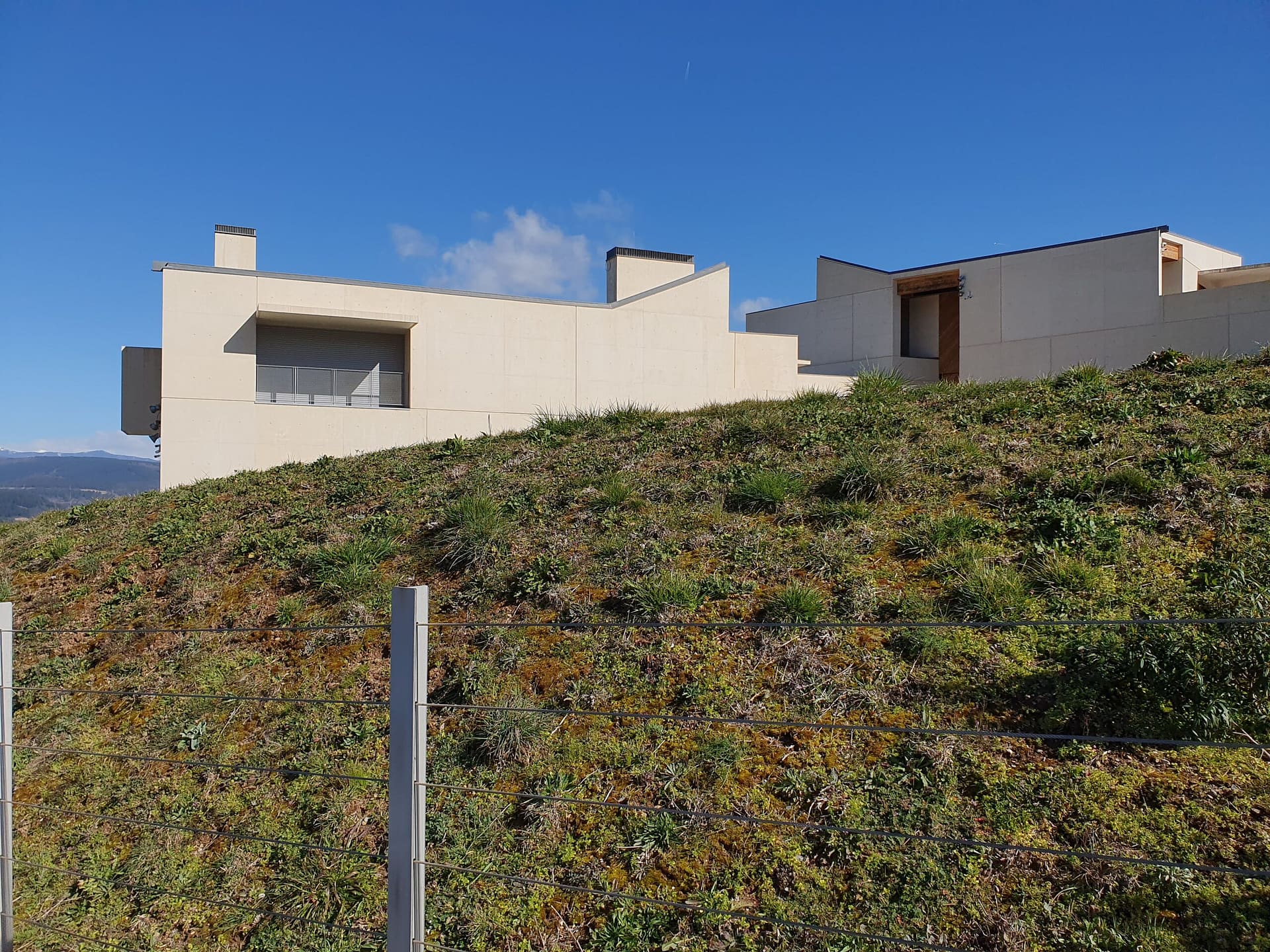
First day in beautiful El Bierzo, now winterly cold. Descendientes de J. Palacios are kings of the hill of Corullón. We visited the steep Las Lamas vineyard, watched Moncerbal from a distance – and saw the differences in soil displayed in the magnificent cellar, made by the famous Rafael Moneo. Here I also include a video where you can watch Corullón village, then over to the El Ferro hill, where you can also spot the mythical La Faraona vineyard. Eventually we tasted the 2022 vintage. Thank you, Ricardo and Iris!
(This post will be updated with a lot more information later.)
Ricardo Pérez Palacios in front of Las Lamas (?)
A display of the soils of the Moncerbal and Las Lamas vineyards
Iris Fernández in the Las Lamas vineyard
La Faraona vineyard in the paraje El Ferro
Geographical details on the back labels
Rafael Moneo is the architect behind the stylish and practical bodega
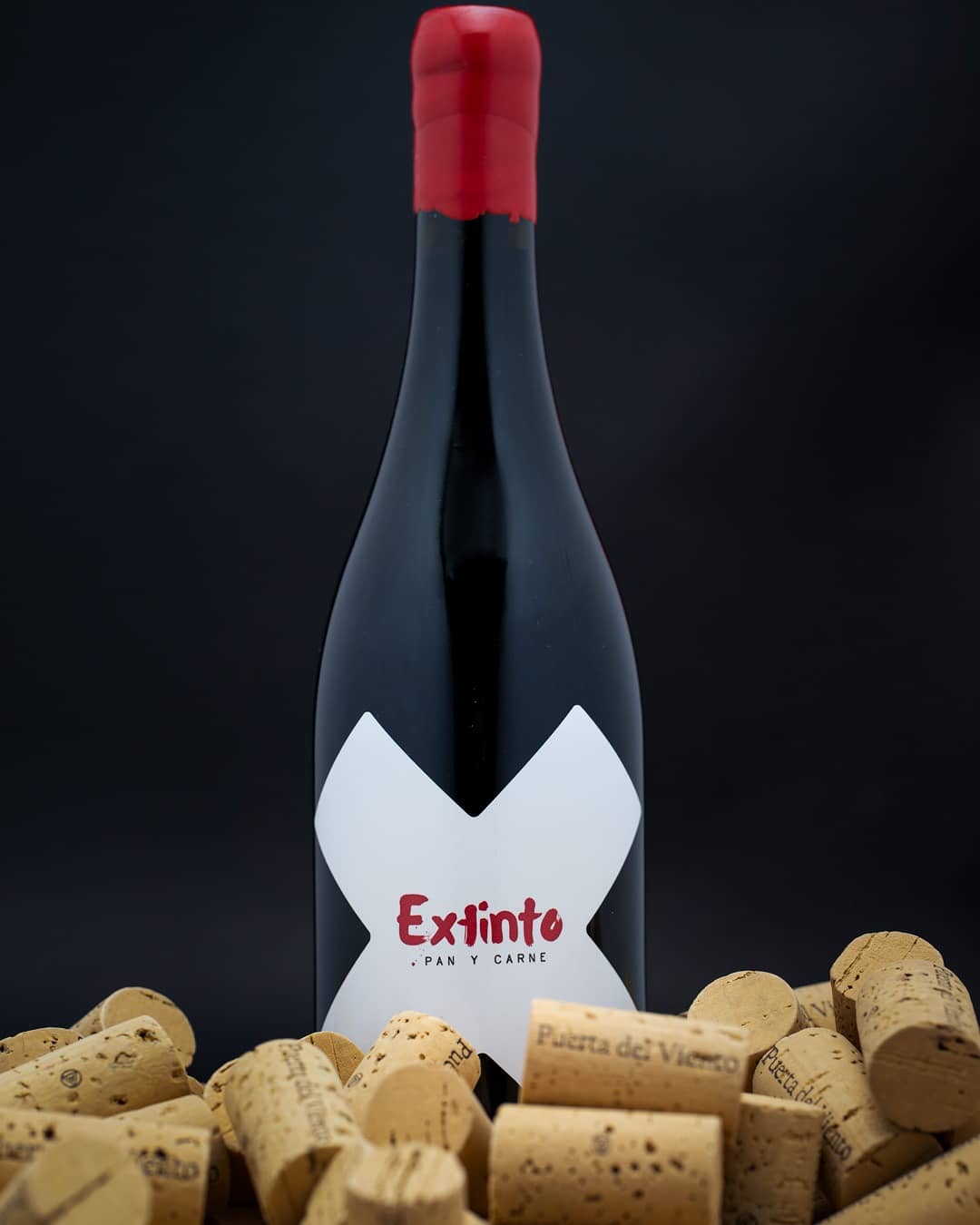
Extinto is a wine from the variety ‘pan y carne’, very rare and too special to forget.
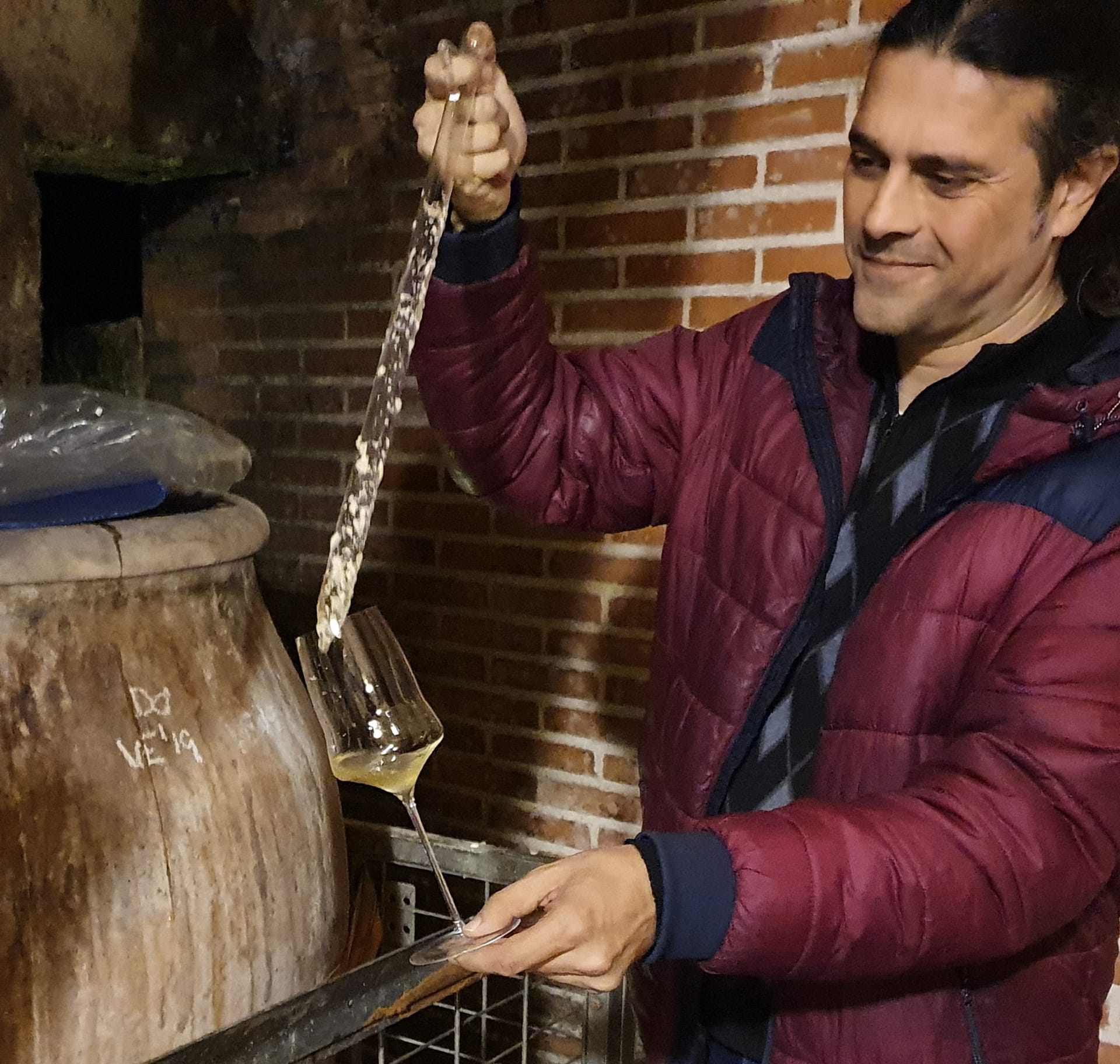
I met Jorge Vega of Puerta del Viento in his home and bodega in the small settlement of Arborbuena outside Cacabelos in Bierzo. Here he has a small bodega that covers more or less everything in a single room. Well, I said Bierzo. Jorge is a maker of natural wines and doesn’t put much effort in thinking about the other producers or the regulations of the wine authorities. Rather he has his network of fellow artisans and his true customers. And he is an acknowledged expert, and many producers turn to him when in doubt.
Jorge is from Cacabelos, one of the main towns of Bierzo, where the consejo regulador is located. It was his mother-in-law who came from Arborbuena, and the reason that the winery is located exactly here. Jorge disposes of an estate of 15 hectares in the settlements of Canedo and Pieros, not far from the winery, and there is a total of 3,5 hectares of vineyards. Jorge never clarifies nor filters, and never adds sulphites. The fermentations are done in big old chestnut barrels, and his tinajas are from Juan Padilla in Villarrobledo (Castilla-La Mancha).
Outside the temperature was below zero, and the bodega was not much better. Still we tasted around ten samples of wines, all from the 2022 harvest. Among the wines that stood out was an appley and cidery godello with doña blanca, also with a hint of honey. In the mouth it showed high glycerine and also high acidity, thus showing a perfect balance. This wine comes under the name Bajo Velo, that means “under ‘flor'”. To name it doña blanca is however unjust to Jorge. He calls the variety valenciana, as this is the name the locals use. JaJa is a valenciana with 30 days of skin-contact. It’s has some orange peel character, complemented by flowers and a strong mineral component, and with some tannin in the mouth. YeYa is a clarete made from 7 varieties, including pan y carne. It was wonderfully fresh, with red berries (raspberry, strawberry) with flowers, fizzy on the tongue with a light structure and an “electric” acidity. It had a bit residual sugar, that contributes well to the balance. Puerta del Viento is a red mencía, with good colour, somewhat blueish, blackberry and violets perfume, a light structure and fresh acidity. And Puerta del Viento Viñas VIejas is an old vines version of the same, with darker fruit (blackcurrant), ink, with young tannins, but still very luscious and drinkable.
Then came the wine in the introduction. Extinto. The wordplay is perfect to denote this tinto, from a nearly extinct variety.
Pan y carne, or estaladiña, is one of the new varieties recognized by the DO Bierzo in their new regulations. The consejo regulador tells that it is less than 2 ha. in total of the grape. This includes the 600 plants that Jorge grafted in Canedo vineyard some years ago. Prior to this he had done a great job to verifiy genetically that it actually was the variety in question, described by the acknowledged agromomist Nicolás García de los Salmones more than a hundred years ago. (A note on the side: I have in fact tasted an estaladiña before. But as Jorge points out, it is very likely to be another grape, a synonyme of merenzao, and not pan y carne.)
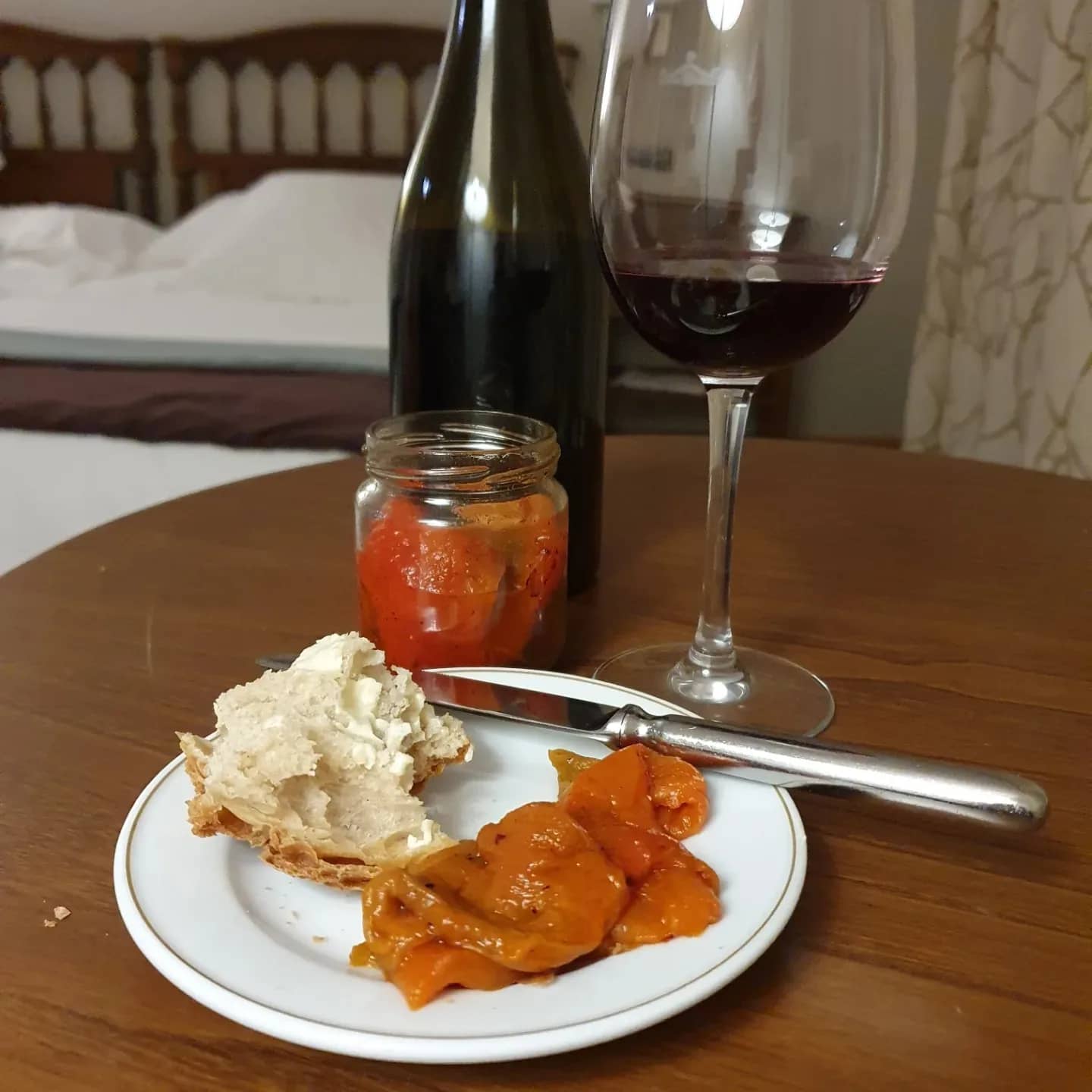
In my room at the parador of Villafranca I had Jorge Vega’s wine, with artisan bread and piquillo peppers made by his neighbour. My sample bottle was without label.
Extinto 2021 (Puerta del Viento)
Dark, blackish with violet hints. Concentrated aroma, young, blackcurrant, violets, ink. In the mouth it is vivid, has some structure (tannins and acidity), though nothing aggressive, hint of coffee-sweets, and a long and fruity finish.
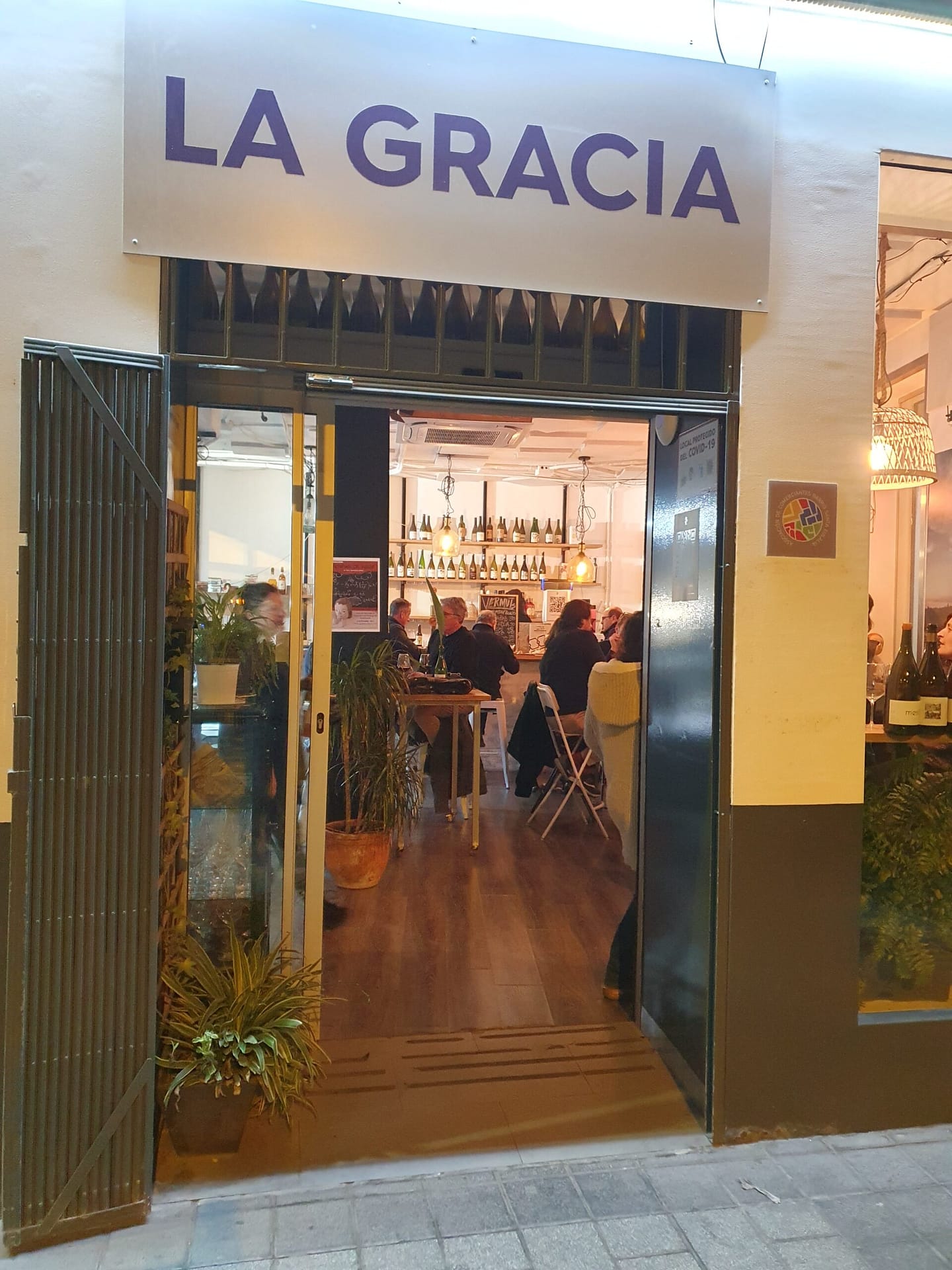
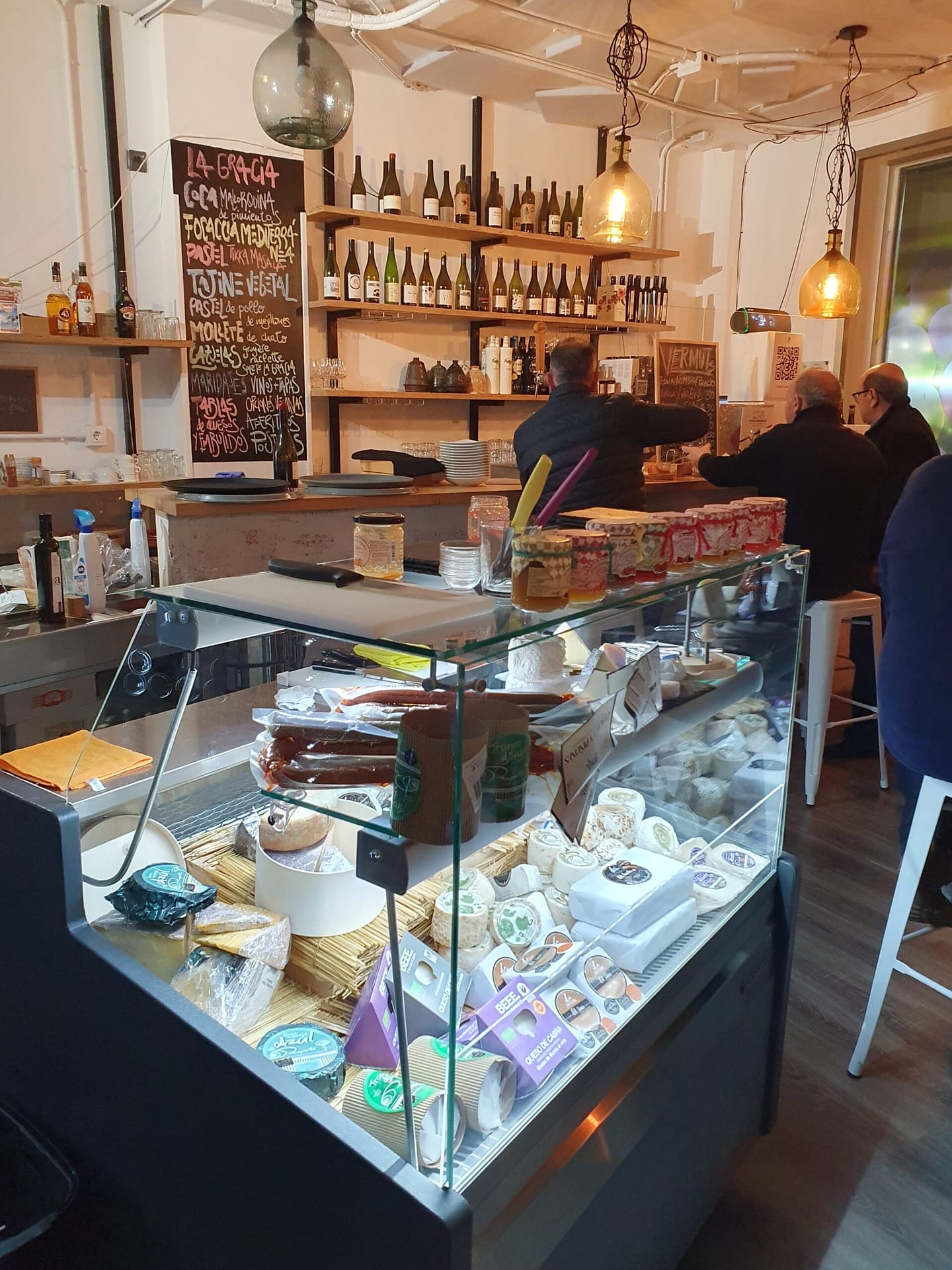
La Gracia is a small and cozy natural wine bar that opened in 2020, when the pandemic was at its height. It’s found in Murcia capital, Spain, in one of the narrow streets behind the city hall and the cathedral in the Santa Eulalia district. They work with artisan producers of wine, cheese and also beer and other products. The owners are Esperanza Pérez Andreo and Cristina Ramos Berna. They have strong ties with local and regional producers from whom they buy directly.
I was there twice at the end of the year, including New Year’s Eve. We sat on the “terrace” (i.e. the plaza behind the first street) near midnight, and then inside the bar around noon. We chose from the cold and the warm tapas menues, and from the by-the-glass wine selection, that counts on around 30 references.
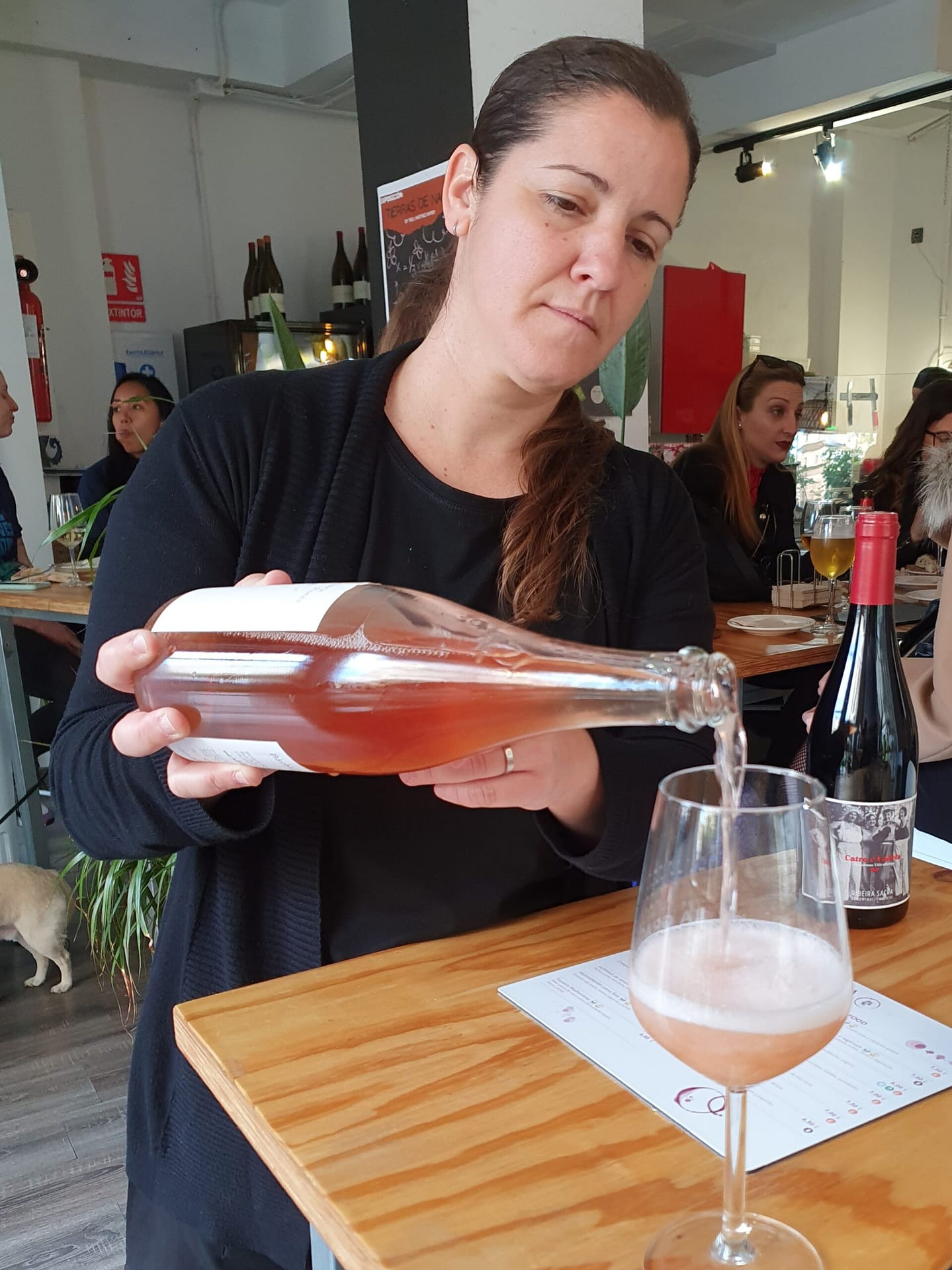
Esperanza Pérez, responsible for the wine selection
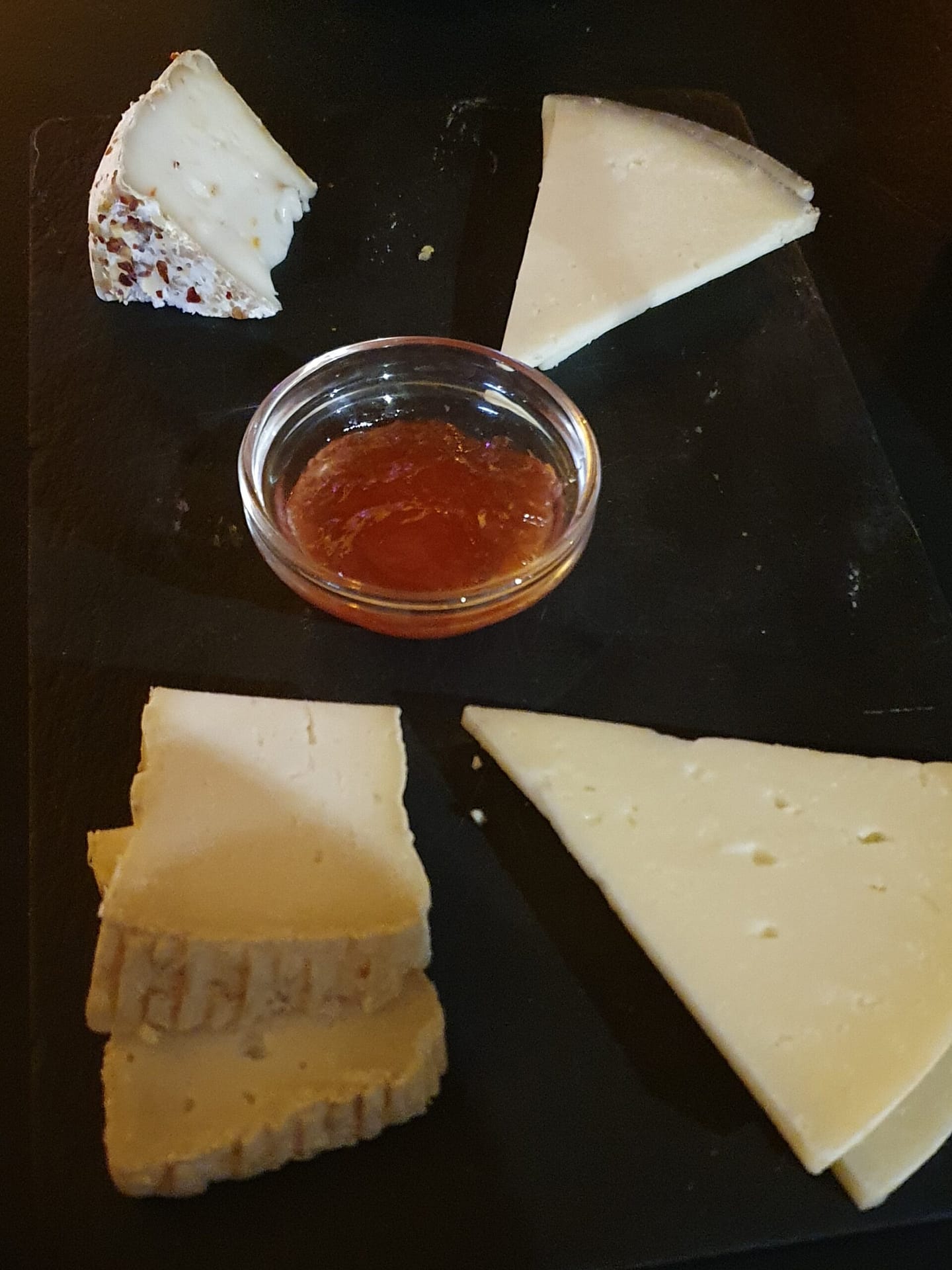
Among the small dishes we chose was a “cured” cheese selection. The first one was a young and fresh, but oh so tasty, cheese from Cartagena, then a 3-4 months cured goat’s cheese soaked in red wine, then a 9 months cured cheese from San Javier called ‘El Abuelo’ (the grandfather) and finally a wonderfully complex cheese from a mountain between Cartagena and Mazarrón. The watermelon marmelade was from coastal San Javier.
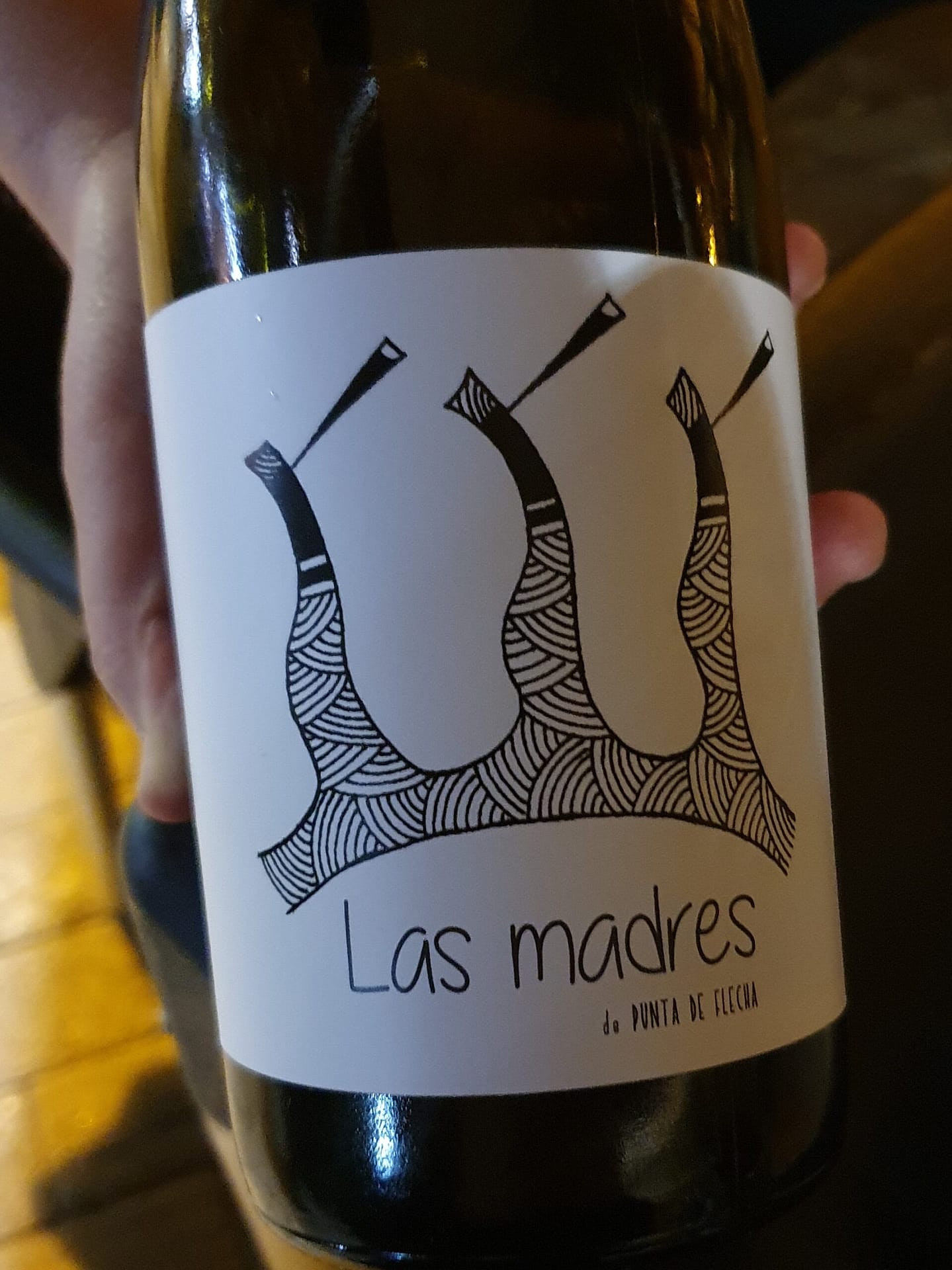
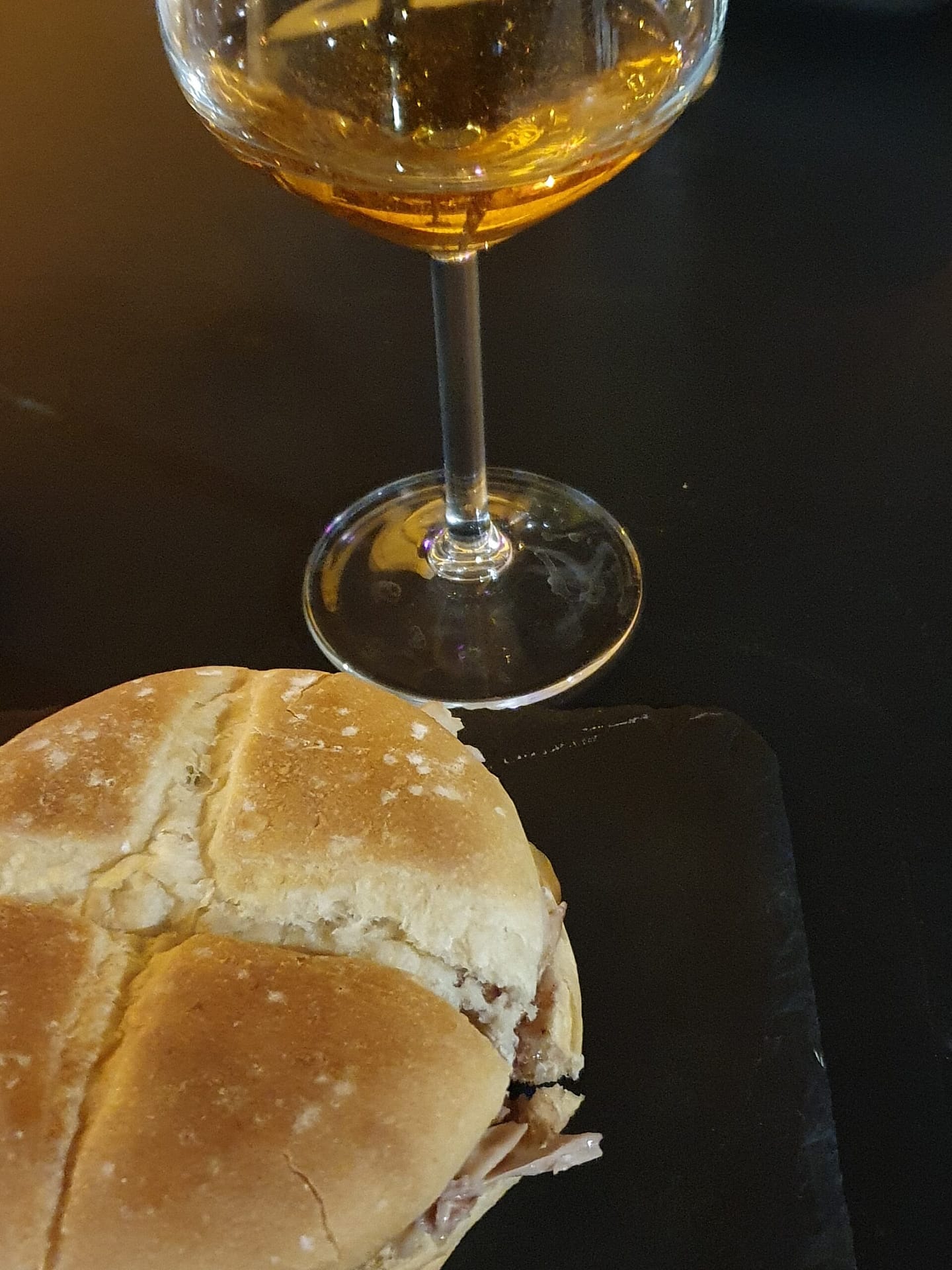
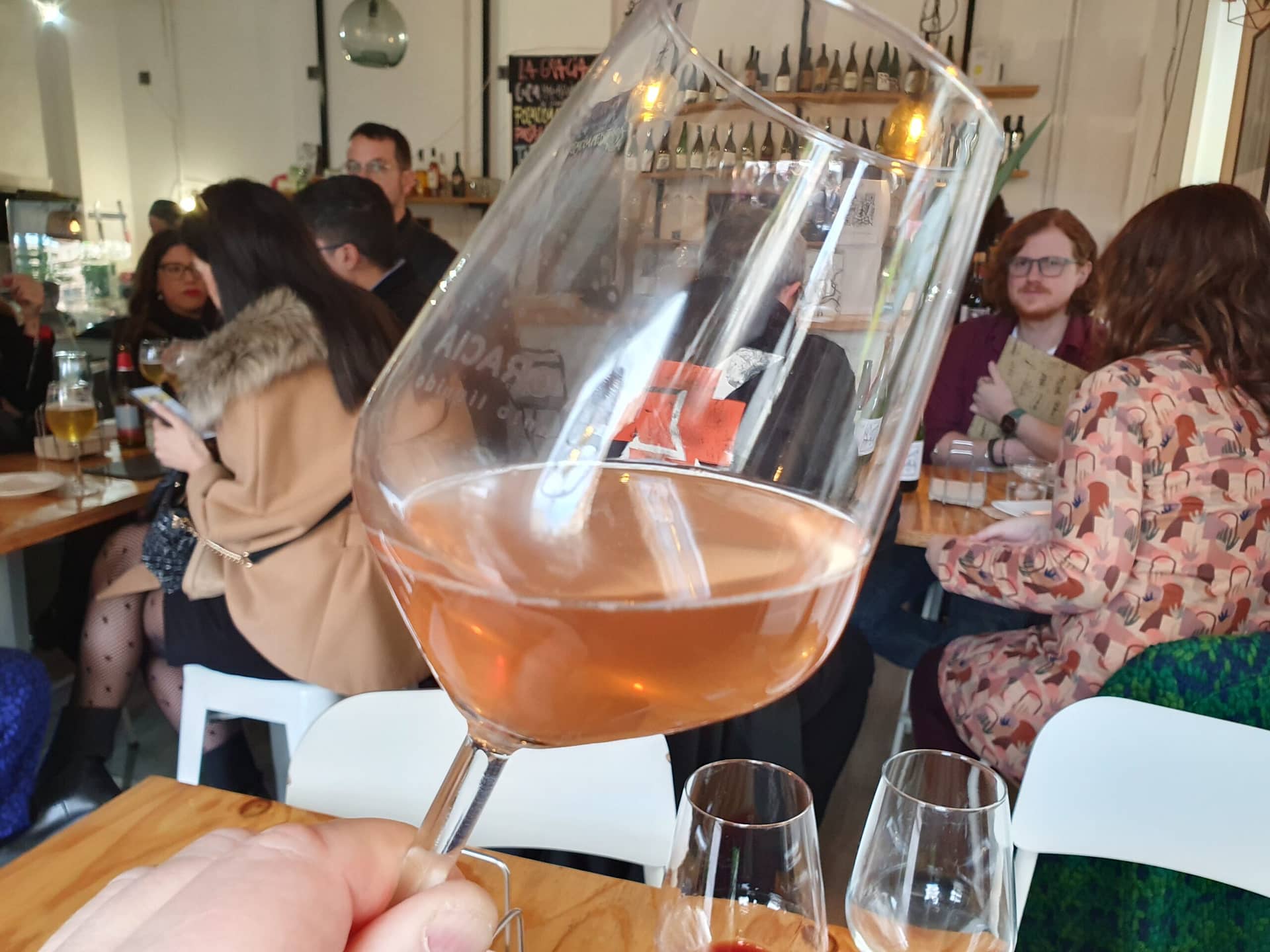
The wine list contains established and new natural wine stars from Murcia and elsewhere in Spain. We started with Las Madres 2020(Punta de Flecha), a light skin-contact white from the Madrid area. The grape is malvar, and like many other wines from that variety it is low on acidity but rather textured. Amber coloured and slightly fizzy, it had a nice aroma of flowers and orange peel.
Las Madres with chicken brioche
Viña Enebro is rather well-known in Spanish natural wine circles, and you can read about a visit in Bullas here. El Yesar 2020 is a white wine made from the red grape forcallat. Hence it has a little blush of red. It’s round and tasty, and the aroma includes traces of citrus (clementine) and herbs.
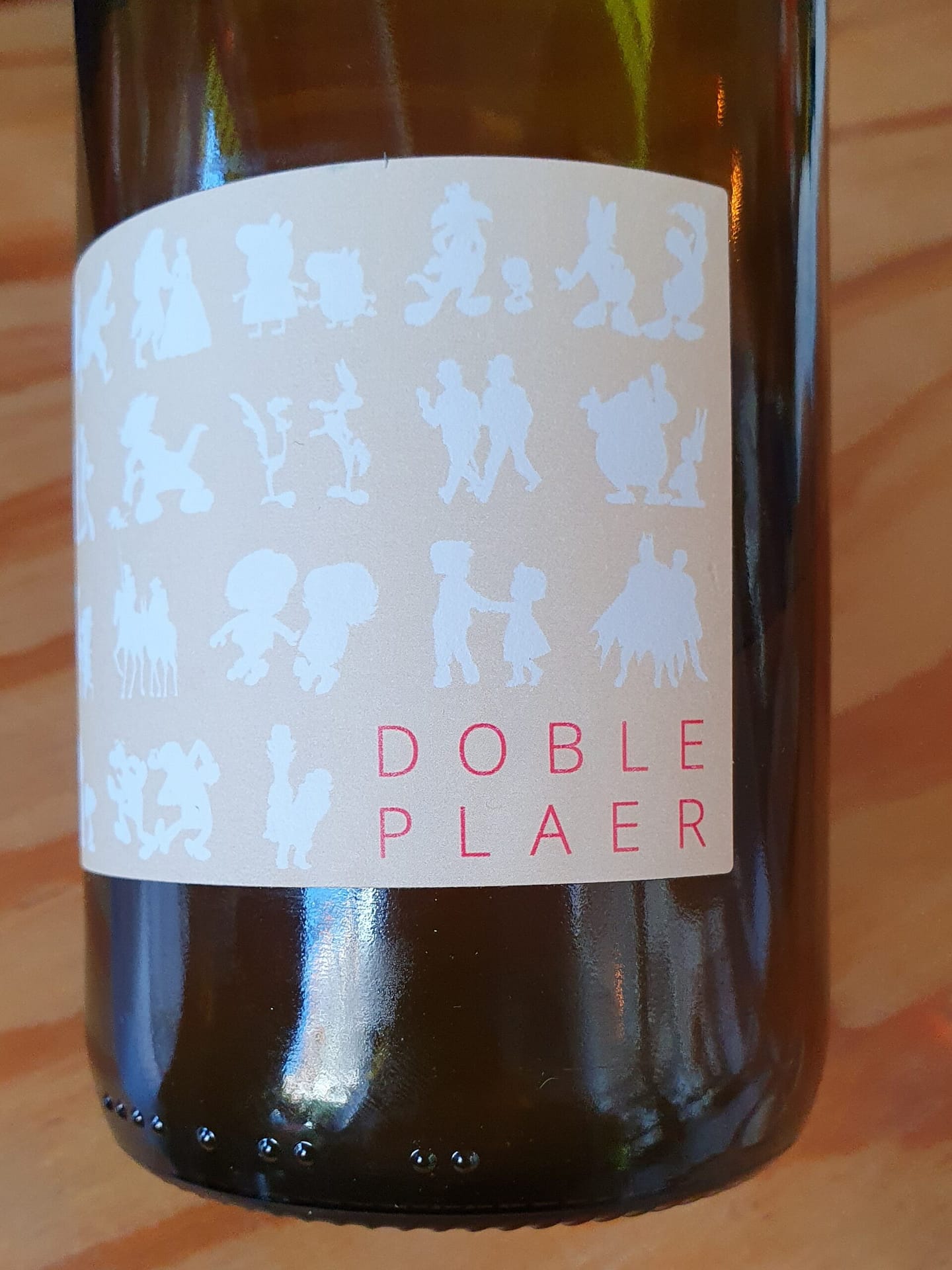
At the second day I asked for whatever white wine and was served Doble Plaer 2020 from Vinyes Singulars (with collaboration from Toni Osorio) It turned to be a wonderful wine with a phenomenal acidity, almost electric. It has a good body too. Light orange in colour, and somewhat cloudy, with an aroma of citrus peel (lemon) and flowers over black tea. Long aftertaste where the citric notes linger. The grapes are malvasía de Sitges and parellada.
The two first reds were revelations from the Murcia region. Negrete 2021 from Negrete Blue is a monastrell/garnacha tintorera from no less than 1.373 meters of altitude in the Bullas denomination. It was a fresh and juicy, berry-dominated, young wine, with blackberry and blueberry in front.
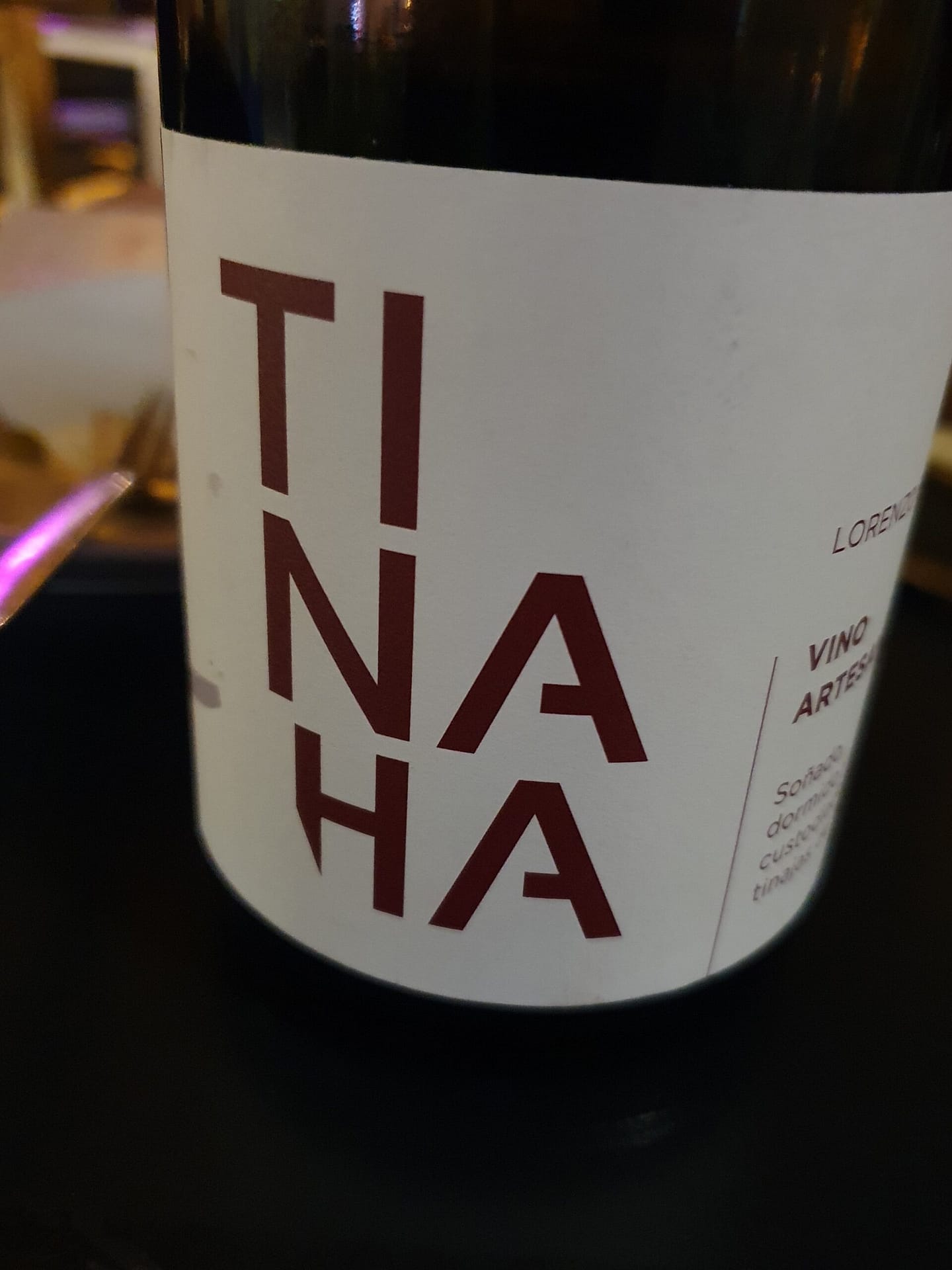
Tinaha 2020 comes from the bodega of the same name. It’s found between Molino de Segura and Jumilla to the north of the regional capital. As the name implies they believe in ageing in clay (tinajas). The varieties are a local field blend, and so monastrell should be among the suspects. The wine had red berry notes, but was more dominated by a clay minerality with flowers, and had a juicy taste with a long aftertaste, and especially for the region, good acidity.
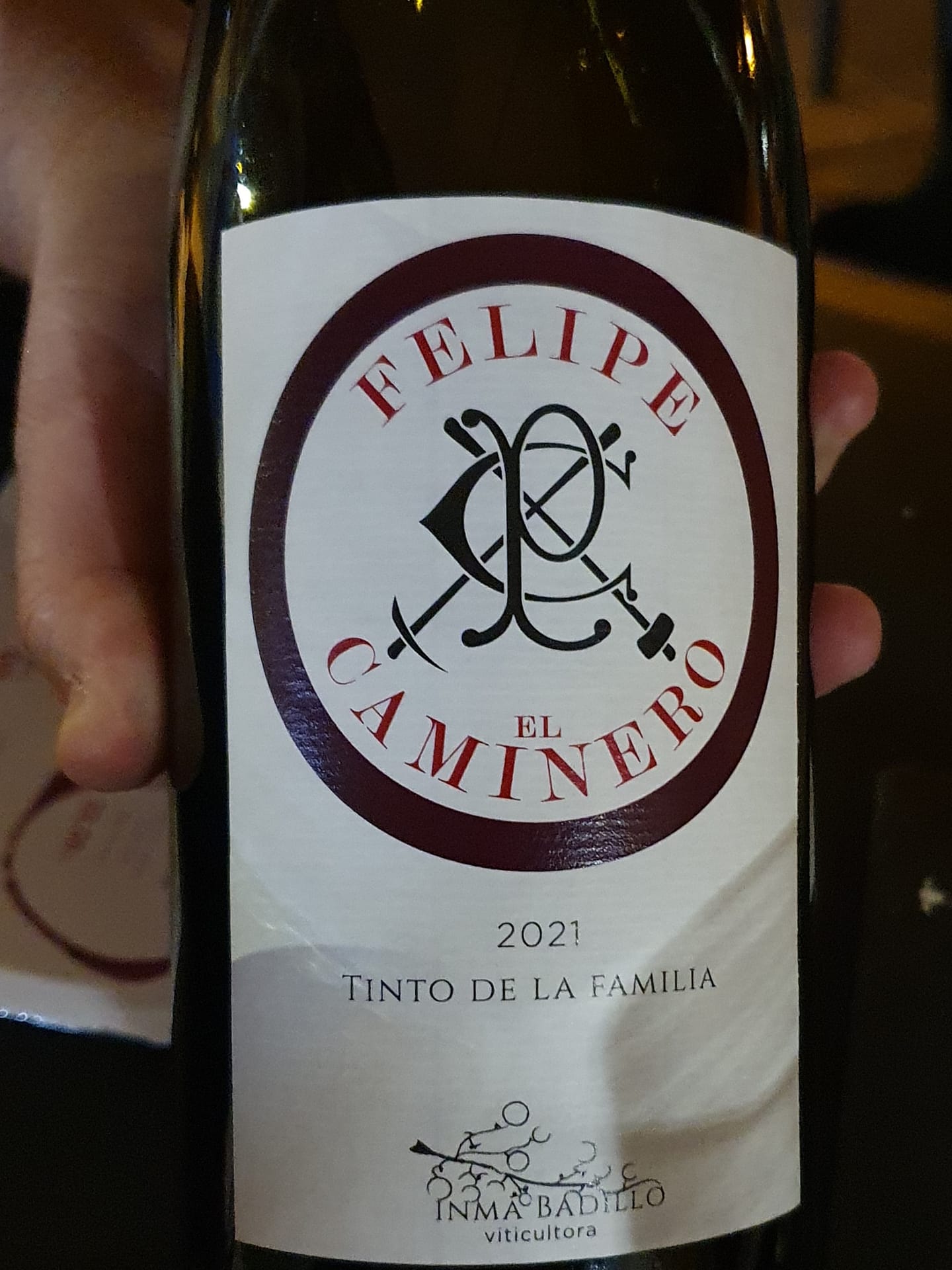
We tasted two reds from Castilla. Felipe el Caminero 2021(Inma Badillo) is a fresh tempranillo/ juan garcía/bruñal blend from Arribes del Duero, close to the Portuguese border (provinces Zamora and Salamanca). It’s a pure, very juicy and fruity wine with lots of berry character. La Payana 2020 (Cható Gañán) is completely different. Made from garnacha on granite soil in the Sierra de Gredos, it has a more serious air to it. It has some of the etheral character often associated with the Gredos garnachas, and some of the minerality behind the red fruits. The oak shows delicately on the palate.
Since I was back on New Year’s Eve I took the opportunity to round off with a sparkling wine. The choice fell on En Moviment A 2020 (Bàrbara Forés) from Terra Alta, Catalunya, made from the local morenillo grape. The sparkling rosé smells of peach and grapefruit. There is an acidic attack in the mouth, the wine is slim in the middle, but the citrus acidity strikes back and gives it a lift towards the end.
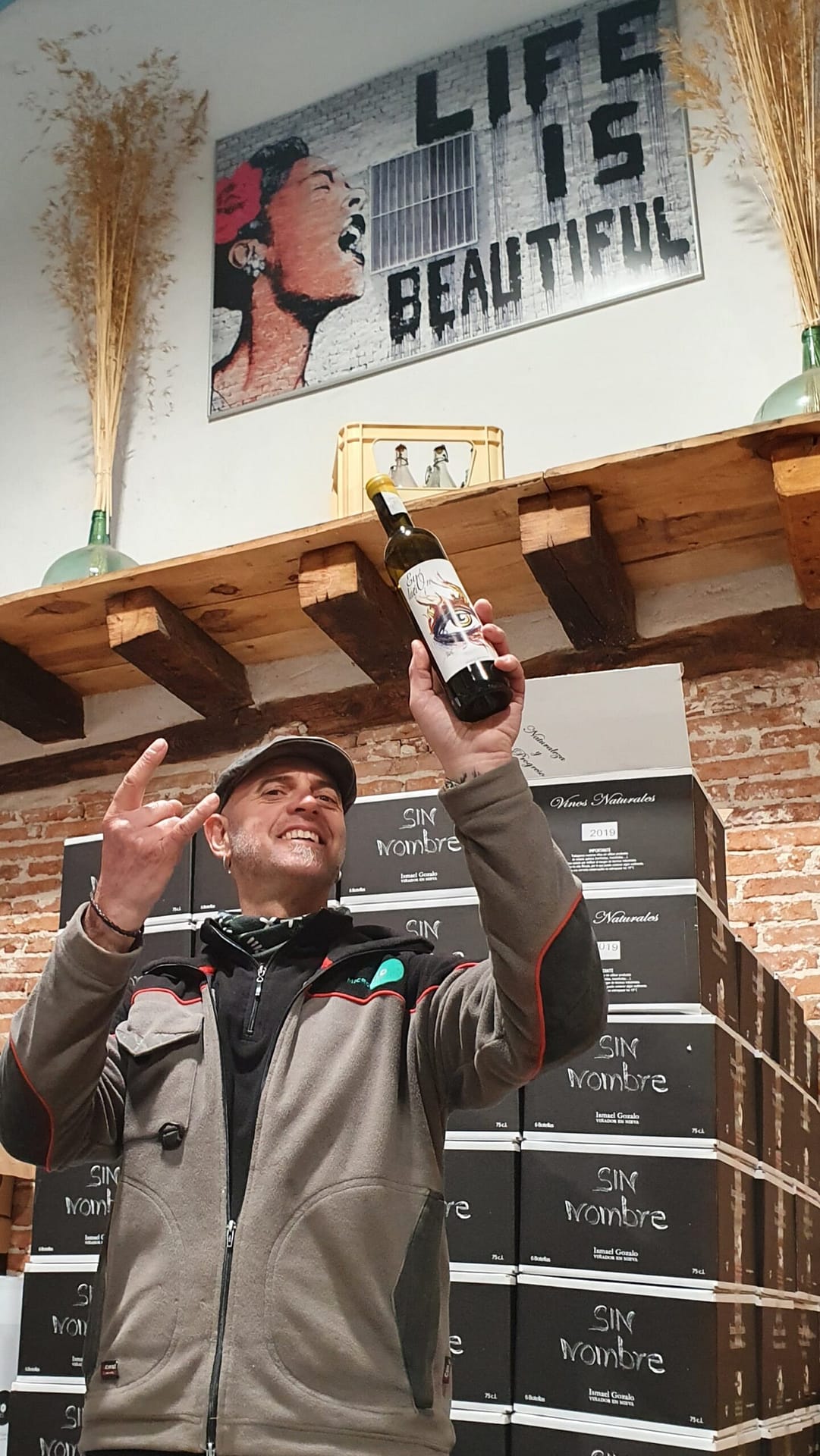
Ismael Gozalo has proved that he can take the verdejo grape to new heights. With basis in the family vineyards of Nieva, Segovia (averaging 180 years old, around 900 meters altitude) he has various takes on that grape.
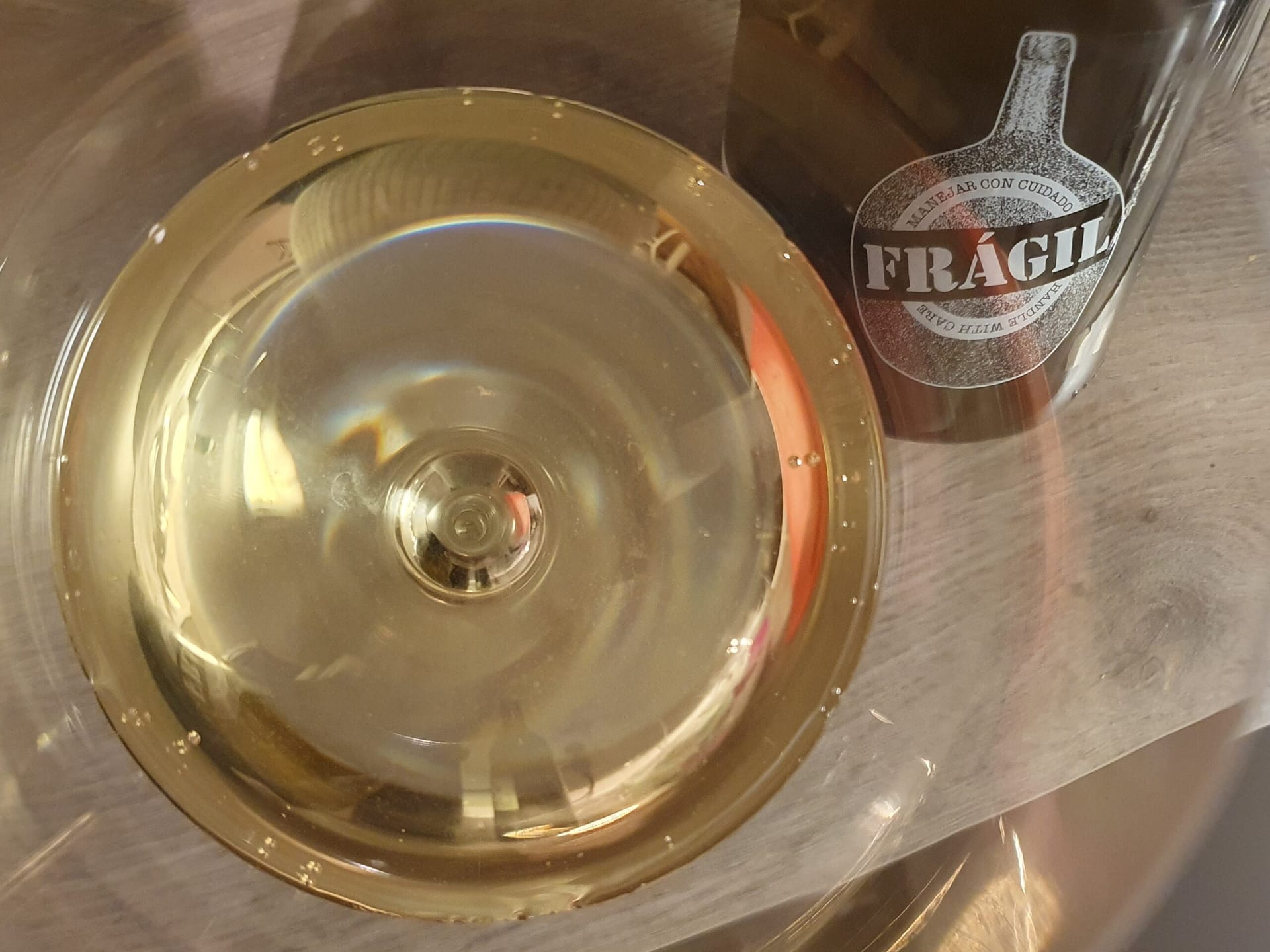
The grapes for the wine Frágil were pressed and fermented naturally in 16-litre demijohns. The wine was further matured in the same glass containers for a further 7 months before being bottled, unfiltered. It is not sulphured and has only been kept in glass after harvest. 670 bottles made.
Frágil 2021(Ismael Gozalo)
Light yellow, slightly cloudy. Aroma of ripe citrus, white flowers and yellow apples. Creamy lees character, some dryness, taste of ripe stone fruit, mineral, good acidity and good length. It’s a delicate, subtle wine yet with a strong varietal character.
Here is my second article from this year’s Simplesmente fair, where I present updates from producers that I already knew well. I tasted everything they offered, but I will try to restrict myself to presenting only a few wines.
(Read the first article from this year’s fair here, about some re-discoveries of wineries I knew a little.)
Antonio Portela
Antonio Portela from the Morrazo península, Galicia, Spain was a special guest this year. Chance had it that I started my tasting experience by his barrel. The occasion is a sad one, he is not able to continue his work for economic reasons. That means, if not anything unexpected happens we will not be able to taste his wonderful, fresh, saline wines anymore. Antonio has other activities to fall back on, such as writing and teaching, so he refuses to call the situation dramatic. Okay, but to call it a pity is to put it in a very careful way. The white (Mar do) Namorado he offered in the 2020 and 2018 vintages. It is a 85% loureiro, the rest albariño, espadeiro a.o., grown in sand on the beach. The 2020 had a light colour; aroma of citrus, flowers and yellow fruits; wonderful acidity and concentration, long with a salty aftertaste. The 2018, in comparison, had a honeyed edge, but still with plenty of acidity and concentration. The red tinta femia Namorado 2019 was light with red fruits (raspberry), a touch anise, and with a saline finish. The Namorado Berobreo 2019 was in the same line, light in colour and with a super acidity. This one was made with whole bunches.
Miguel Alfonso, Pedralonga
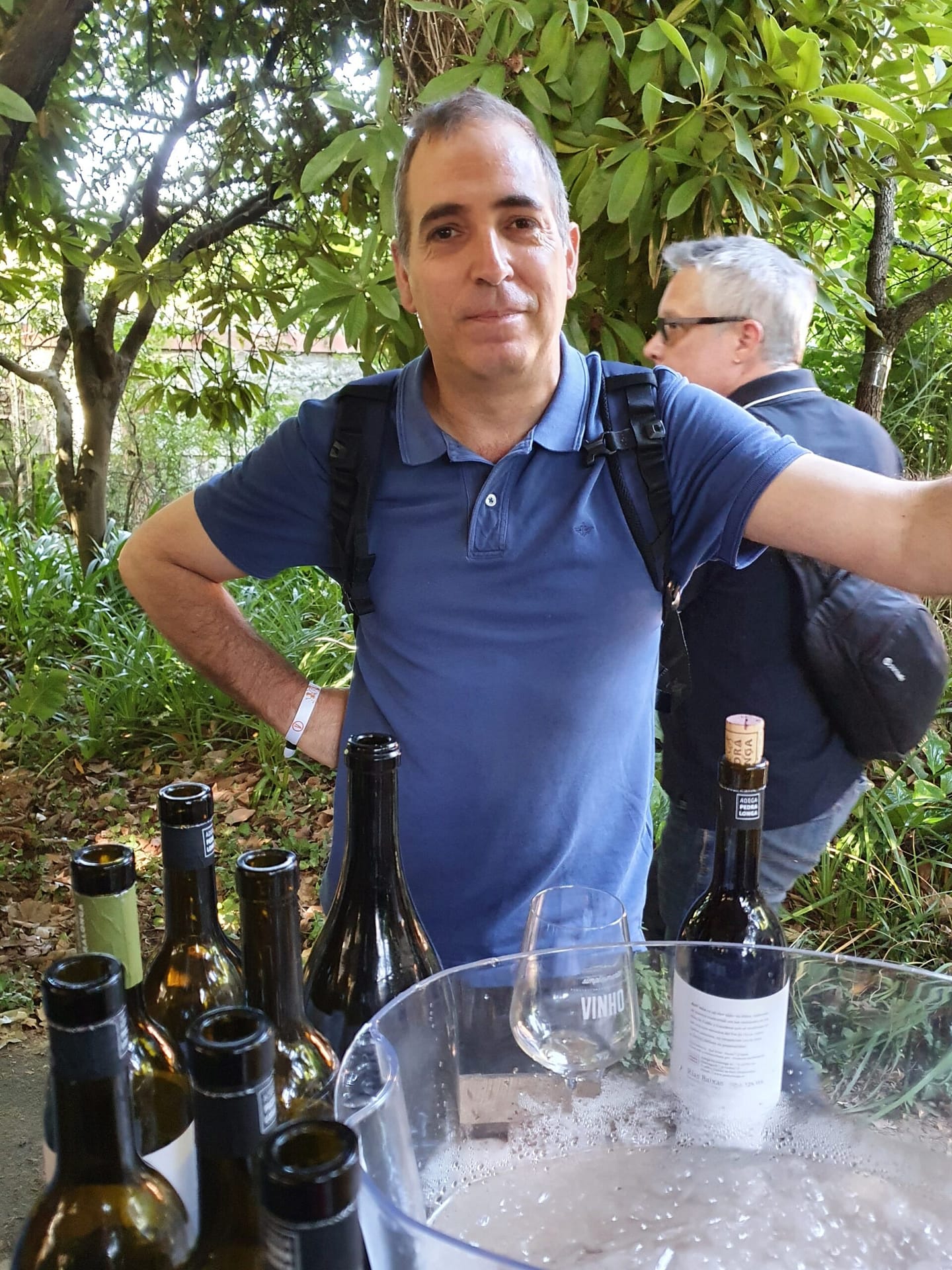
Miguel Alfonso’s family has produced wine for generations in Val do Umia, in the Salnés part of Galicia. The current winery, Adega Pedralonga, was founded in 1997 by Miguel’s father Francisco, and biodynamic practises were implemented ten years later. Miguel says that the work is professionalized, but it follows the philosophy of the ancestors. This means they plough only when necessary, Also in the cellar they do as little as possible. Albariño is not de-stemmed, only natural yeasts are employed, malolactic fermentation is not blocked and all wines get an extended ageing on lees. The Pedralonga vineyards sit on granite soils and are influenced by an Atlantic climate, which very much shows in the wines.
Pedralonga 2021 is a classic, with its fresh aromas of citrus and flowers, wonderful texture, steely acidity, salt and a flinty mineral finish. One of the great whites of the fair. The same can be said of their Carolina 2021, made from caíño blanco, with a greenish hint, quince and herbs, unctuous with a grapefruity aftertaste. Tinto de Umia 2019 is light red with a bit of evolution, red fruits, a touch of smoke and a lovely acidity and a saline finish.
Alfredo Maestro
Alfredo Maestro operates in both his native Peñafiel (Ribera del Duero) and in Sierra de Gredos. Since 1998 he has vinifyed each plot according to its peculiarities, with native yeasts and without chemical products. The artisan practise continues in the cellar, where no machines are used. Wait a minute: Few machines are used. But I have seen on YouTube that Alfredo experiments with drones to do various work in the vineyard. A machine yes, but this is also to minimize the use of that sort.
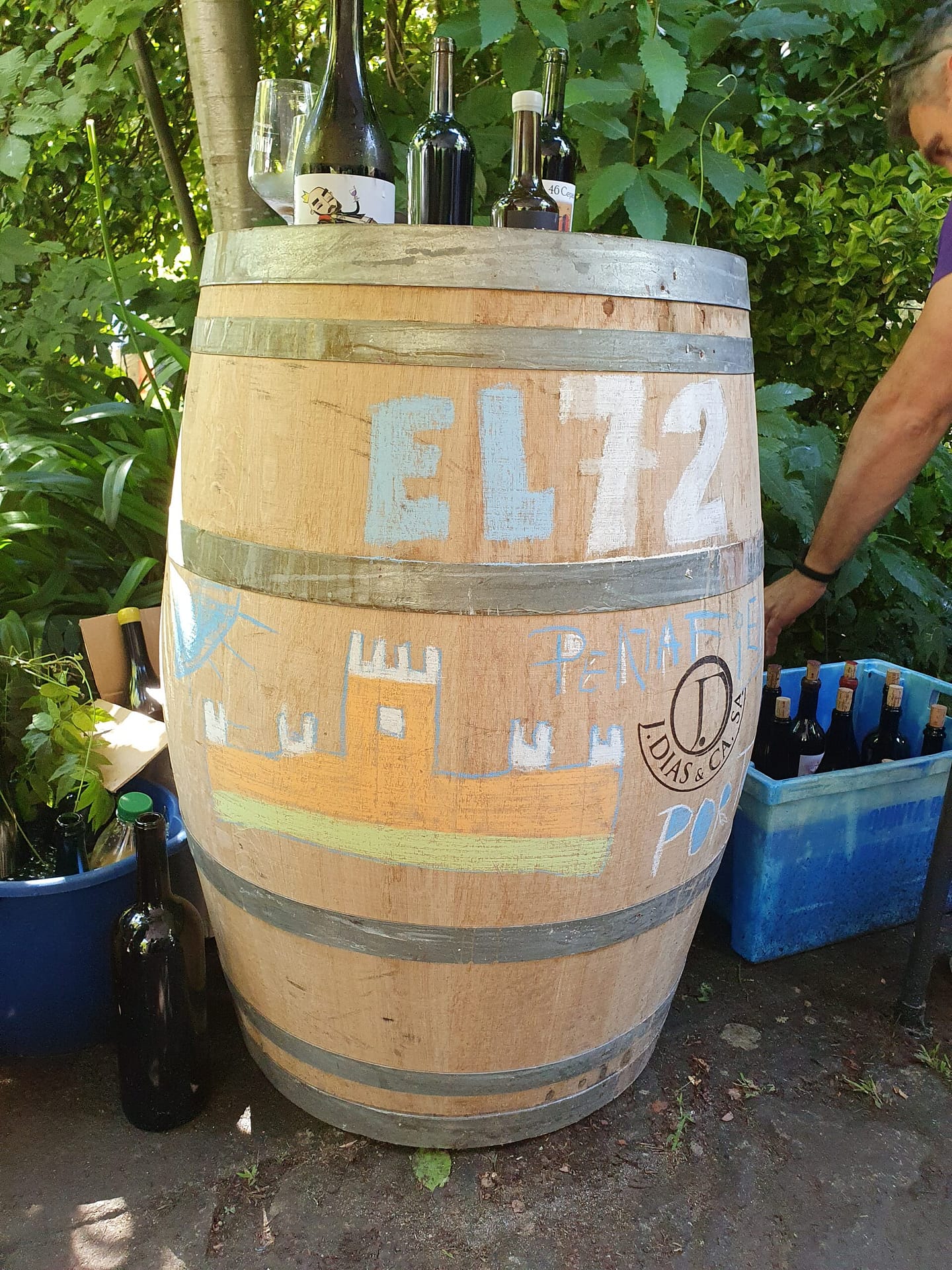
Alfredo put his signature on the barrel, such as a drawing of the Peñafiel castle of his hometown
Rey del Glam 2021 is an elegant example of the carbonic maceration garnacha. A mix from both Ribera and Gredos, it shows fragrant red fruits with licorice; juicy in the mouth, also with some structure. Almate 2021 Is an un-oaked Ribera: Dark cherry; red and wild fruits (cherry, blackberry); full-flavoured, yet with fine tannins. The skin-contact albillo mayor Lovamor 2021 and the partly flor-aged albillo mayor Consuelo 2020 delivered as usual. So did the speciality La Cosa / The Thing 2020, a sweet moscatel de alejandría. It’s interesting that someone makes a Cigales these days. Alfredo has an interesting garnacha gris called La Badi 2021, made with three days skin-contact. Therefore it achieves a light red colour with greyish hints (“ceniza y cigarro”, ash and cigar, Alfredo calls it). It’s a juicy glou-glou, truely fascinating. I have a crush on Rosado Clásico deValladolid, now in its 2019 vintage. It’s in fact a clarete (in Spain made of red and white grapes, the same as a Portuguese palhete). It’s made with direct press, half in botas de Jerez, half in chestnut. The colour is pale red with an orange tinge, aromas of red berries (raspberry, plum), dried fruit and leather; the acidity and the alcohol (13,5) are integrated, while the tannins, fine-grained though, struggles to see if they can break out.
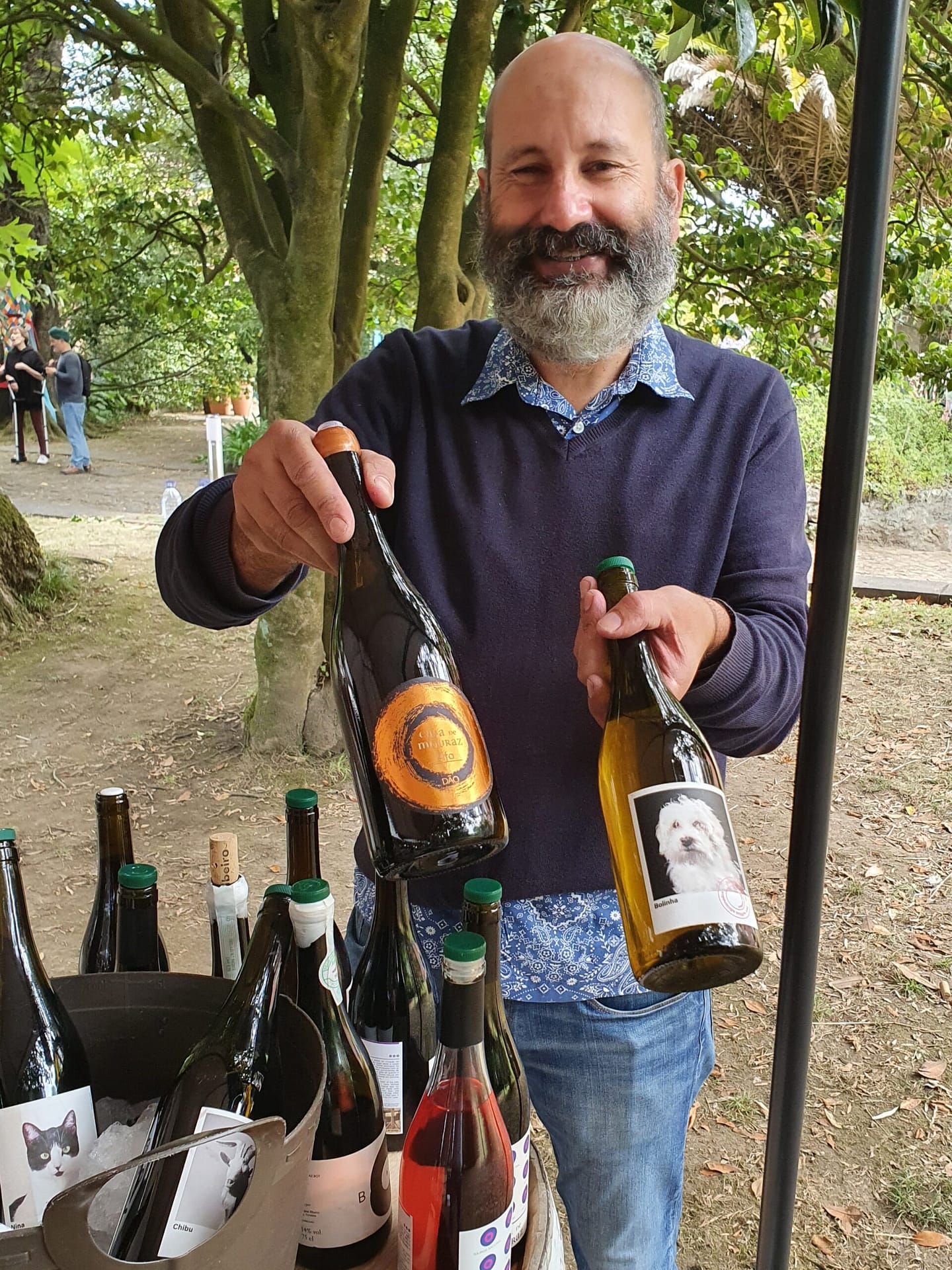
António of Casa de Mouraz presenting the Elfa and Bolinha wines
I visited Casa de Mouraz after 2017, the hot year with the devastating fires. (Read about the visit here.) They make fresh and inspiring Vinho Verde wines under António Lopes Ribeiro’s initials, alr. Here I choose a few Dão wines. Casa de Mouraz Encruzado 2020 is a perfumed varietal, with the extrovert fruit that the grape can offer, wonderfully balanced. Casa de Mouraz Palhete 2021, a field-blend of 80% red grapes, the rest whites, was light in colour, with concentrated raspberry and strawberry notes, an intense flavour and balanced acidity. Elfa 2017 made from 95 year old vines, with 30 different grape varieties co-planted. Worth mentioning is that there is no touriga nacional (not normal in Portugal, especially when there are that many varieties employed) and no oak. A red fruits- (cherry, raspberry) fruity wine with an underlying pine character; it has a fine structure and good balance. António also presented three wines without DOC, under the umbrella Planet Mouraz. The fact that they come without a DOC would most often mean that they are unfiltered. I tasted two vintages of the white Bolinha, namely 2021 and 2017. This is also a field-blend, fermented in stone lagar and stayed with skins for one week. The 2021 was clearly unfiltered; light golden, turbid; with an intense aroma of yellow fruits and herbs; grapey and full. The 2017 had a bit more colour; intense, with apricot and honey; quite big and full-flavoured, long and balanced. Bolinha is the name of the dog on the label, by the way.
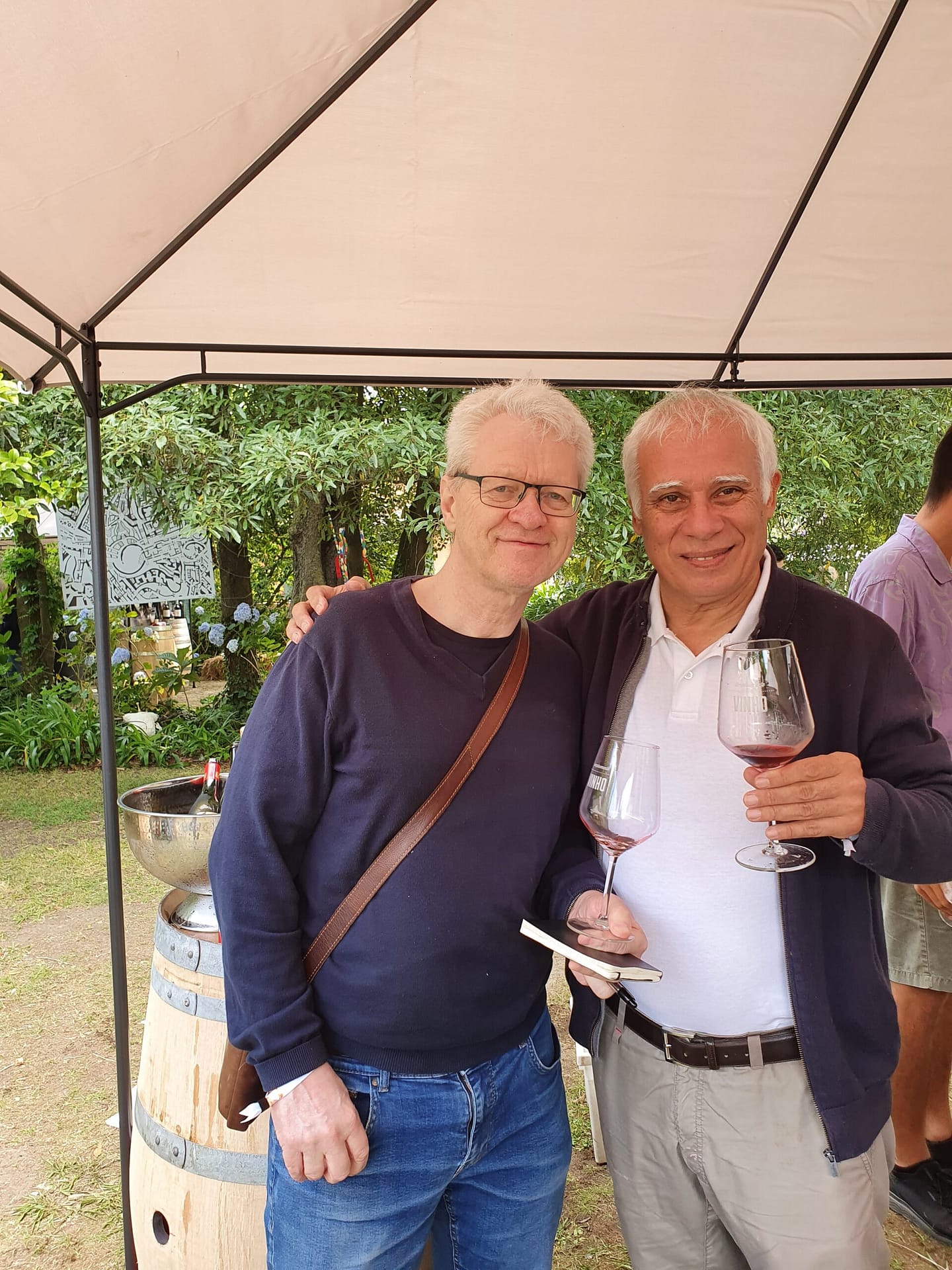
Meeting up with José Perdigão
It’s always a pleasure to meet José Perdigão, architect and vinegrower of Silgueiros, Dão, and taste his wines with labels by his wife Vanessa. A long-time favourite among his wines is the Quinta do Perdigão Rosé, now in its 2021 edition. It’s a rosé with some colour (José can maybe “arrest” me, but I would say somewhat less colour than before). It’s a full-flavoured rosé with aromas of raspberry and currant, and fresh acidity. Another classic from the house is the Alfrocheiro 2013: Dark cherry red with dark fruit aromas (blackberry, blueberry), pine; structured in the mouth, elegant, and very much alive after almost ten years. One that I don’t remember to have tasted is Noël 2015 (named after his youngest son). This is another wine that has kept well: Dark cherry; ripe red fruits (cherry, prunes); smooth, full of flavours. Still potential for ageing.
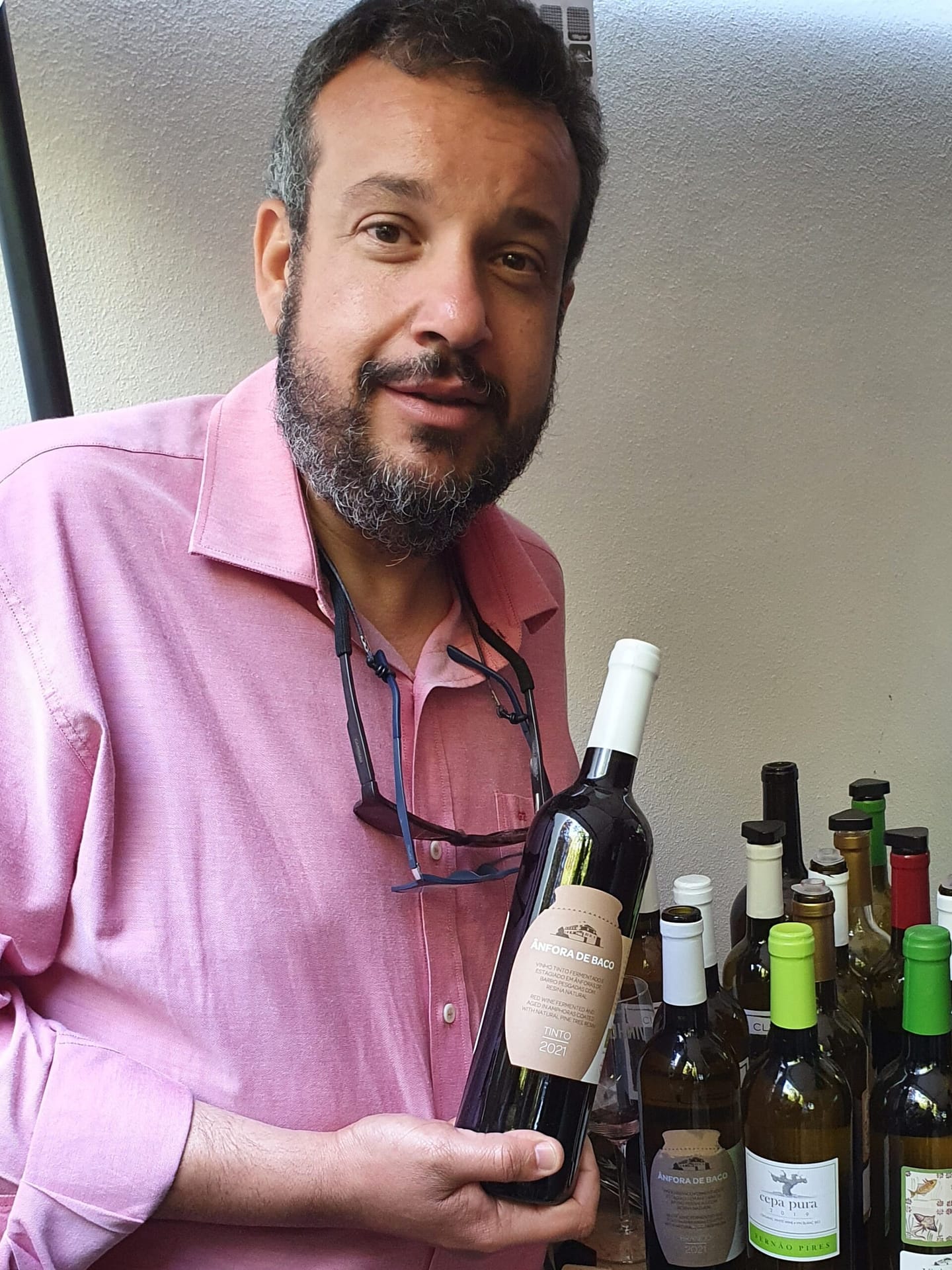
Lastly a trio from the Lisboa region. André Gomes Pereira and his Quinta do Montalto are actually found in the municipality of Ourém, in the Santarém district. But the wines are launched under neighbouring Lisboa’s regional.wines, if not DOC Encostas d’Aire (Medieval de Ourém). Pioneers in Portugal, since 1997, all crops at Quinta do Montalto are organic.
His medieval wine, a red and white blend, must be mentioned. This year I was in a hurry and skipped it though. I tasted his amphora wines for the first time. The vessels are made locally. Originally the manufacturer used epoxy. André said that this is “cheating” and against tradition. He said to André, why don’t you do it yourself? Then, as a statement, André decided that he would himself coat the amphoras with resin. Ánfora de Baco 2021 white is a varietal fernão pires, made 30% with skins and 3 months ageing with skins and on lees. Golden colour; flowers, resin and yellow fruits; full on the palate, fresh and Atlantic. The red equivalent with the same name is made from equal quantities trincadeira and aragonêz. Garnet red; red fruits (cherry), stonefruit (plums); super acidity and salinity. Cluricun Skin 2021 from grape varieties siria and fernão pires, 3 months on skins, was a peculiar wine. Pale amber colour; aroma of clementine and nuts; medium-bodied, with a light tannic grip.
Pedro Marques of Vale da Capucha (Turcifal, Torres Vedras) is a top producer, right there up with the very best. I could have mentioned all his wines. I will not, but I can say that they are focused, elegant and shaped by the terroir. The vineyards are planted on kimmeridgian limestone with clay. The white Fossil 2017 sums it all up. The name tells the story of a winery only 8 kilometers from the coast, in earlier times under water. Fossil has a light golden colour; aroma of citrus, white flowers, wax, chalk; a mineral taste, quite full and with a super integrated acidity. A lovely wine at a very nice price. Vale da Capucha Arinto 2019 is for me a star among his varietal wines. It’s light yellow; concentrated aromas of citrus (lemon and peel), yellow pepper, chalk; medium full in the mouth, mineral, with a lovely integrated acidity. Vale da Capucha Palhete 2019 is a blend of the white arinto and the red castelinho, made by “inking” a white wine with the red castelinho, then co-fermented in steel before bottling. Light red; red fruits (raspberry), salt; juicy, carefully structured.
Daniel (Baías e Enseadas, left) and Pedro (Vale da Capucha)
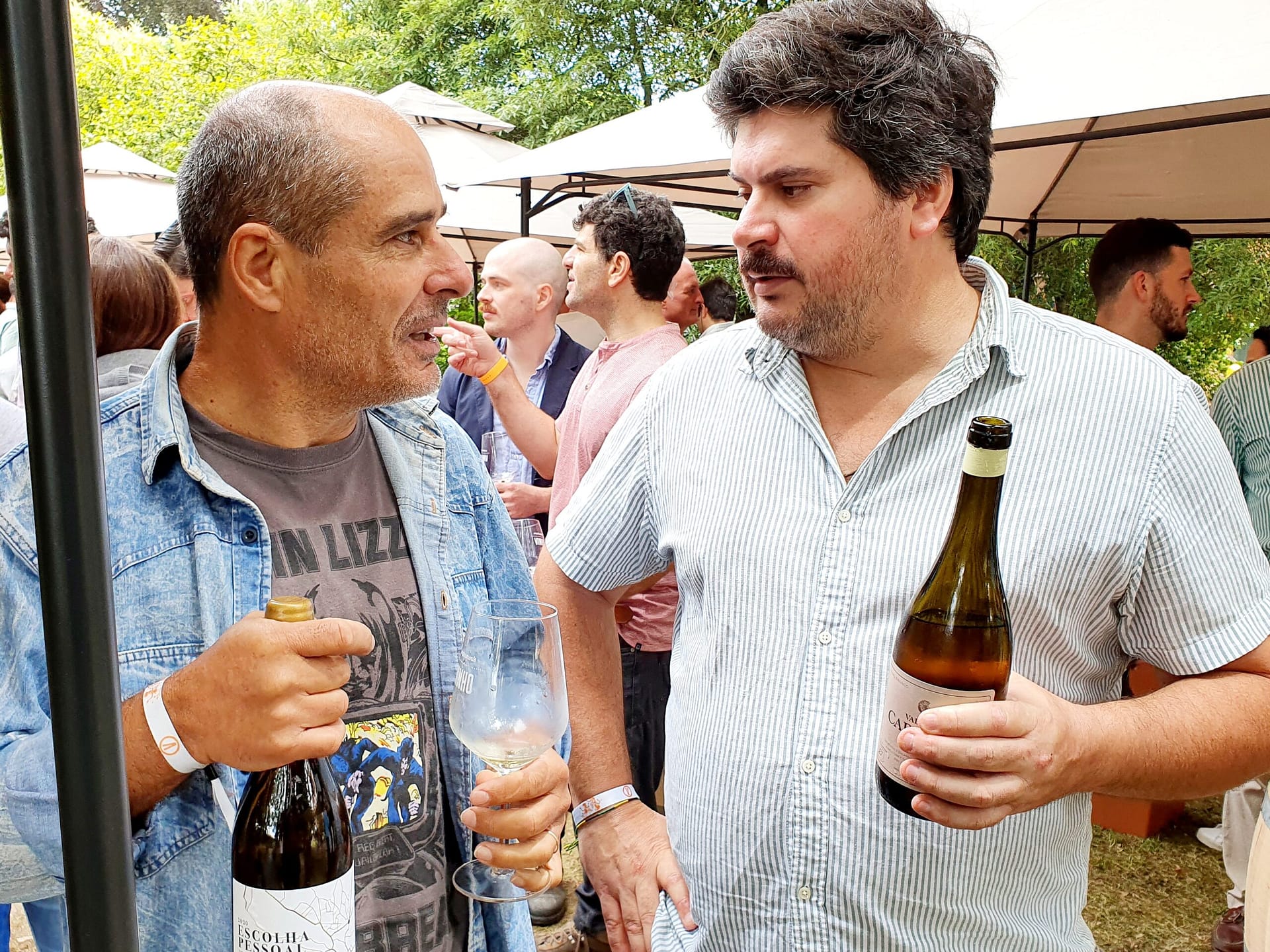
Baías e Enseadas is located in Codiceira, Colares country, west of Lisboa capital. They have a more mature style. Daniel Afonso says, “I want to extract all I can from the skins”. The white Fernão Pires 2020 had stayed 6 months in barrel, with a lot of batonnage. -I always have acidity, says Daniel, now I want to work on the creaminess. And yes, a creamy texture together with a good acidity was achieved here. The Escolha Pessoal 2020 could be found along the same path, though a bit more concentrated and also elegant. Castelão 2020 showed mature fruits, alongside flowers and a hint licorice; juicy and quite complex, and a fruity finish.
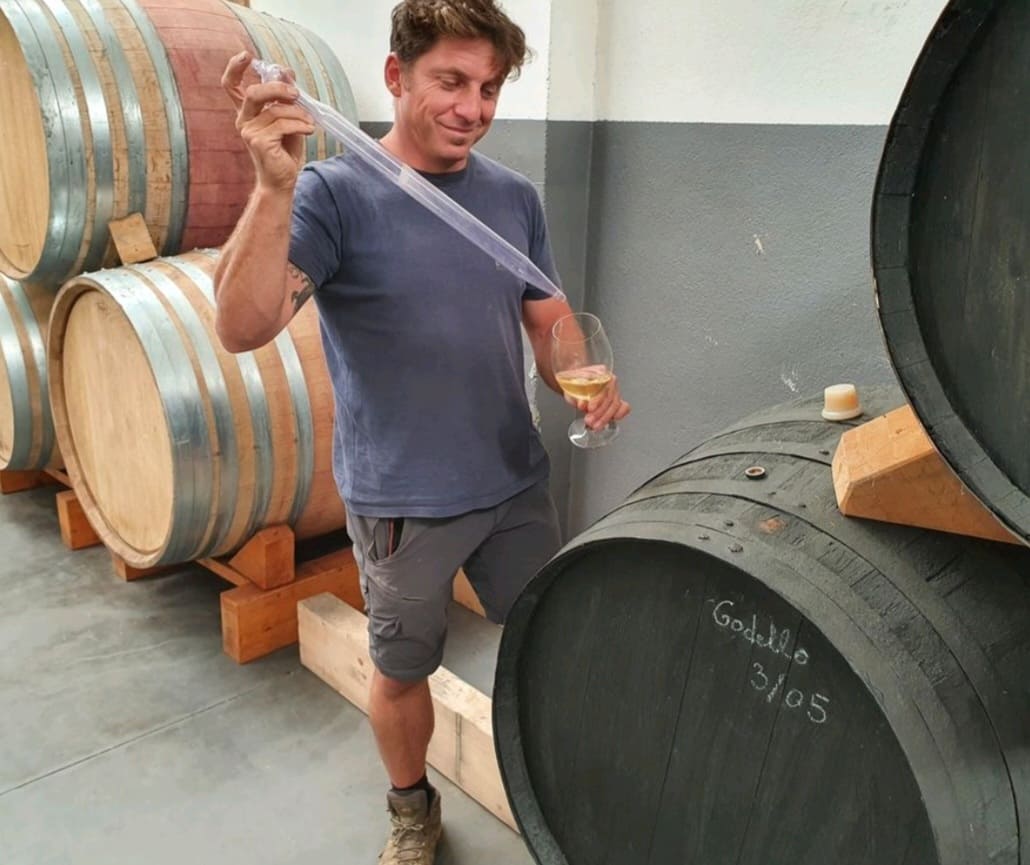
Grégory Pérez was educated in Bordeaux, and came to Bierzo, where he has his roots, in the early 2000’s.
His steep vineyards are situated by the river Cúa in Espanillo, ranging 600 to 850 meters above sea level. Pérez only grows local varietals that are fermented with native yeasts, and the work is strictly organic. He plows and aerates the clay and decomposed slate soils to enhance the health and biodiversity of the earth, he strongly limits the use of fertilizers, and he never uses herbicides.
Gregory Pérez samples a godello in his cellar
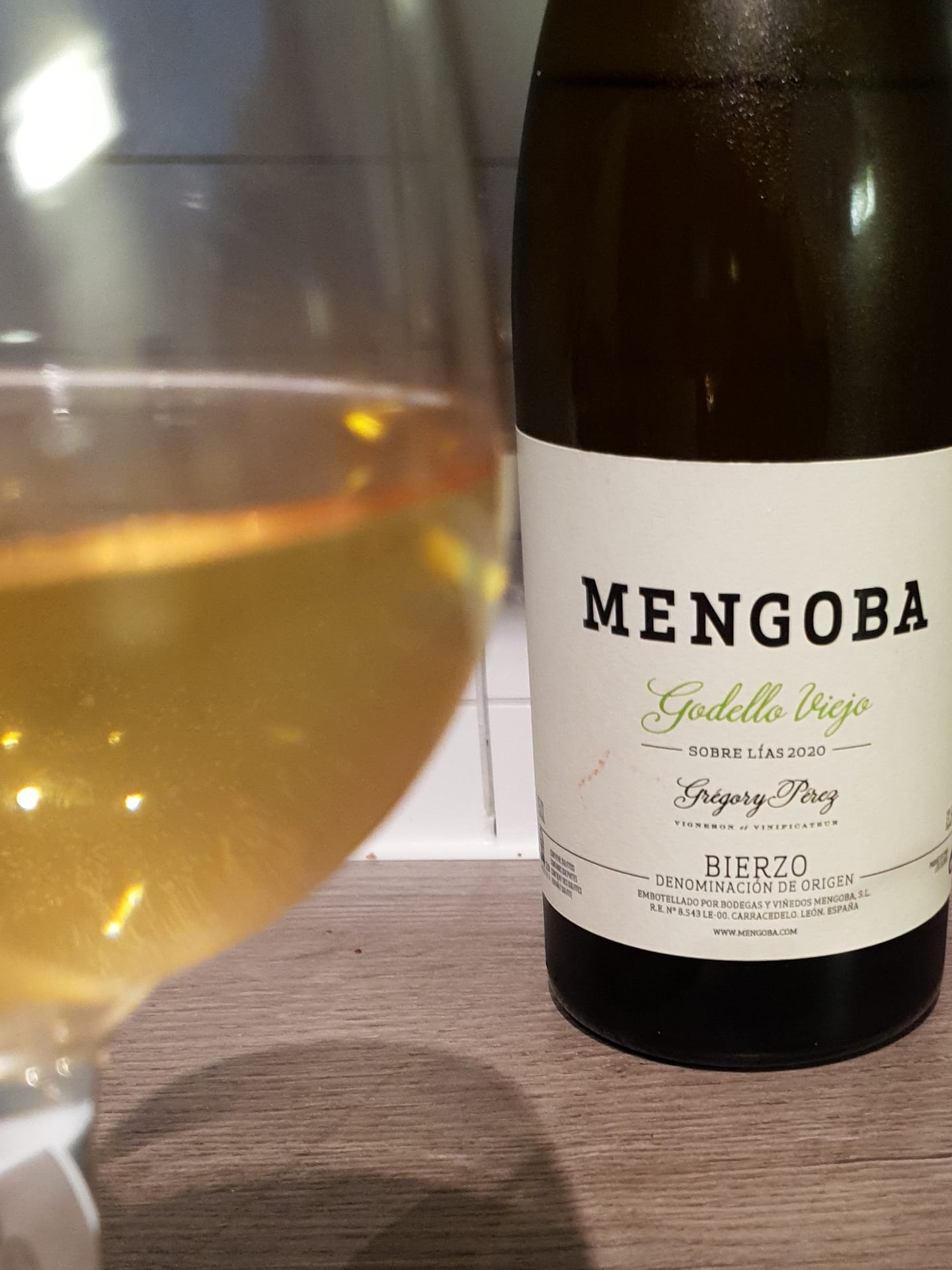
The grapes for this wine is exclusively godello, that have grown on calcareous-clay in Valtuille and Villafranca vineyards, stony soils in Carracedo – and on slate in Espanillo (the latter around the bodega). The age is 25 years, trained in goblet. They were harvested manually, pressed with whole clusters and fermented in 4,000L foudres. Then followed 7 months in foudres on fine lees with weekly stirring. Very light fining and filtering.
MengobaGodello Viejo Sobre Lías 2020(Grégory Pérez)
Light yellow. Mature pear, yellow apple, hay and herbs on the nose. Good volume in the mouth, with mature fruit, a pleasant acidity and a salty touch in the finish.
We end our journey with some more recent initiatives. Their history is not necessarily that short though. Menade for instance is relatively new, and the launch of their oxidative wine too. But the companiy’s history can be traced many generations back, and their dorado has also some history.
Menade was officially founded in 2005. But this branch of the Sanz family can trace its wine history back to 1820, when they sold their first vintage to the mayor of La Seca. At that time, there was more red wine than white. Antonio Sanz was one of the pioneers of Rueda and of Spanish wine in general; he traveled around, among other places to the Basque Country to see how they made wine there. He took part in the revolution to avoid oxidation; pick at night and use steel tanks – and to start DO Rueda. Now his three children in the 6th generation are leading the family business. Menade operates completely organically and is committed to spontaneous fermentation. The family sold the famous brand Palacio de Bornos, and the bodega which later got the same name. But they kept the vineyards. Menade benefits from the use of these today.
Ivan in Menade’s Rueda cellar
Here we meet again my musician friend, who I first met in another Rueda bodega. Ivan Acebes García is generally interested in culture and speaks long and inspired. His thoughts on the history of the Spanish nation will not be discussed in detail here. But he says that for 250 years, solera was the way to make wine here. It was to make the process cheaper that they started placing the wine out in the sun. It is natural that Ivan asks if we can meet in the old bodega in La Seca, where a living room is filled with books. Later we drive to what has been the headquarters since 2009 in Rueda town. There they have made an organic bodega, laid out a garden with all the typical plants – and supplemented with, among other things, an “insect hotel”. Menade has a total of 210 hectares, 60 here at the farm in Rueda. Their homage to the dorado tradition they call Adorado. The vines for this are between 20 and 25 years old, and the grapes are picked by hand.
-Every year we harvest earlier, says Ivan, with the global warming in mind.
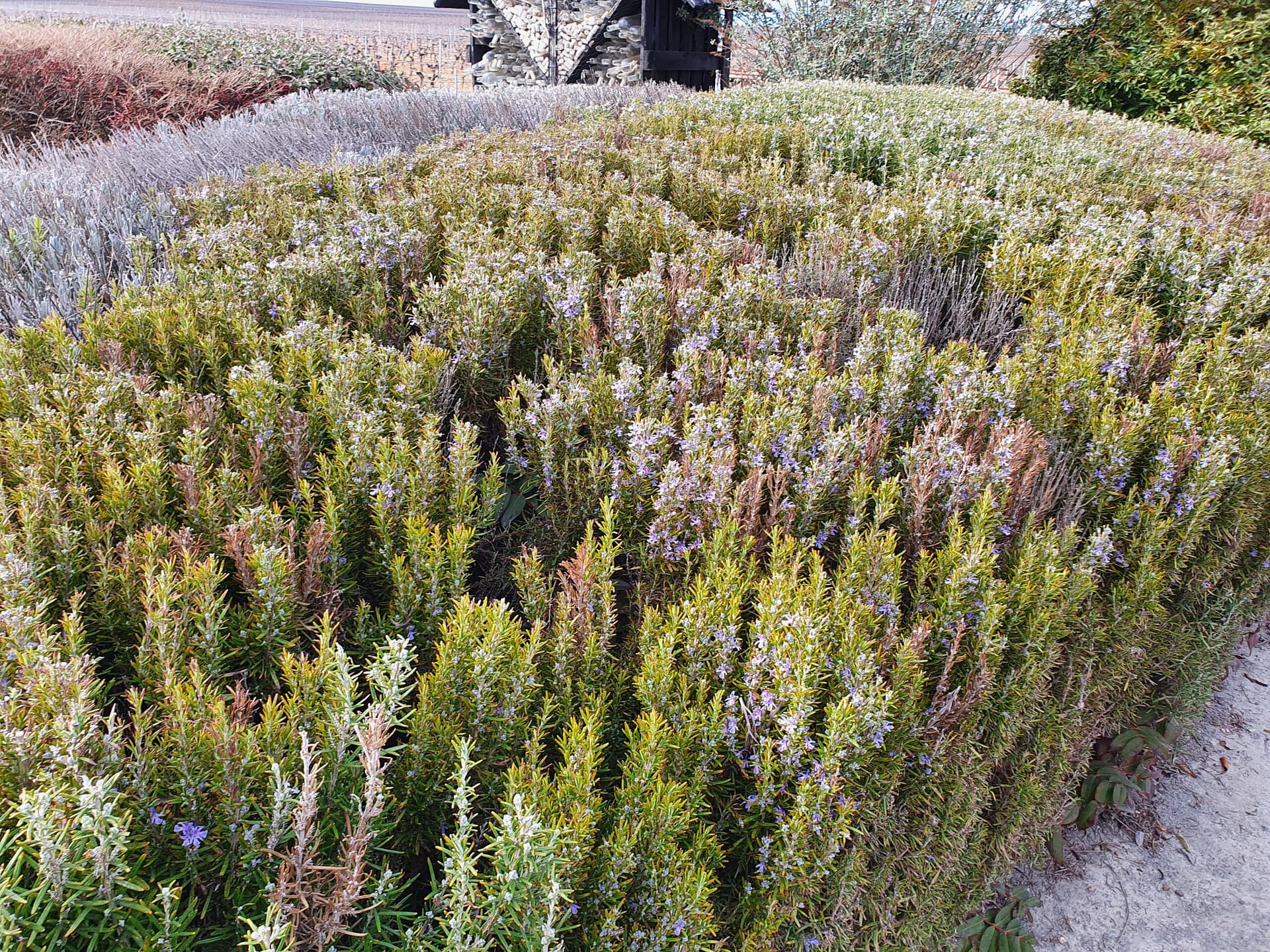
We are out in Menade’s biodiversity paradise. There is a lot of fennel: -All verdejo smells like fennel, other typical smells are rosemary and thyme, he points out.
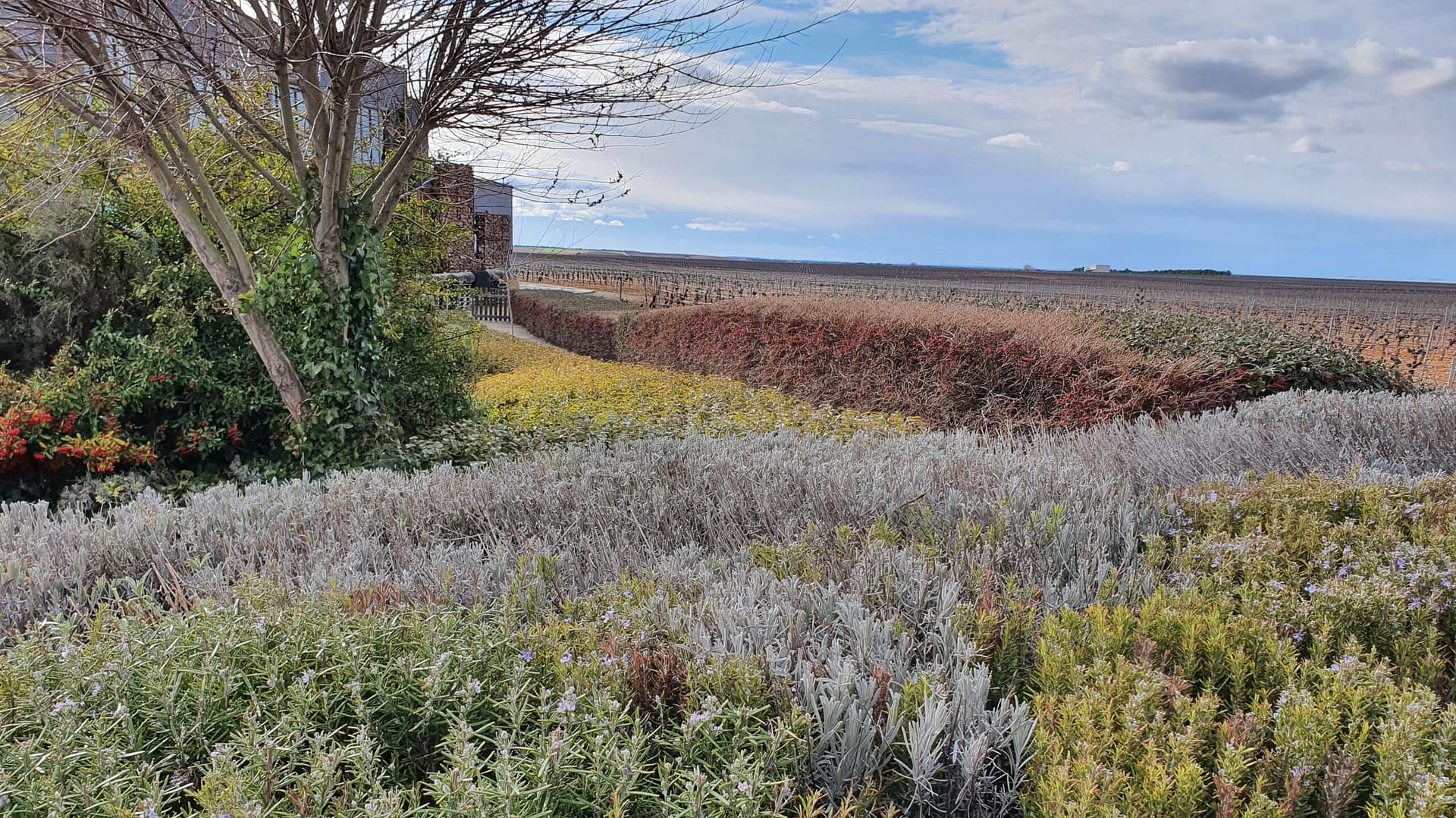
It’s getting late, and a breeze has crept in over the inhospitable Castilian landscape.
-Here, far inland there is actually a certain Atlantic influence, he says, -there is nothing to stop the wind between the sea and these fields.
The pressing takes place in a historical vertical press from around the year 1900, when it is believed that an earlier incarnation of this particular wine was made for the first time. The must is cloudy, and the fermentation starts naturally. After fermentation, the finished wine is fortified with grape spirits to obtain 2 or 3 extra grades of alcohol. Flor develops, usually in the spring, and when it has disappeared, the oxidative process resumes in the old underground bodega in La Seca. -The mother solera of Adorado dates back to 1967, but the first “saca” (withdrawal from the solera) was as late as 2018, when we made the decision to reactivate this style, Ivan continues. Unlike the other well-known producers, Menade uses 8-liter damajuana. The wine is released on the market without clarification or filtration.
This dorado has even more saline expressiveness than the aforementioned wines. In addition it has evident iodine and umami features. It has a clear amber color with a golden element.
Vidal Soblechero
I always appreciate coming back to Alicia and Vidal Vidal Soblechero in La Seca. (No, there is no misprint there.) Vidal is a passionate “bird man” and is the only one who has made me hold a bird of prey on my arm. By the way, his falcons have a function; they keep pests away from the vines. Alicia is a music lover and this time she invited me to a baroque organ concert in the local church of La Seca.
Actually, I find it strange that this producer is not more famous. They did get a lot of attention when they made Spain’s first ice wine in 2010, but it was probably quickly sorted under curiosities. No, it is their single-parcel wines that most of all arouse interest and admiration. I always make sure to taste some, if not all, of these. The wine series Pagos de Villavendimia was born precisely with the aim of expressing the characteristics of the various plots.
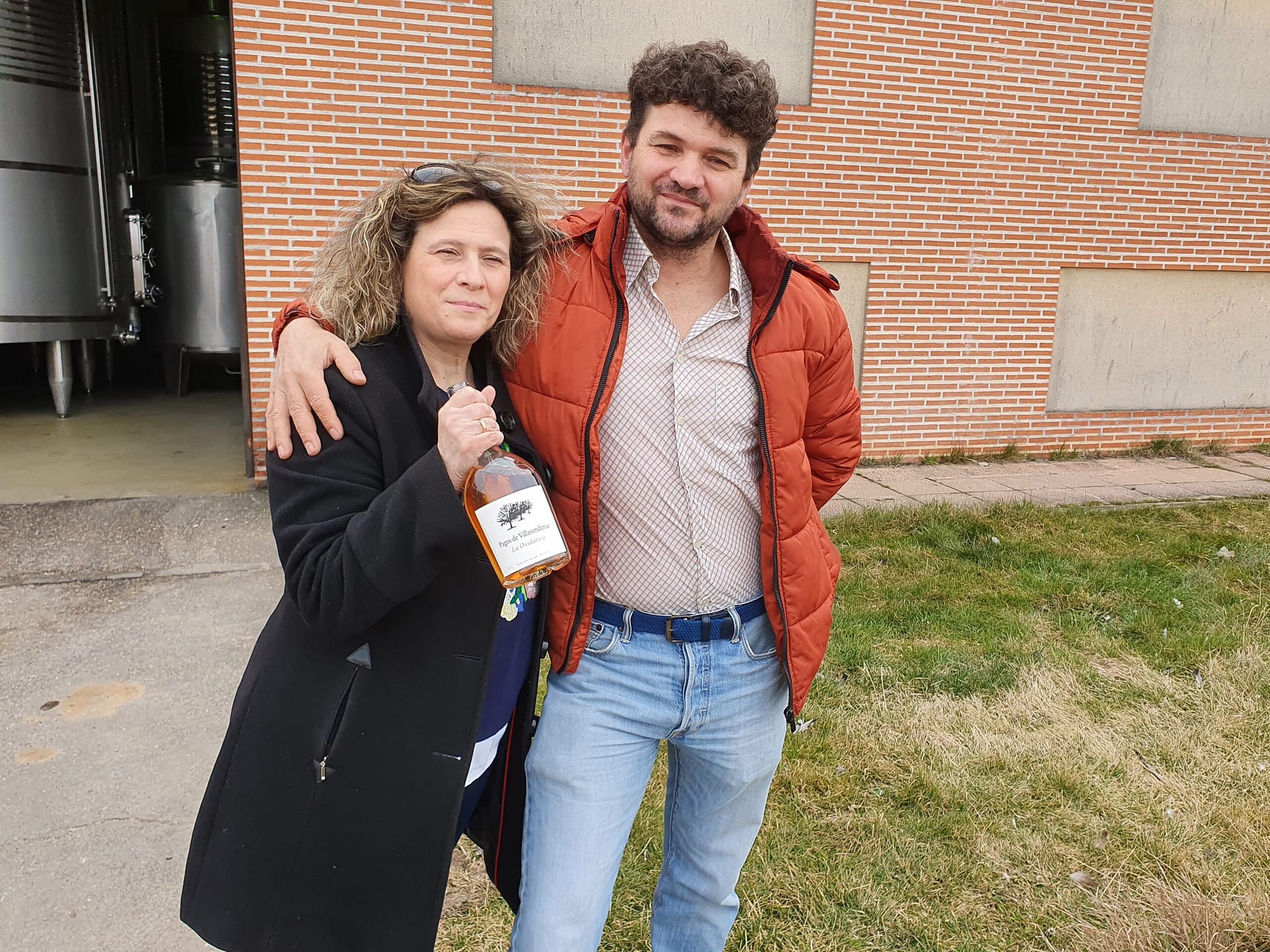
Alicia and Vidal
The Vidal Soblechero family has 50 hectares on 32 plots. Nothing is bought-in, no vineyard is rented. It was his father Cláudio who was behind the standard verdejo Clavidor (also derived from his name).
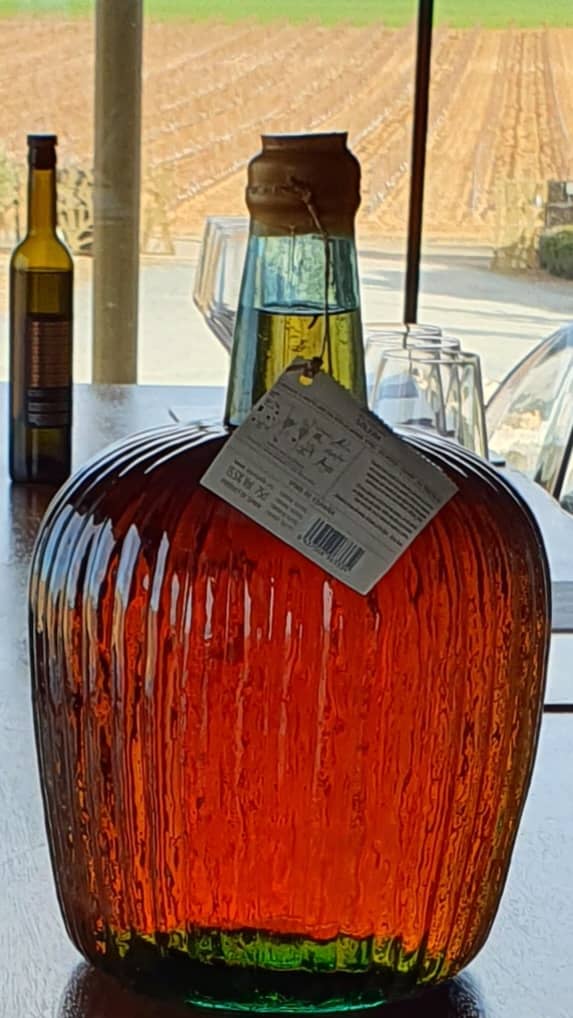
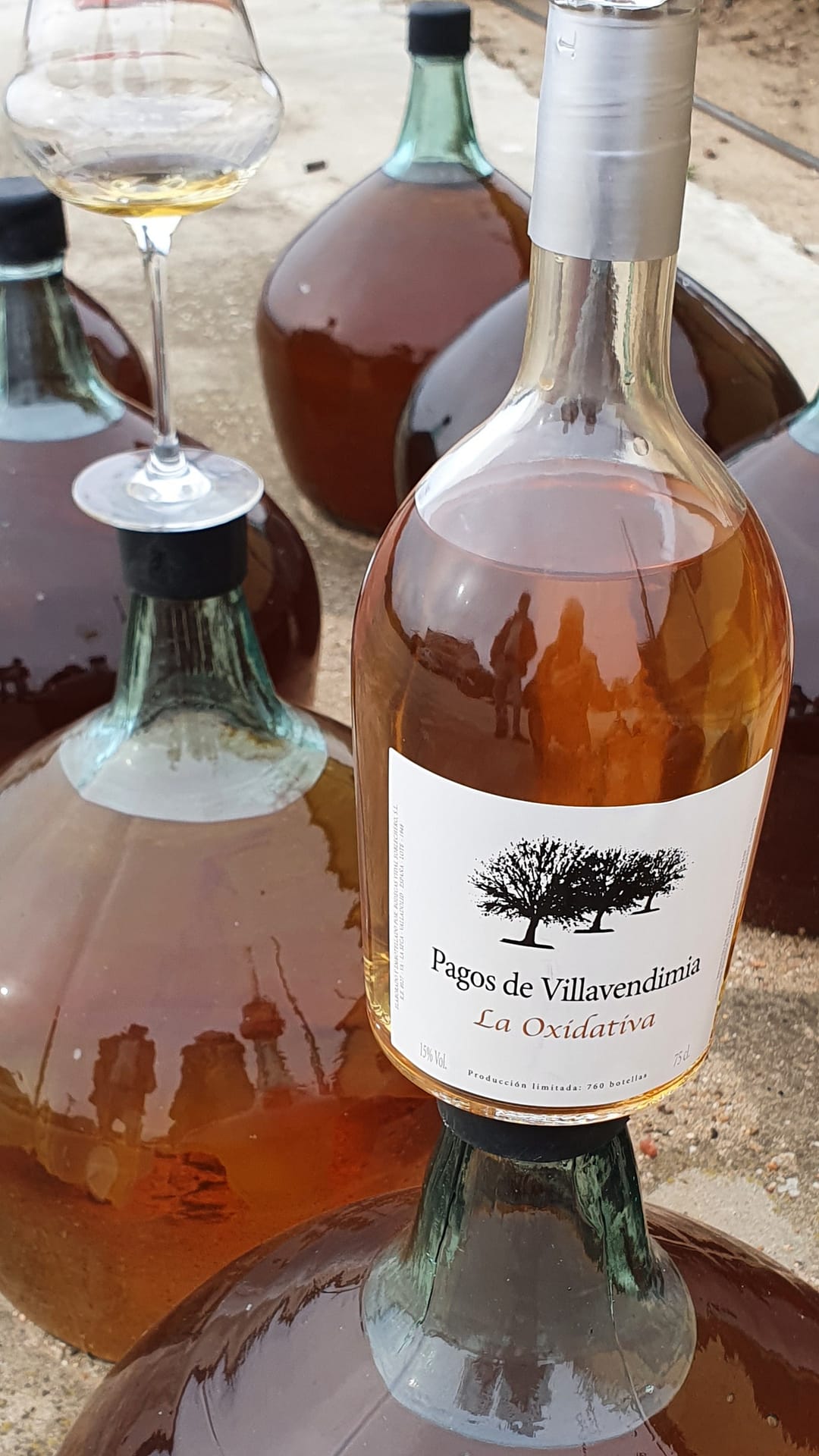
La Oxidativa, their dorado, comes under this label Pagos de Villavendimia. It is made from 100% verdejo from over 80 years old vines and stored in damajuanas that are always full, in a form of solera from 1947.
-It started, once told their distributor Joachim Buchta, -when Cláudio Vidal put a barrel in the yard filled with ordinary verdejo. Then he placed enough damajuanas around it on the ground. After six months, he replenished ten percent of the wine from the barrel with the wine from the damajuanas. Then he refilled the damajuans. Over the years, the number increased. Now it’s around ten.
This explanation is perhaps good for understanding how the solera system works in this context. The point here is that there are barrels that never run out, that there is a small amount left from the first vintage.
Another point is that at Vidal Soblechero, dorado is fermented like ordinary verdejo, with potentially about thirteen percent alcohol. You are then sure to end up with a completely dry wine.
We see that this is a type of wine that several producers are now bringing to light again, and beyond the four I had planned to visit especially with a view to dorado, I will mention two. I had agreed to visit Ismael Gozalo anyway, and he gave me a bottle of his historical wine when I was about to leave. And to a trade fair in Barcelona, Malaparte had also brought their oxidative wine.
Ismael in his Nieva cellar
Ismael Gozalo
Ismael Gozalo’s father was one of the founders of Viñedos de Nieva, a reference in the area. And he himself was behind Ossian together with Javier Zacchagnini, known from Ribera del Duero. In 1998, Ismael started making wines outside the family’s bodega, and it did not take long before everything was produced organically, as natural wine without additives. Nieva, the small village where he was born in 1971, is one of the highest in Rueda, 850 meters above sea level. With less than 300 inhabitants, Nieva has four significant wineries, which must be said to be an unparalleled density.
Ismael Gozalo has 31 hectares, only “en vaso”, without upbinding, which is very common in Spain, with all its old vineyards. The wine EvoluciÓn comes from one of Gozalo’s best vineyards, 180-year-old pre-phylloxera in sandy soil. The wine is based on the vintages 2010 and 2011. It has then been over ten years in old sherry barrels. It has a permanent flor layer based on yeast cells from the bodega since the 11th century. As he writes on the baking label, it is “stored under flor (flower), bottled on a ‘día de flor’ (flower day) and you can enjoy this flor (wine flower)”. He may be called the “verdejo alchemist”, for his creative ways of dealing with this emblematic grape. Obviously, he also uses 100% verdejo for his dorado. Ripe grapes are picked by hand, spontaneously fermented and stored in barrels, which are only filled up with 5/6 of the capacity. The wine achieves an alcohol of 15%, but evaporates, and when the wine has 13.5%, it is not refilled with alcohol, but bottled as it is. It would thus not have been approved by DO Rueda. 950 half litre bottles were produced.
Old sherry bota from producer Pedro Romero
“Natural artwork” (inside a damajuana)
EvoluciÓn is stored longer under flor than the aforementioned wines. Therefore, one might call it pálido rather than dorado. Surely it is that it is also made after inspiration from the historical wines from Rueda. Because of a longer time under flor it is lighter than the others in colour. It is aromatic, with hints of ripe apples and plum and a yeasty flor characteristic. It is a very fresh wine with good concentration, vital acidity and a sweetish fruit sensation. Dry in the mouth, and good length.
Ismael’s EvoluciÓn
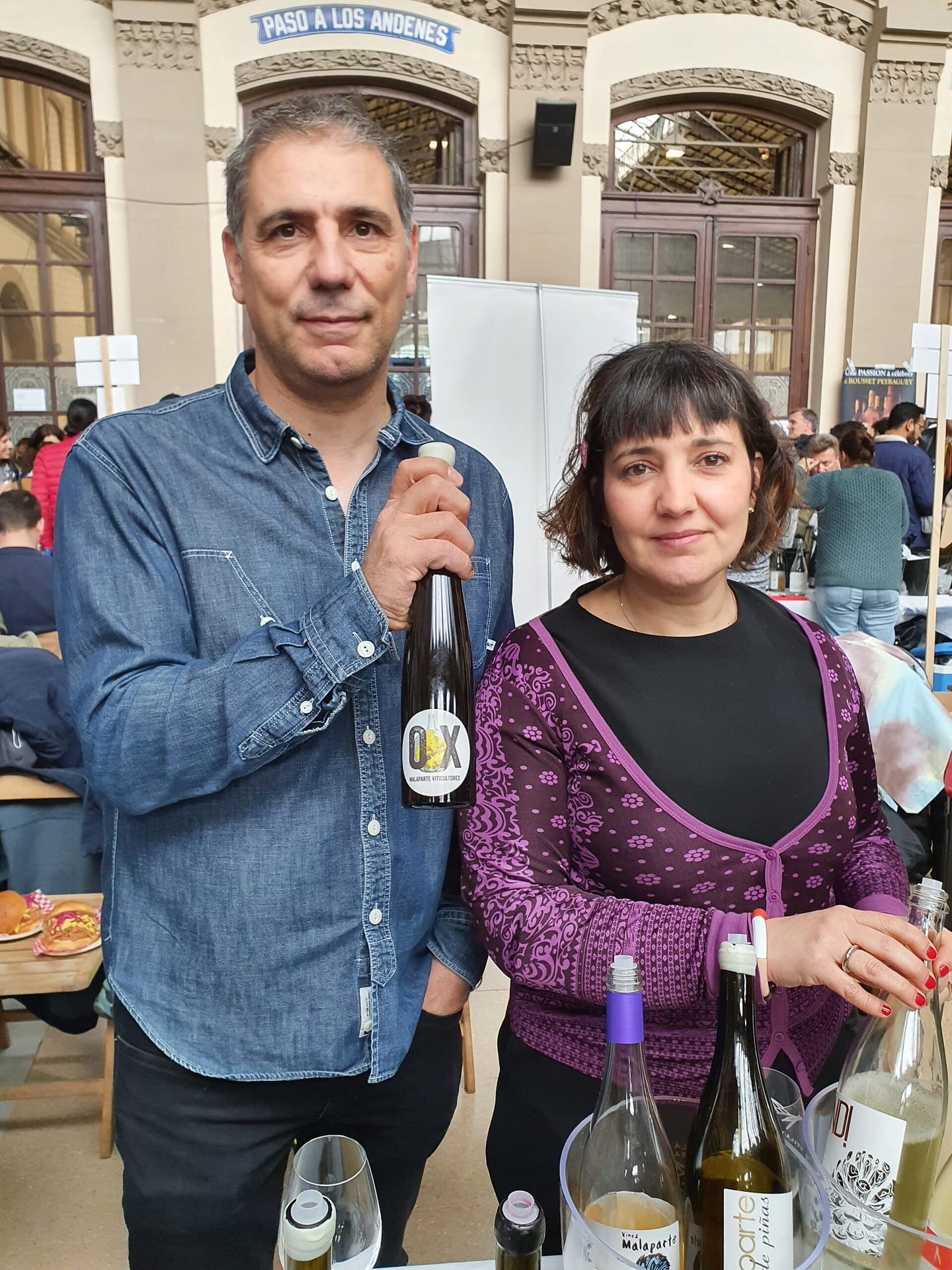
Like Gozalo, Bodega de Frutos Marín is located in the province of Segovia. The producer is most often called Malaparte, after its most famous label. Rubén and Elisa cultivate 5.5 hectares of vineyards near Cuéllar. They use different techniques, such as tanks, old barrels and amphorae. All plots are operated without irrigation. This is near the Ribera del Duero. Still, and despite a lovely amphora-aged tempranillo, I would say that they are mostly a white wine producer, offering several versions of verdejo and viura. Interesting for us in this round is the wine OX. This is obviously an abbreviation of “oxidativo”. It is based on verdejo and palomino fino from 65 year old vines. After a year it was transferred to damajuanas. It naturally reaches 14%, and is not strengthened. It has all the yeast, almond and dried fruit aromas one would expect, and in the mouth it is glyceric – and typically more fruity than its sherry equivalents.
Rubén and Elisa
Maybe the dorado drink can get a place at our tables again? The first mentioned wines (see part I and II) should have similar use as a young or medium aged amontillado or palo cortado sherry. If we should refer to what the producers themselves are suggesting, it can be anything from cured cheeses, via stews, anchovies, bacalao, foie and smoked and pickled starters – to salty and sweet foods, such as blue cheese and chocolate-based desserts. EvoluciÓn will probably be more like a fino, manzanilla pasada or young amontillado, with some lighter food. One of Gozalo’s importers mentions Asian-inspired dishes and red fish. It would probably suit some of the others as well.
The golden age was called the era after the discovery of America. It remains to be seen whether the golden drink is now facing a new golden age.