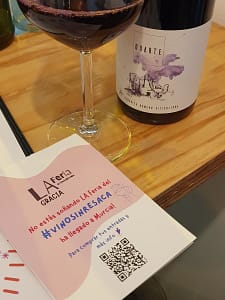
Back in Murcia for Christmas celebrations, I never miss an opportunity to visit La Gracia natural wine bar near the cathedral (and the bull ring). Sommelier Esperanza tells that they will organize a natural wine fair on the 21st of January, called #vinosinresaca (that means wine without hangover), where some 25 of the most prestigious microbodegas from all over the country will participate. I really appreciate and support the initiative, though I can’t participate this first time. You should if you are near.
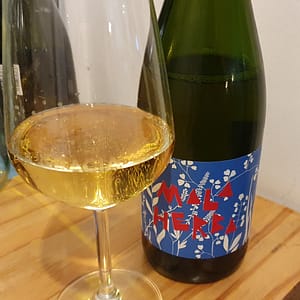
This evening I chose a plain Italian focaccia to go with all three wines, that were excellent. I opened with an aperitif, the sparkler Malaherba 2019 from Finca Parera, Penedès. It’s a rich and tasty wine with lots of body based on the xarel.lo vermell (red) grape, with yellow fruits aroma with wax and iodine.
The invitation to the upcoming fair and the Duarte bobal
Next was Duarte2022, a young bobal-tempranillo with fresh and dark berries and herbs, quite simple, but tasty. Good fruit throughout, and the tannins were quite firm and seemed young. Its maker Verónica Romero from Utiel-Requena, València is a comet in today’s natural wine sky. The wine is made with whole bunches in a variant of the carbonic maceration.
One of the more established natural wine producers in the Gredos mountains is Cható Gañán, where Kike Prados holds the reins. Navaciegos is a quite complex garnacha wine, purple coloured, aromas of red and dark fruits, also some dried herbs, and a layer of coffee. In the mouth it is full, quite dense and concentrated, with rounded tannins and good fruit. It’s made in Navahondilla, in a 0.35 hectares vineyard of 60 year old vines, at about 785 meters of altitude, with very degraded granite soil. A small part of the grapes are foottrodden and vatted with stems. The rest is destemmed. It was aged in French barrels of 500 liters at various ages.
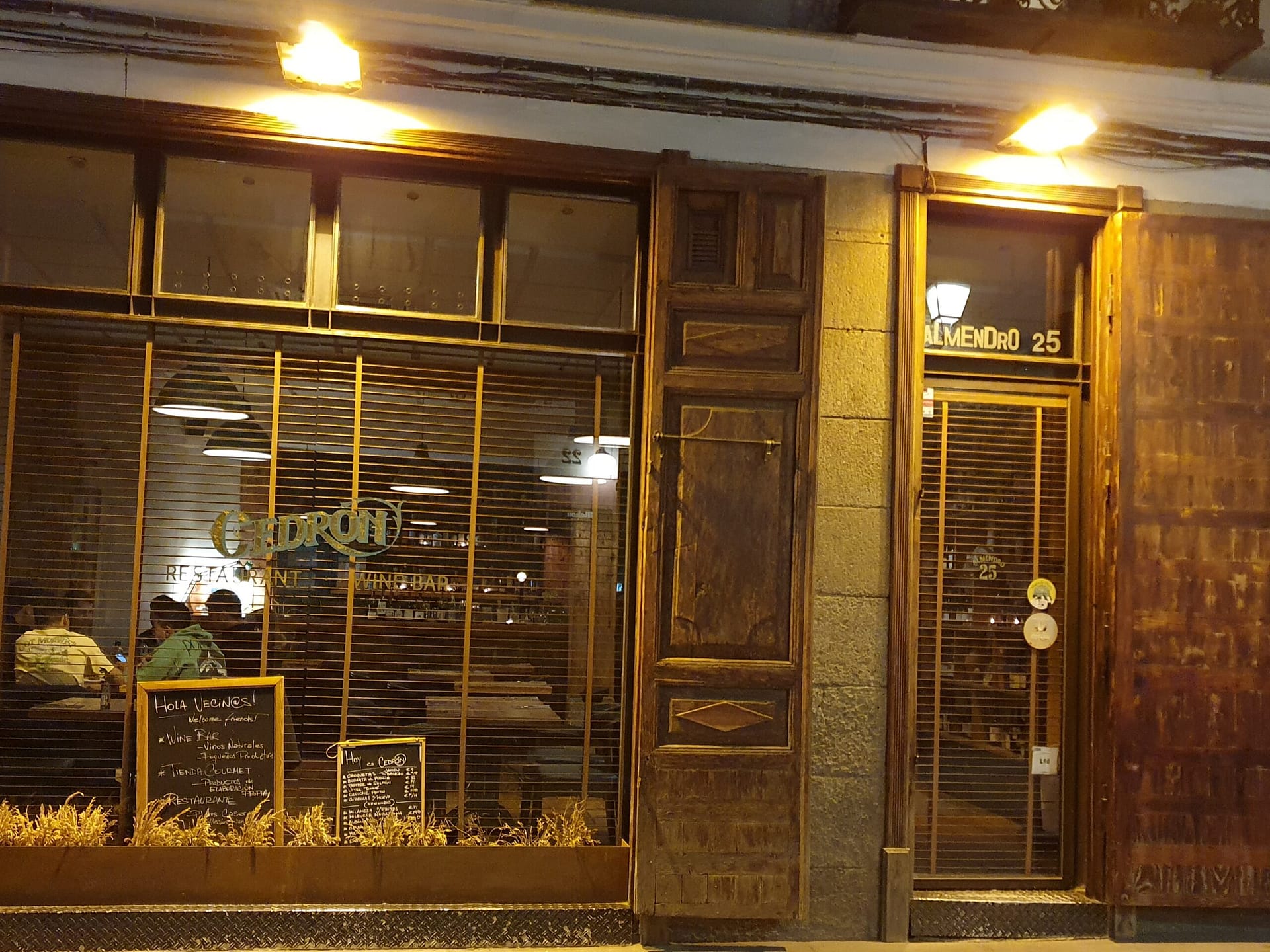
Wine bar and restaurant Cedrón is located in the the La Latina neighborhood of Madrid, just behind the Plaza de la Cebada, with the famous market. It’s a warm and cosy locale from 1850, with wood, steel and stone. They have a wide variety of wines by the glass, some are natural wines, some just organic, and all are made by small family producers.
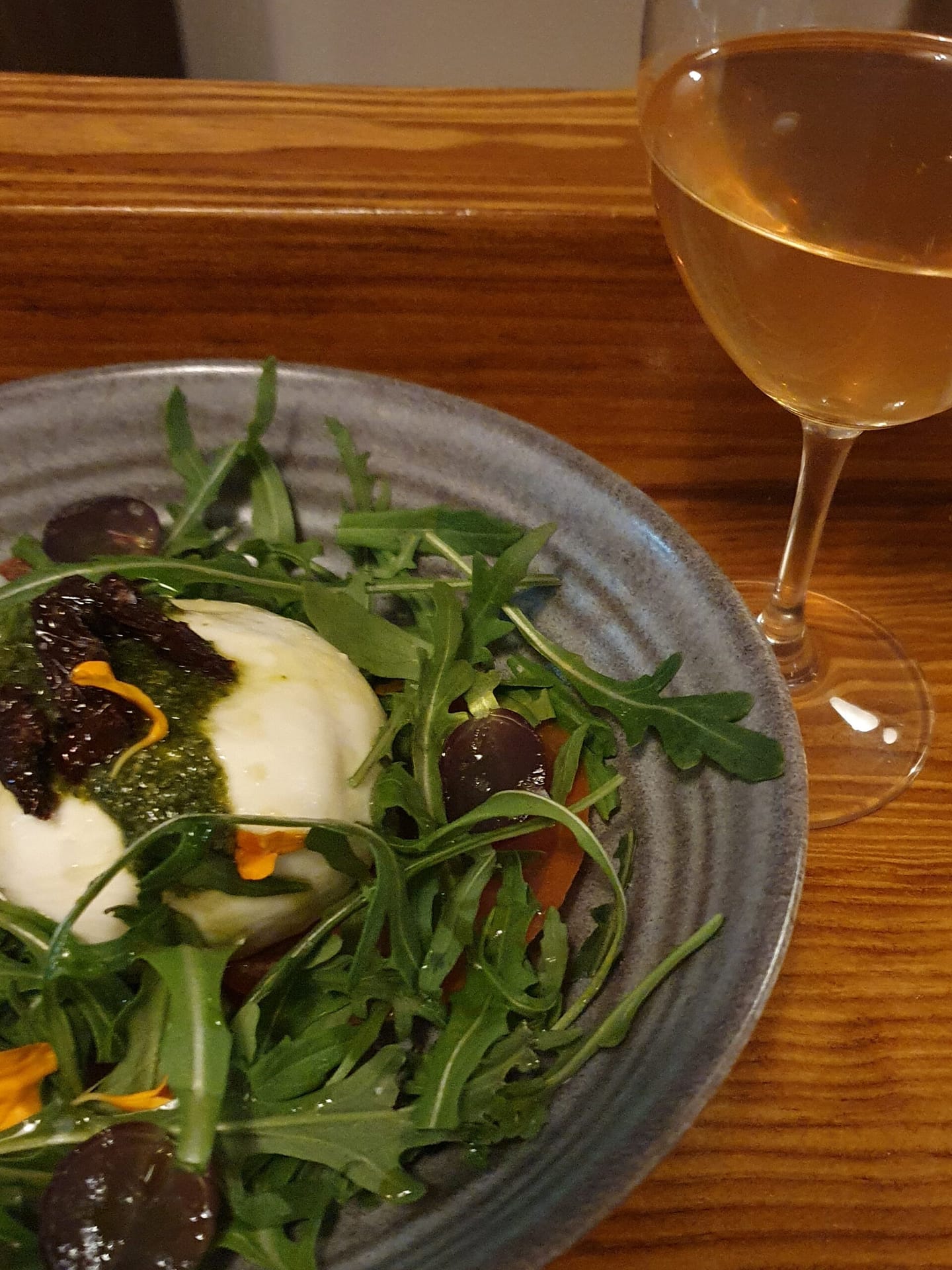
The owners are Argentinians, and both wine list and food menu has some influence from this. I ordered vitello tonnato, that is Italian origin, but very popular in Argentina. I completed with two more small dishes, a fresh burrata, and croquetas of cod, that turned out to be quite spicy. A complimentary starter was a humus de remolacha, accompanied by flatbread with herbs.
For the three platters I chose three wines. La Salada Disbarats 2021 is a simple but delicious white made by Toni Carbó, that has collaborated with Mas Candí in Penedès. The wine, from macabeu 80% and xarel.lo, is a light skin-contact white, slender, with aromas of citrus, flowers and a touch of orange peel, and with a saline finish.
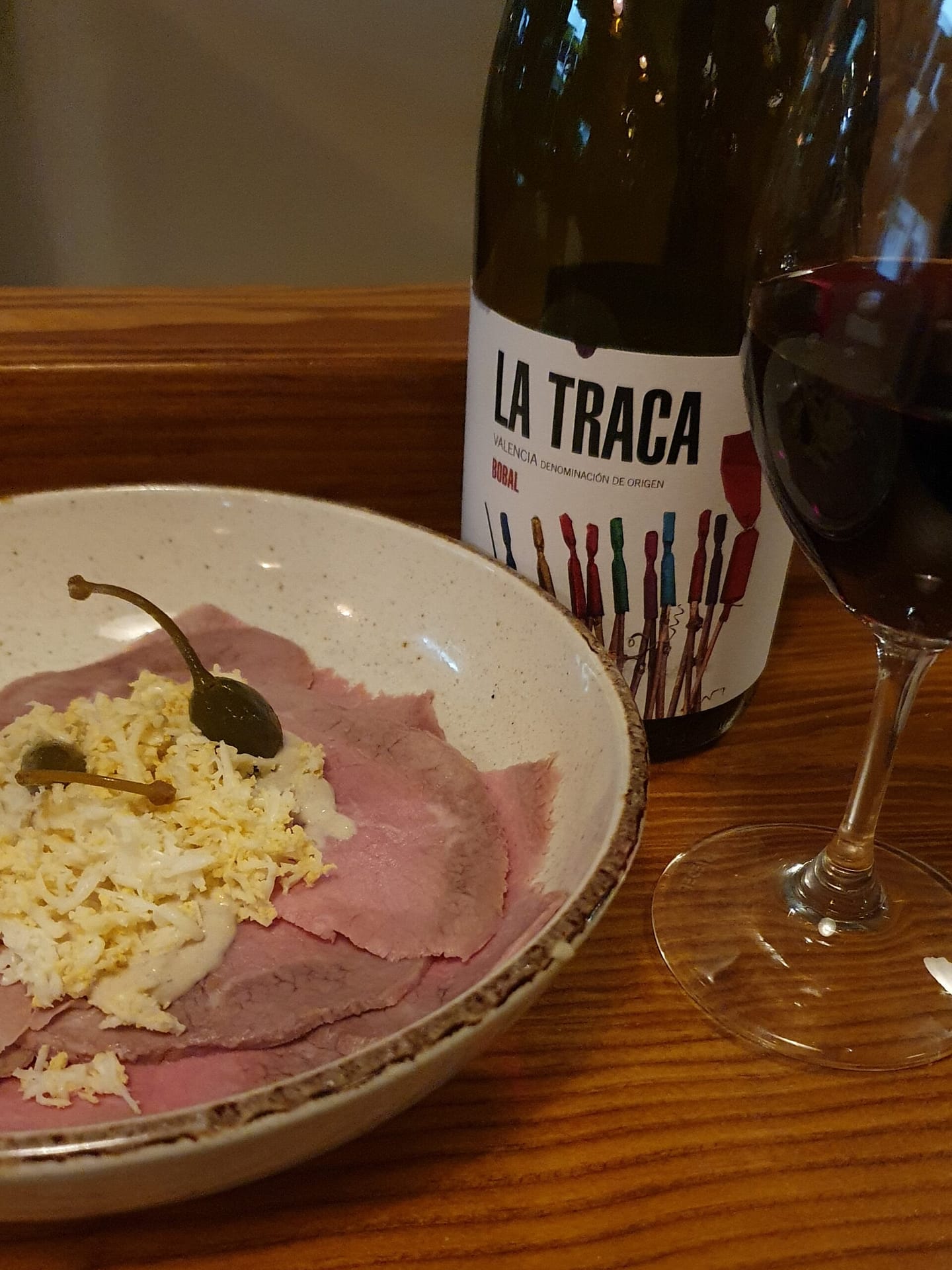
La Traca 2020(Risky Grapes) is a juicy, light structure bobal from València. The colour is ruby red, and the aromas are dominated by red berries like raspberry. This red wine accompanied the vitello tonnato, as always cold veal with tuna mayonnaise, a dish with some umami. Sommelier Gustavo, also Argentinian, said that he would normally have chosen a sherry for that dish. Knowing what I now know it would have been easy to agree.
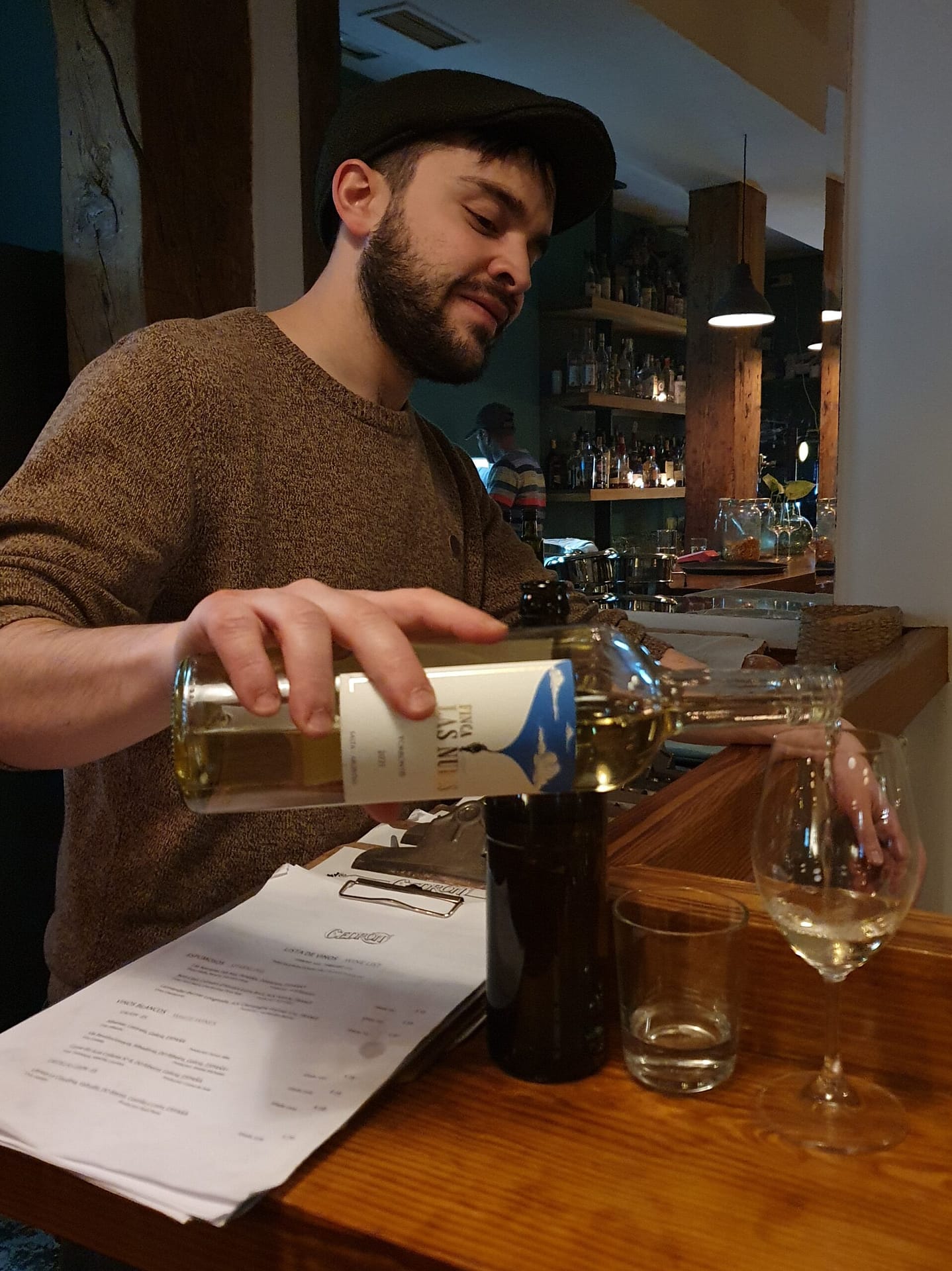
I had quite a bit of luck, as the croquetas were more spicy than expected, and also the last wine was more sweetish than expected. Las Nubes 2021 is made by José Luís Mounier, whom Gustavo called the father of the grape torrontés in Argentina. Light straw coloured, and on the nose it was very perfumed with flowers and honey. This gives a sweetish sensation, not sweetness. The same continued into the taste, not unlike a dry moscatel. I had a suspicion though that this was a wine made with selected yeasts, later confirmed by the producer’s web page. Anyway, the marriage was good, and I am happy to have found a new wonderful wine bar in central Madrid.
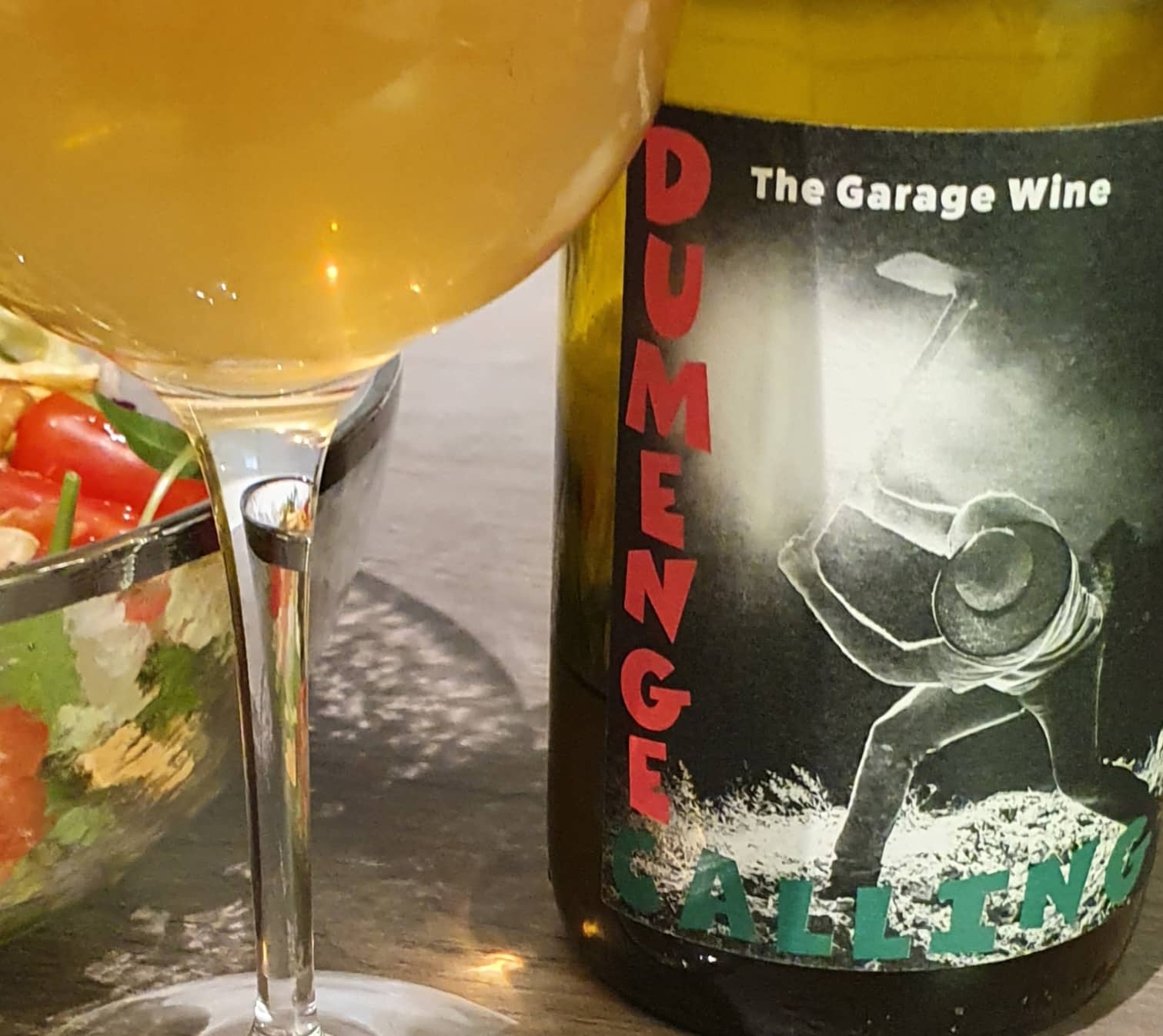
No, it’s not a cheap joke, but the name of the wine. I am told it was made for the Garage Bar of Barcelona, in a tiny quantity of 100 bottles. I bought it from the Bendito bar in Madrid. (Read a short article from Garage here and a review of Bendito here.)
Dumenge Calling is monovarietal xarel.lo produced by Celler Dumenge in a garage in Penedès, Catalunya. The winery calls it an “ancestral”, or a pét nat. All their wines are made with a deep respect for the vineyard, seeking the highest possible expression of the grape and the soil. They opt for natural agriculture, always with minimal intervention, which results in original and true wines.
This wine has been aged in amphora, which allows it to perfectly preserve the freshness of the varietal, and at the same time it adds to the complexity.
Dumenge Calling 2017(Celler Dumenge)
Light yellow, slightly turbid. Fruity aromas of pears, white flowers and grapefruit. Fresh fruit on the palate, vibrant acidity, quite full and with a long finish.
Price: Medium
Food: Shellfish, white fish, tapas, and many Asian-style dishes
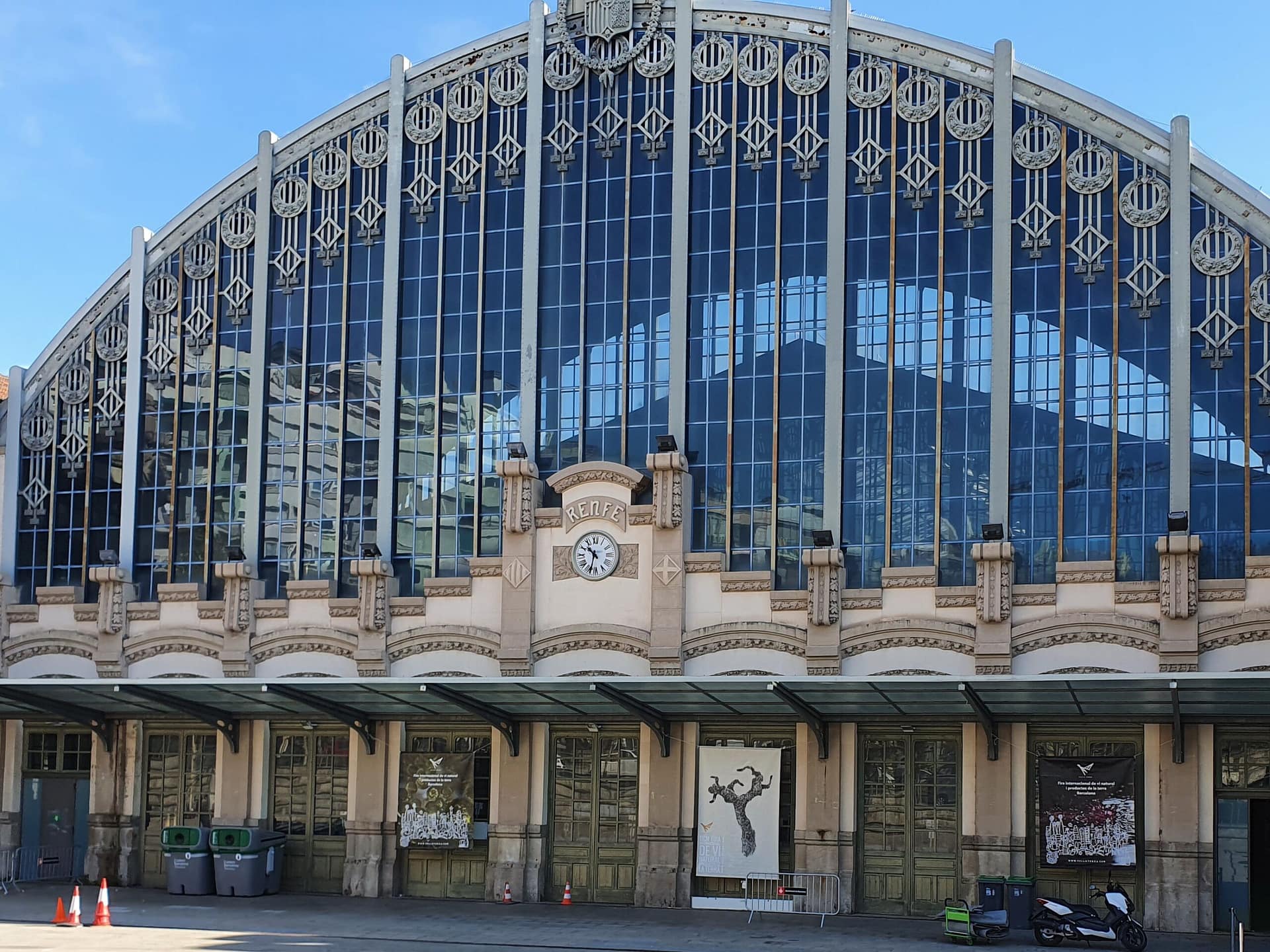
I am back at Barcelona’s Vella Terra. It is now in its 6th edition after having been postponed, last time since February this year. Vella Terra is a fair organized by the couple Ale Delfino and Stefano Fraternali, and celebrates natural and low-intervention wines from smaller wineries, most of them family businesses. This year there were 146 artisans from 16 countries booked in. There were also related companies like Pulltex, distributor of wine accessories (see my company profile of one of their most important collaborators Pulltap’s in a forthcoming article) and restaurants like Garage Bar and Zaza. There were of course also various activities around town, with so much “talent” gathered in one place.
The Vella Terra poster by the entrance of Estació del Nord
This year I had no special theme in mind. I did select a bit, but was also open to walk in new doors. So here are some of the most interesting tastes, only organized from local to global, if I can put it that way. And as many times before, I try to restrict myself by chosing only one wine from each winery. In this first part we shall deal with Spain.
Josep Casañas and Brugués Faura Ginabreda
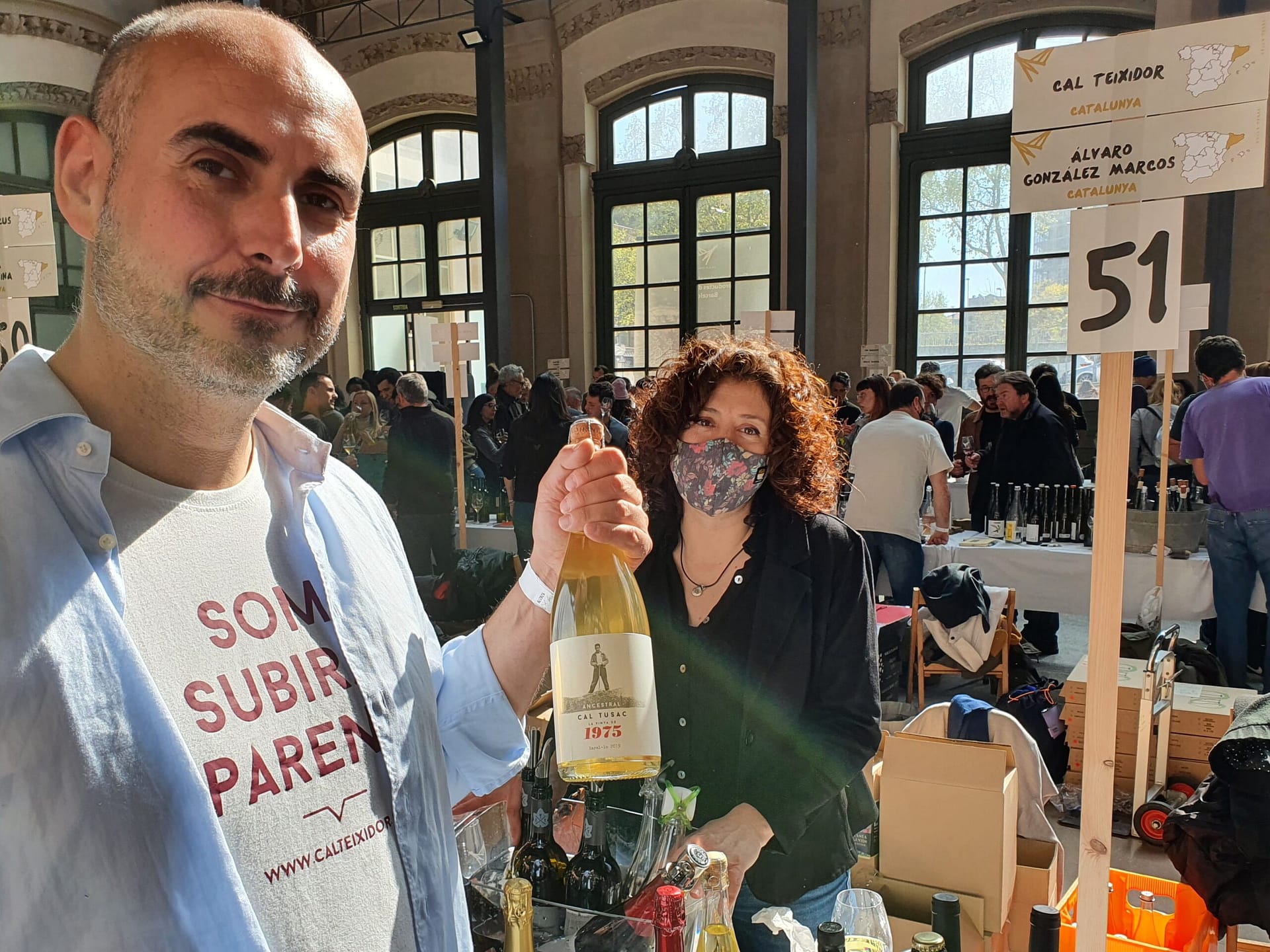
I had tasted a few wines from Cal Teixidor before. (See my latest wine of the week here.) Their winery is found in Corbera de Llobregat, not far from Barcelona. At Vella Terra Josep Casañas showed an impressive range, most of the wines based on the two vineyards described in my latest wine of the week, that you can read about here). These are a north-facing xarel.lo vineyard that gives acidity and minerality, and a south or southwest-facing macabeu vineyard that gives more fruity, aromatic wines. There were also wines made from subirat parent (see his T-shirt), also known by the name malvasía riojana. Here I chose a wine solely based on the macabeu vineyard from 1974. It’s called Masía Cal Salines 2019, is made with whole clusters and aged … Dark yellow; appley, with fennel-tones; rich, structured and mouth-filling. Josep also showed a superb subirat parent traditional method sparkler with almost the same name, Masía Cal SalinesBrut Nature Reserva. This fruity wine, with herbs and mature apple, but also mineral and with a fresh acidity – was of the 2017 vintage and aged 42 months on the lees. Which strictly makes it a gran reserva (it’s minimum 30 months, by Cava standards). Lastly, his wife Brugués is the force behind the estate’s own olive oil.
Josep Medios and Anna Janué, Loxarel
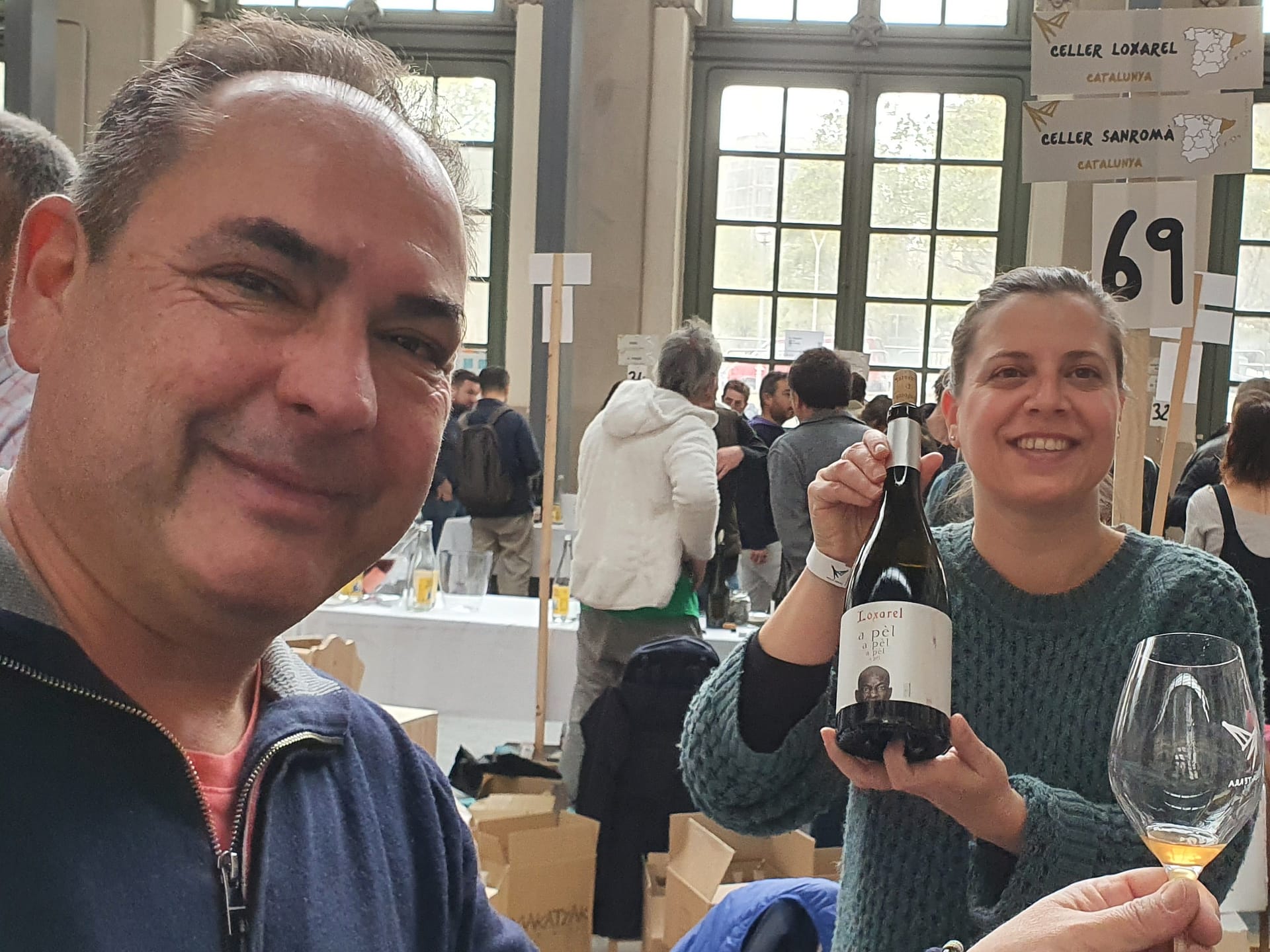
Loxarel I have known a long time, and I’ve appreciated their good and not least good value wines. Last time they were represented in a wine of the week post was here. In February I had an appointment with winemaker Pep for a visit to their Penedès winery, but had to cancel as I was struck by covid. Here founder Josep Medios participated together with Anna Janué, who calls herself commercial sommelier. They showed an impressive range, such as still and sparkling Loxarel à pel, an amphora-made xarel.lo, and a “xarel.lo sherry” (called Himen), and reds. Here I chose Loxarel109 2011, a brut nature reserva (well, technically it qualifies for a gran reserva). This wine was the reason that Loxarel left DO Cava for Clàssic Penedès, because the authorities didn’t allow them to bottle without disgorging. Loxarel’s opinion is that after nine years the wine has already integrated the yeast. Obviously, this is also a xarel.lo-dominated wine, like nearly all the most ageworthy. Aged on the lees for 109 months in a shelter from the civil war. Light in colour; smells of mature apples, burnt yeast and coffee; is rich with a super acidity and mineral finish, it’s still full of vividness and not at all “old”. It comes in a bottle wrapped in paper.
Núria Aviñó, Clos Lentiscus
Núria Parellada (front)
Clos Lentiscus is located inside the national park in the Garraf mountains just outside Sant Pere de Ribes. The winery was established in 2001 by brothers Manel and Joan Aviñó, when they set out on a task of restoring the family vineyard from the 14th century. They currently cultivate 22 hectares of vineyards in a biodynamic way, of which 95 percent are planted with local grape varieties.
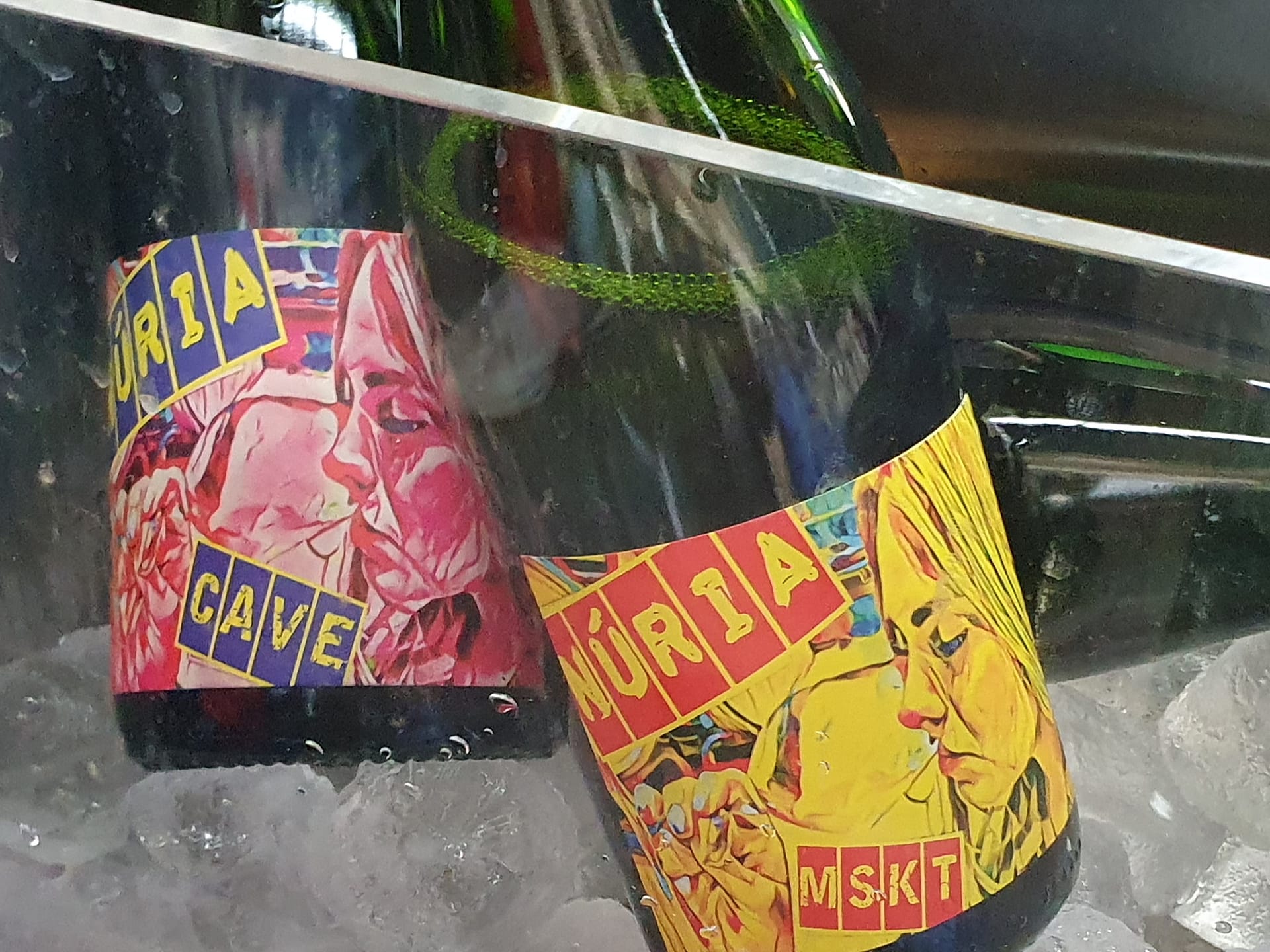
Before the fair I had warmed up with a classy, mineral red, Perill Noir Carinyena 2017, a varietal carinyena that also were shown here. I chose one of the bright sparklers that Manel’s daughter Núria poured. The Núria Parellada 2018, one of several wines named after her, is a pét-nat, very fresh for its age. It’s very dry with notes of red apples, raspberry and bright citrus.
Dido and Jur of Vinyes Tortuga
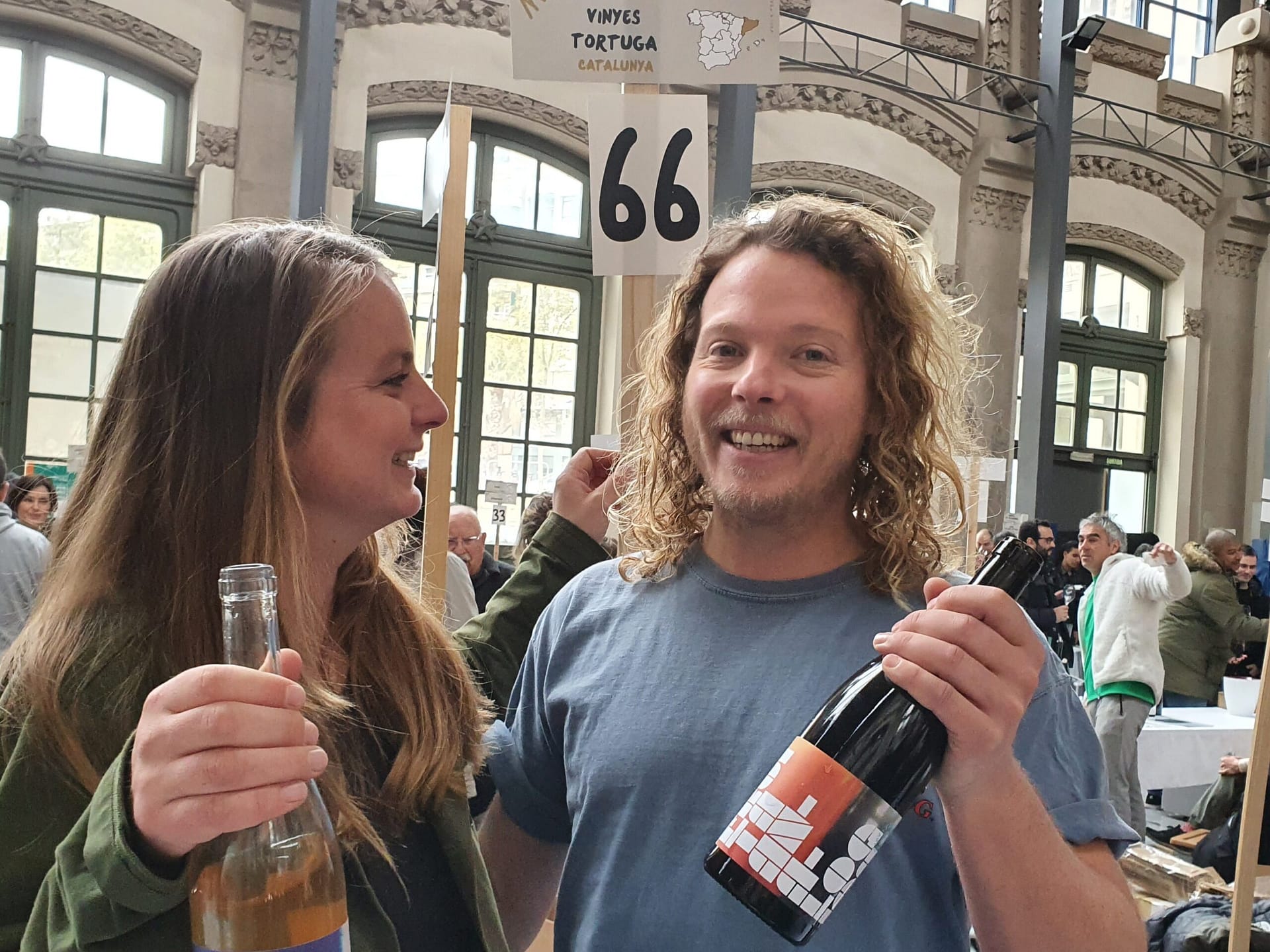
I met Dido and Jurriaan three years ago at the Garage Bar. Then they were just starting, after having travelled the world and worked in a number of wineries. Since then I have come across their rosé sparkler Juicy several times. (See here.) share a passion: wine. They bought 9.5 hectares of vines planted in the Albera natural reserve of Alt Empordà, where they farm organically and have started to implement biodynamic principles. They have now bought an old coop in the village Rabós, where they first were hiring space.
Many of their labels carry references to music, such as Big Time Sensuality, Comfortably numb and Libertango. My pick here would be Magic Potion 2021, a cabernet franc-sauvignon pét-nat named after the album of The Black Keys: Blueish red, full of fresh and sweet strawberry and raspberry fruit, and in the mouth some structure that complements well with a slight residual sugar.
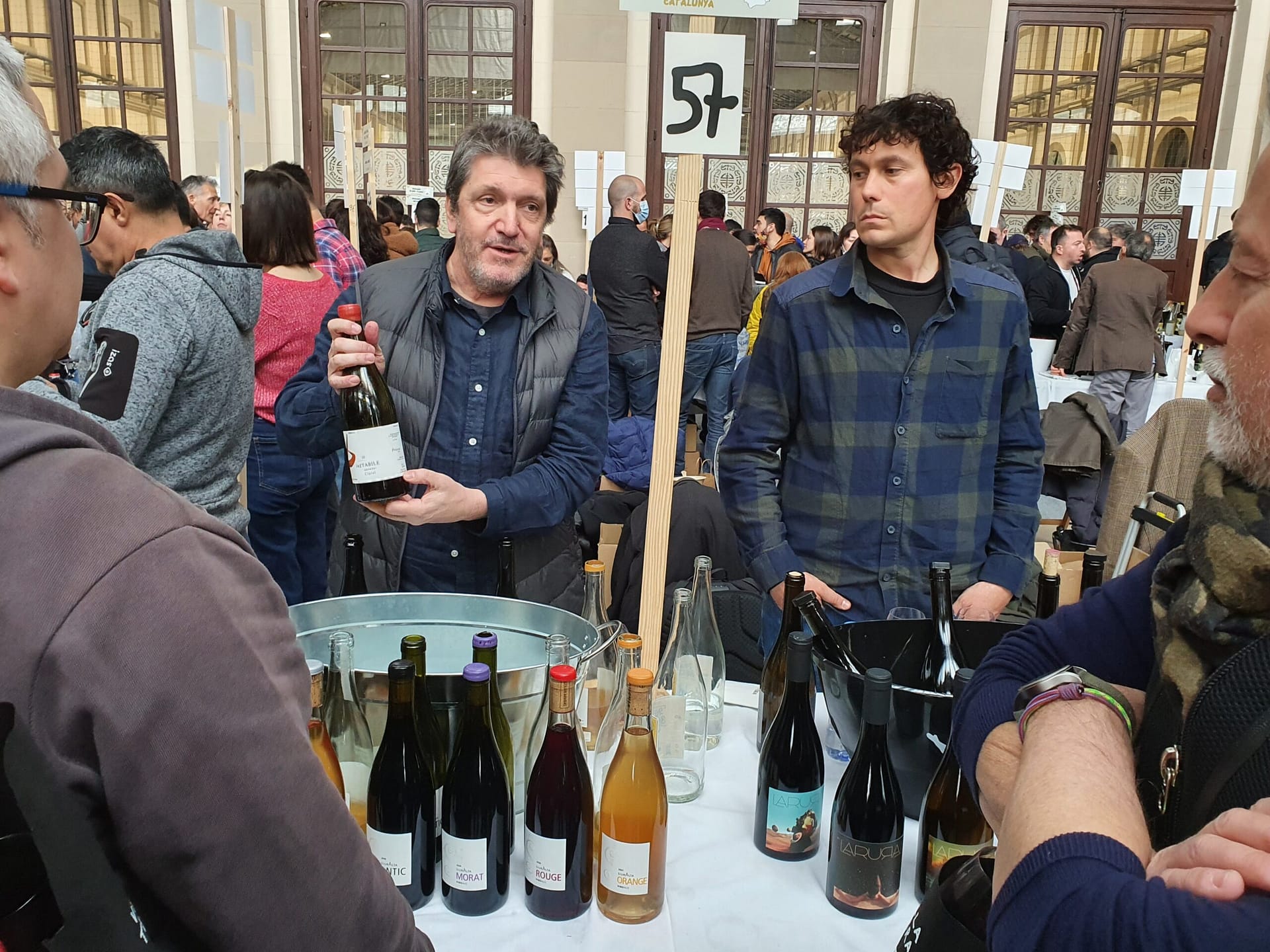
Alfredo Arribas show while Andreu Padró from La Rural watches
Architect Alfredo Arribas is quite new on the Catalan wine scene, having taken over the family’s vineyards in 2001 founded his bodega in 08. But he has made himself heard. His two main series are Siuralta, mostly monovarietal wines from Montsant and Instabiles, more free-spirited wines from Priorat. The vineyards are in Cornudella de Montsant, in the north of the Priorat region, and the grapes are vinified in the winery in Falset. Arribas’ project is a response to the challenges of climatic change, seeking higher altitude vineyards, more shade and rainfall, biodiversity and more.
For Siuralta grapes from the highest vineyards are spontaneously fermented in whole clusters with stems in small steel tanks and amphorae in various shapes. The grapes for Instabile are spontaneously fermented mainly in whole clusters with short peel maceration. The wines are matured in small cement tanks and amphorae of ceramics, porcelain or glass. Different vintages are mixed in some cases by bottling.
Let’s taste the Siuralta Antic2019, a varietal cariñena: Deep red; cool, fresh fruit, dark and wild berries (blackberry, elderberry), a hint of pepper; luscious/fleshy in the mouth, carried by a long acidity, beautifully integrated tannins, more to the mineral side.
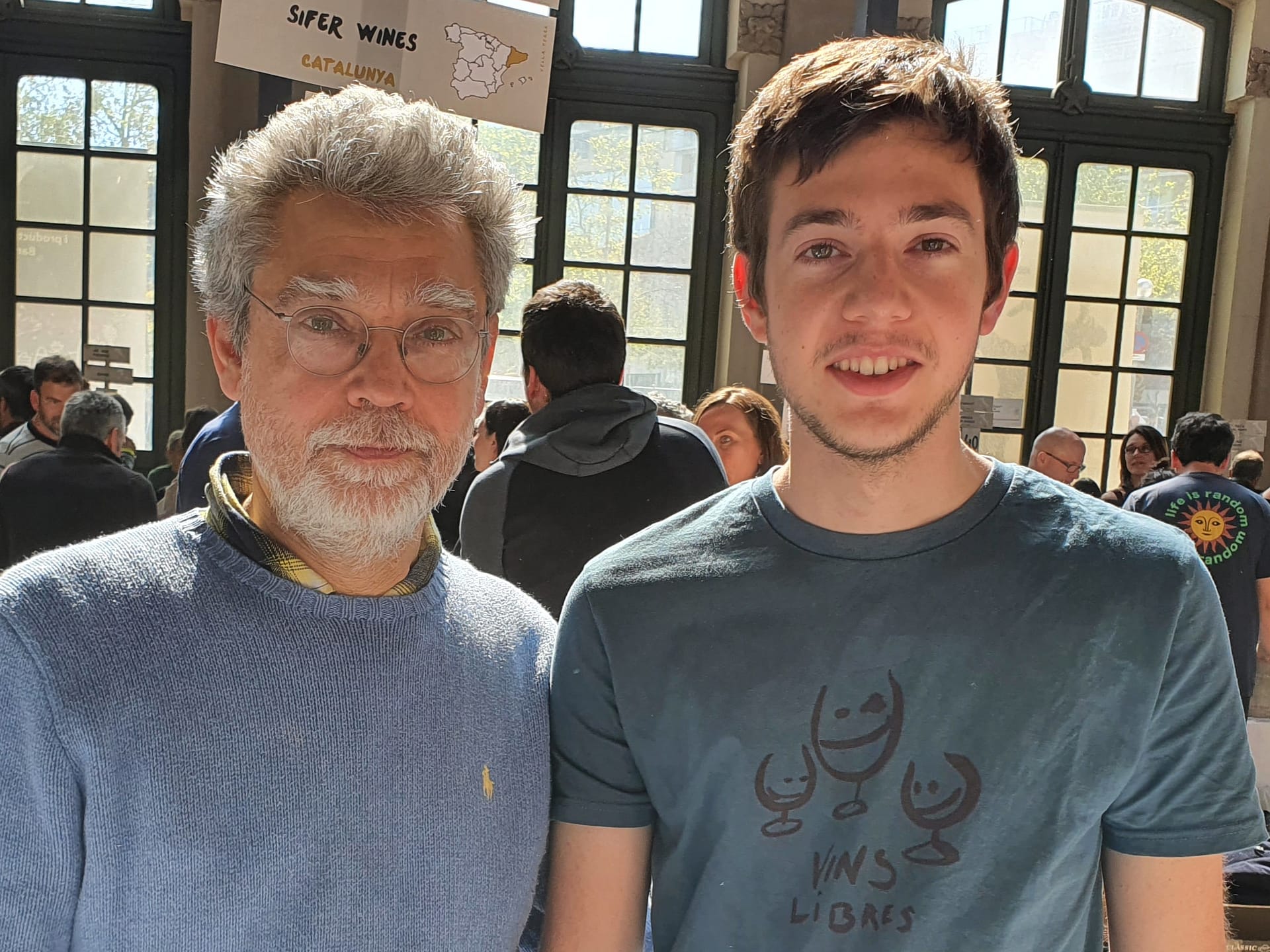
Ephraim ame Roc Orengo, father and son
I didn’t know Sifer Wines, but it clearly is a winery to watch. (See also a mention of their Ephraim Mel garnacha blanca here.) Sifer, the name made up from two last names, has vineyards both in Terra Alta’s Batea and in Teruel, Aragón. Among their expressive, vibrant entries were Víbria Soul 2021, a macabeu made in amphora and steel. It’s light, quite turbid, with pear and white fruits and a super acidity.
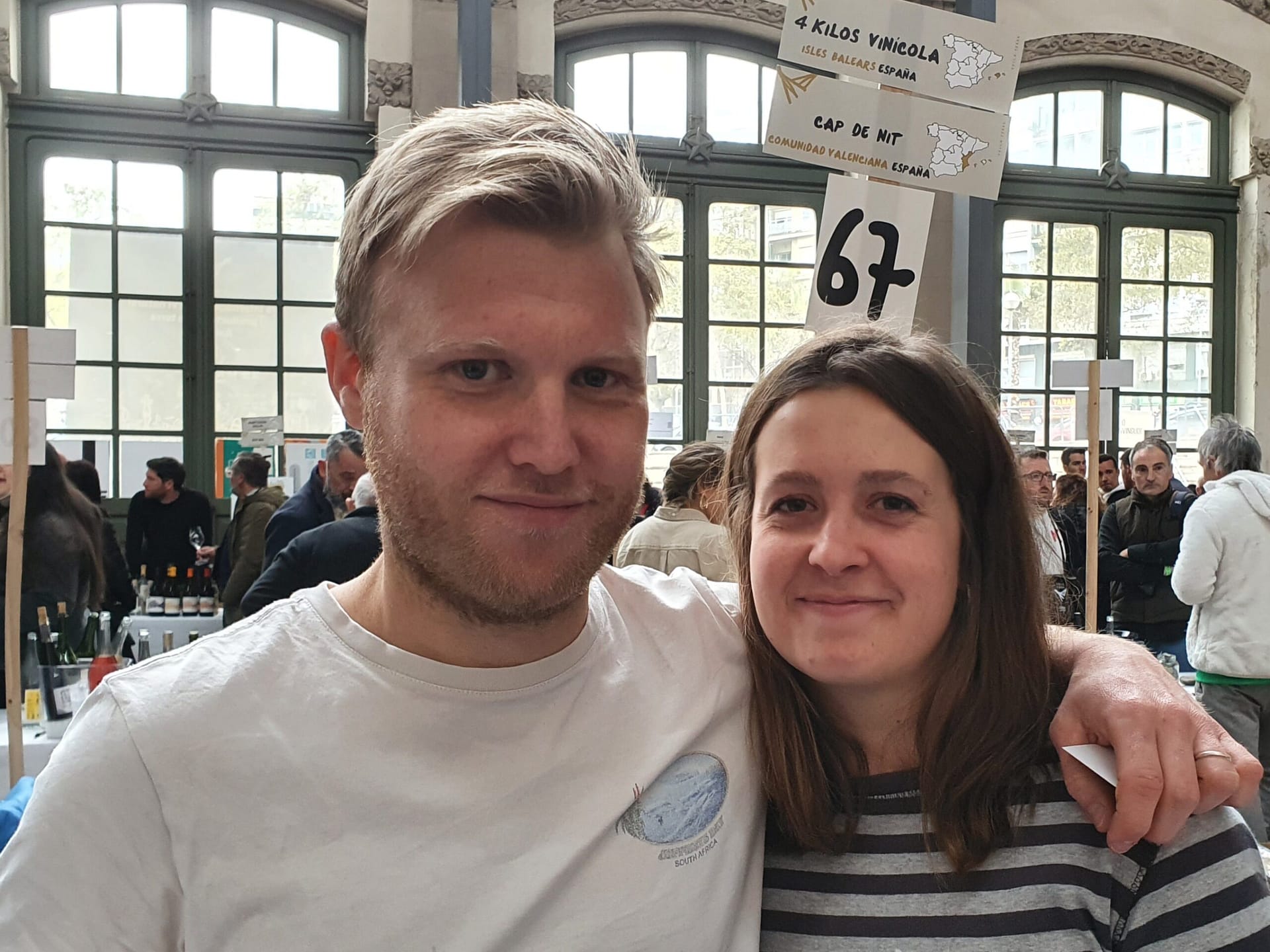
Joshua Kniesel and Josie Cleeve of Cap de NIt, Alicante
Cap de Nit is a young family winery that produces wines in the Marina Alta in the north of the province of Alicante. Josh and Josie started the project in 2017, looking for old vineyards of native varieties, to work them in strict organic farming. The vineyards are mostly located in the Vall de Xaló, in the coastal mountains. The small plots are hidden between plantations of almond, orange and olive trees. Work in the field and in the manual warehouse. – The wines are made naturally, fermentation is spontaneous, temperature is not controlled and the wines remain on the mother lees throughout the ageing. No type of additive is applied. The fermentation and aging is done in 500 liter clay pots and stainless steel tanks. They work with different degrees of maceration. At the end the wines are bottled by gravity. – Grape varieties: muscat of alexandria and giró
Rubén Salamanca and Elisa de Frutos, Malaparte
The real name is Bodega de Frutos Marín, but this producer is most often called Malaparte, after its most famous label. Rubén and Elisa cultivate 5.5 ha of vineyards near Cuéllar, in the province of Segovia. They employ various techniques, such as tanks, old barrels and amphoras. All vineyards are farmed dry.
This is close to Ribera del Duero. Nevertheless, and in spite of a lovely amphora-aged tempranillo, I would say they are mostly a white wine producer, offering verdejo and viura in several fashions. Maybe because I am currently working on an article about the historical wines of the lands of Medina, I chose OX. This is obviously an abbreviation of oxidative, a feature of the “dorado” wines. It is a mix of varieties (I will check, but typical, and recommended in DO Rueda are verdejo and palomino fino), 65 year old vines. The wine rested one year under “flor”, and was then transferred to “damajuanas” (big bottles, demijohns in English). It arrives naturally at 14%, and is not fortified. It has all the yeast, almonds, dried fruits aromas that one night expect, and in the mouth it’s glyceric – and more fruity than its sherry equivalents.
Aitor Irazu, Makatzak
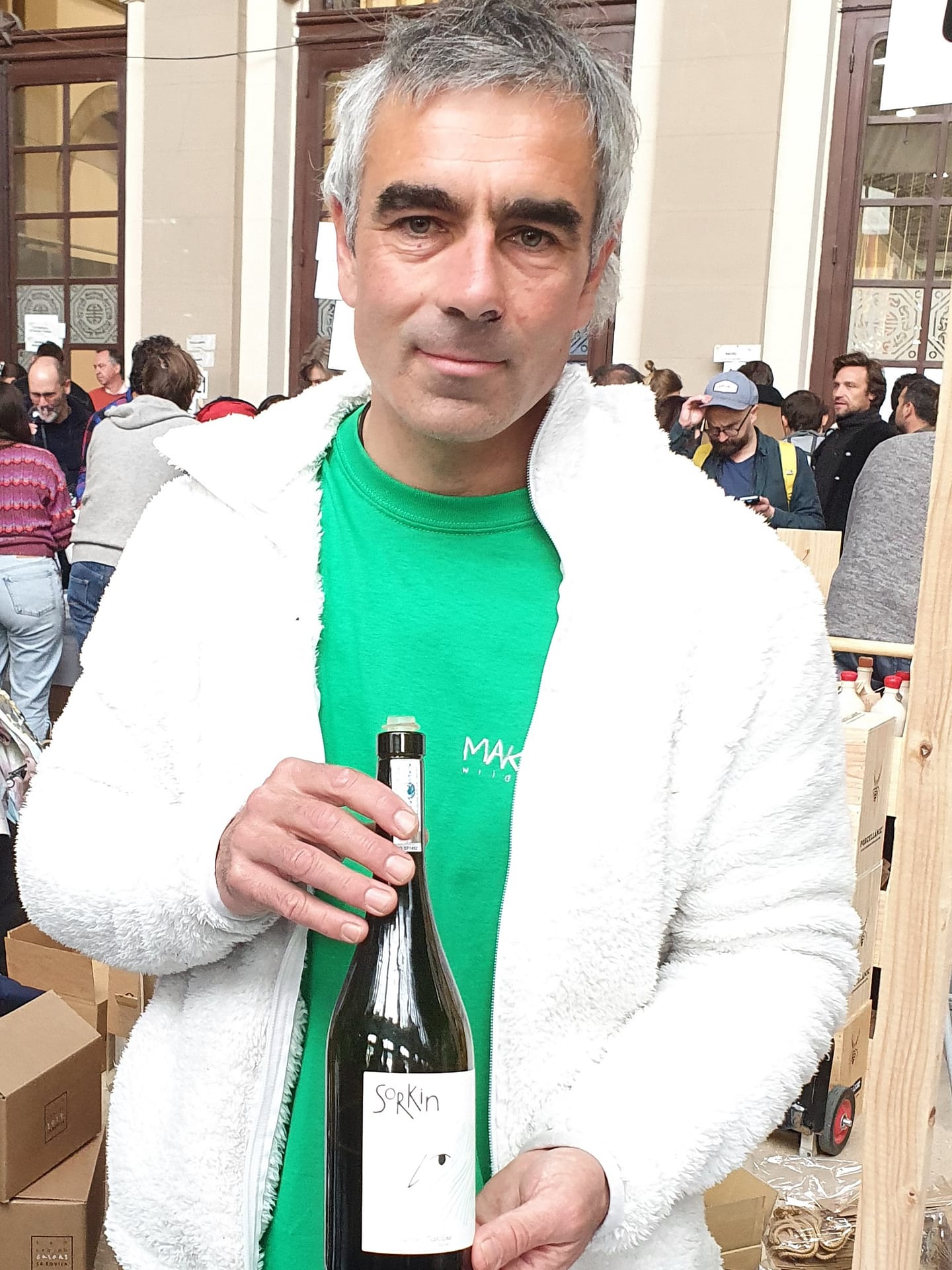
Makatzak Wild Wines is a Basque project found in Aia (Guipuzcoa), near Zarauz, that really has impressed me. Here is no talk about conditions “not favourable for organic growing in our region”, as we often hear. Aitor Irazu Alonso started the winery with his cousin. Here he manages the Sorgintxulo vineyard, that after being abandoned for 5 years now is restored. It is an ecosystem of 3 hectares of vineyards, whose main variety is the hondarrabi zuri. Atlantic climate with high rainfall, mainly southern exposure, steep slopes and slate soils are the main characteristics. The work is based on ecological, natural, regenerative and biodynamic agriculture. Makatzak are now receiving their organic certification, and will later aim also for a biodynamic one.
Sorkin 2021 is light in colour, has an aroma of green apple and bright citrus, and comes with a wonderful acidity. It’s a natural txakolí that’s “impeccably clean”, I imagine the classic British writers would have said. A prime example of the growing natural wine scene in Spain.
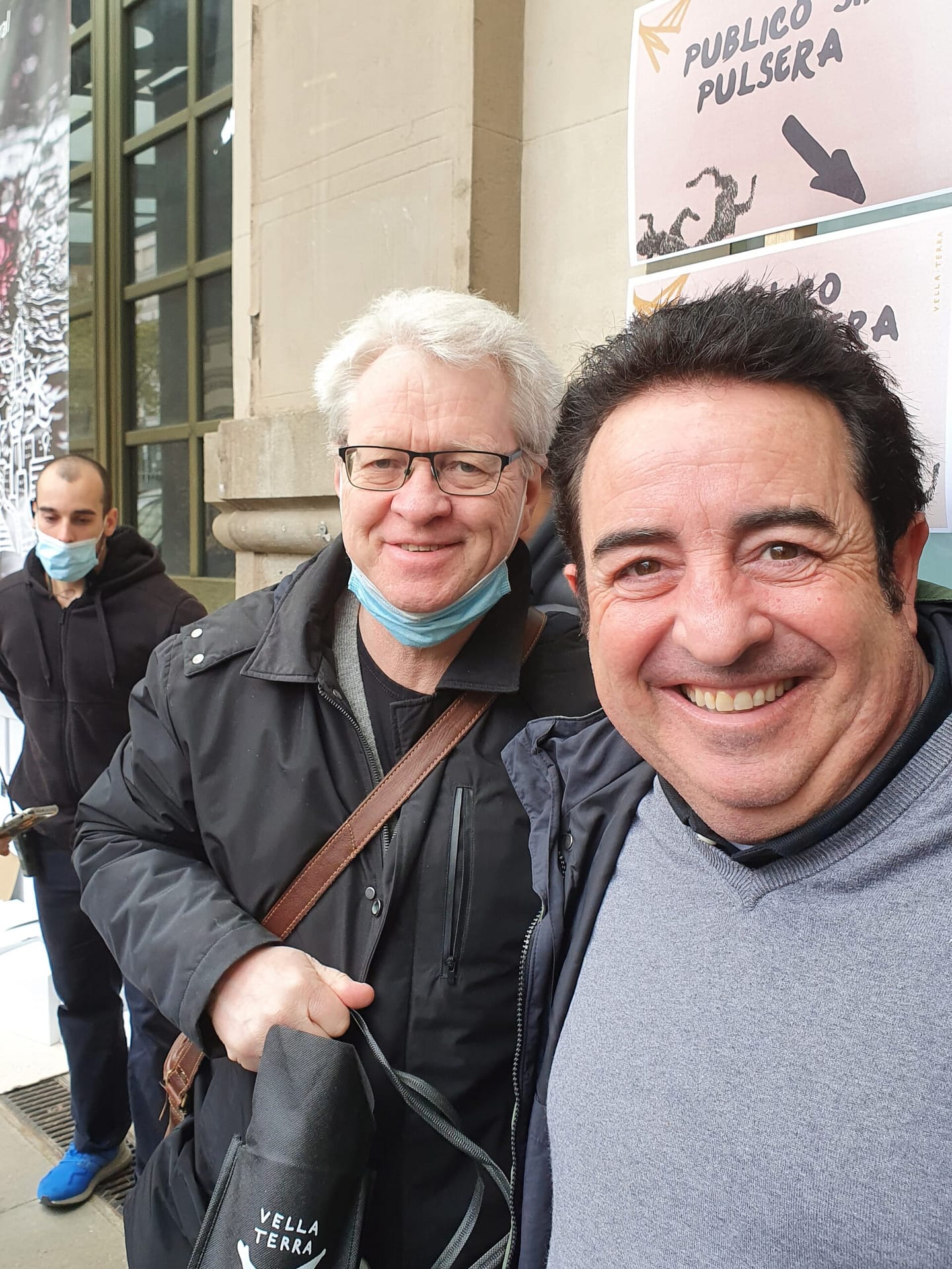
Pepe Mendoza was one of the vintners that didn’t expose, but came to the fair to taste and talk to colleagues. I met accidentally in the entrance line.
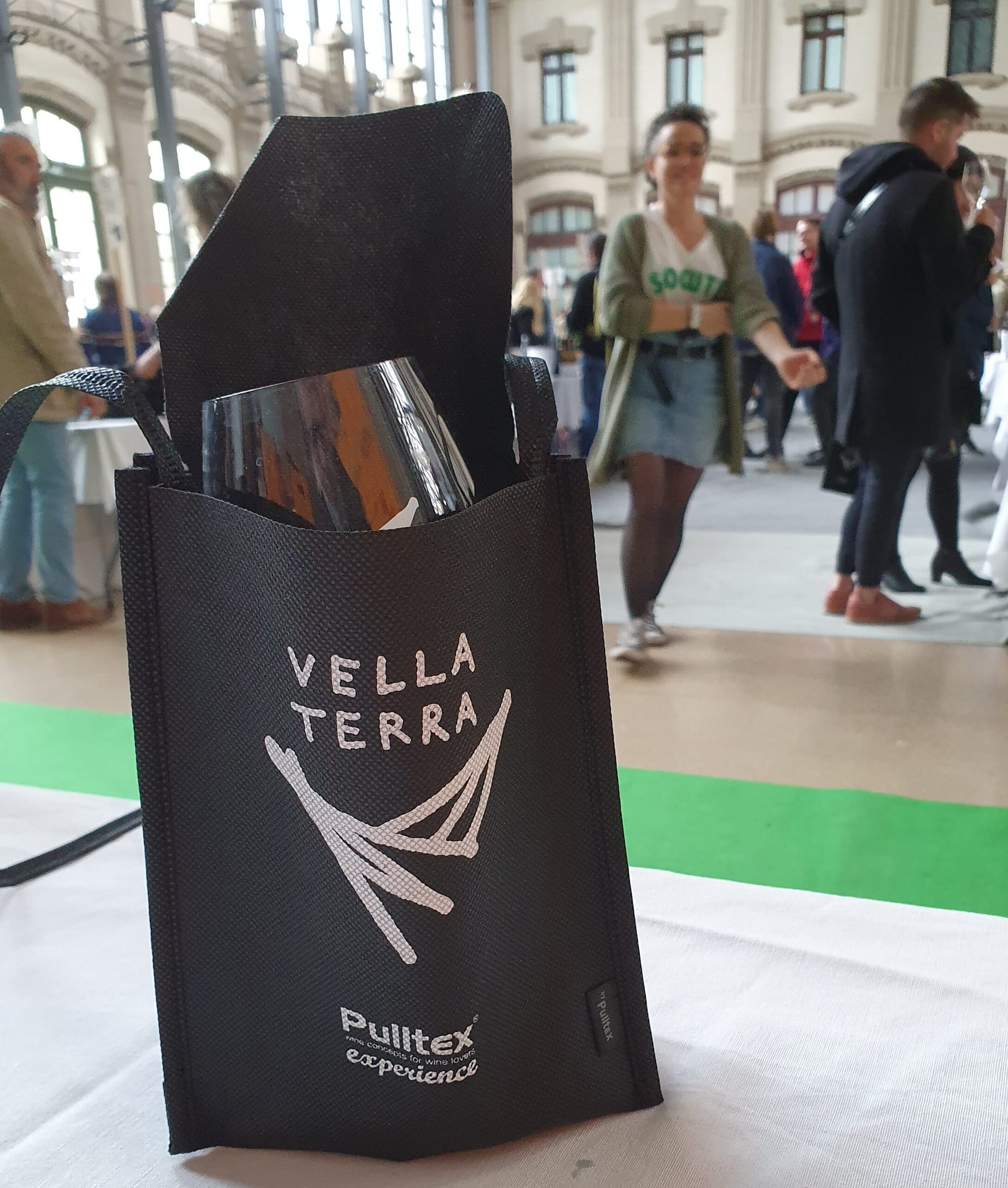
End of Day 1. I bring my glass back to the hotel in a bag provided by accessory distributor Pulltex. See you in next post, where you meet a bunch of “foreign” producers.
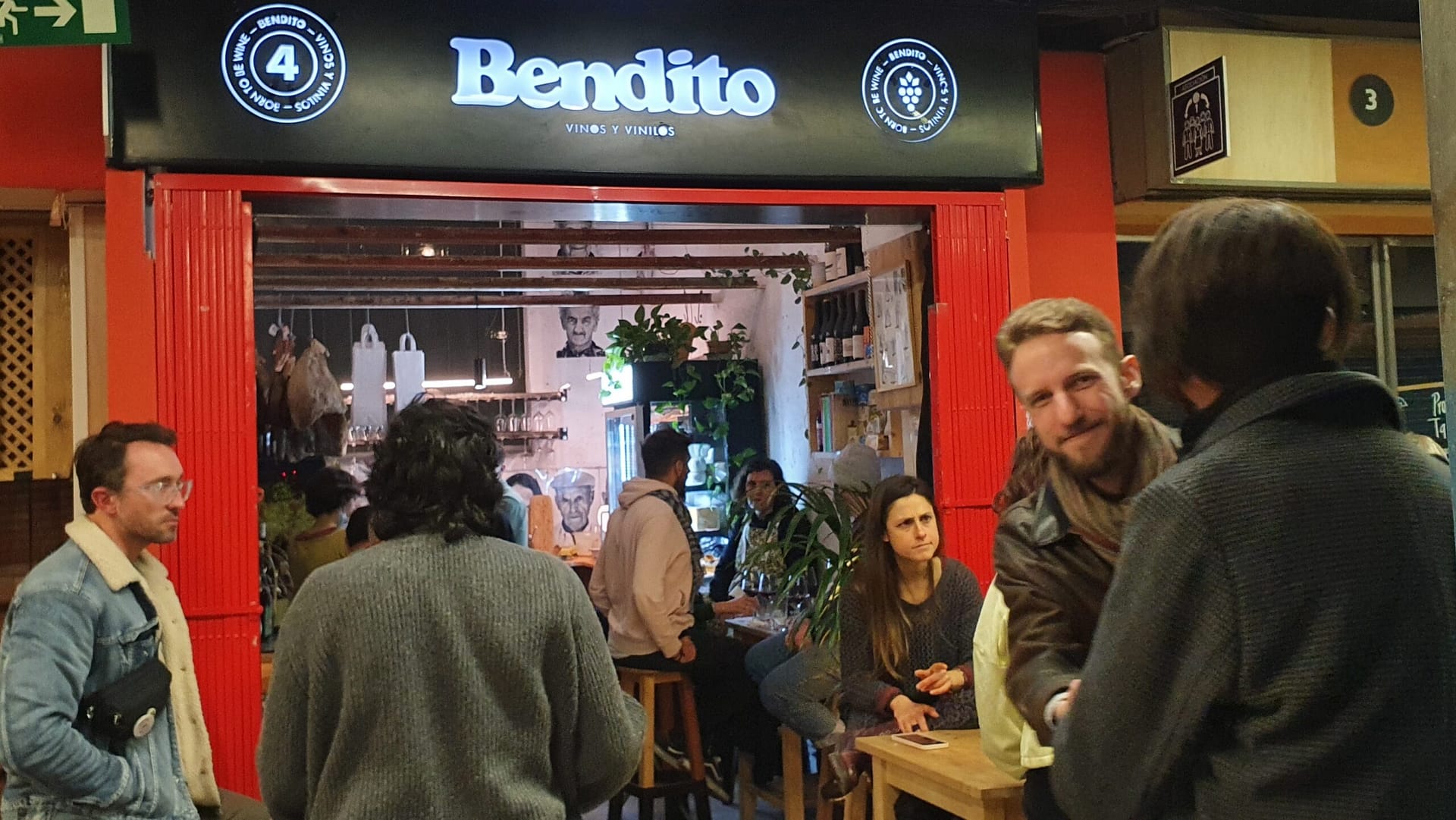
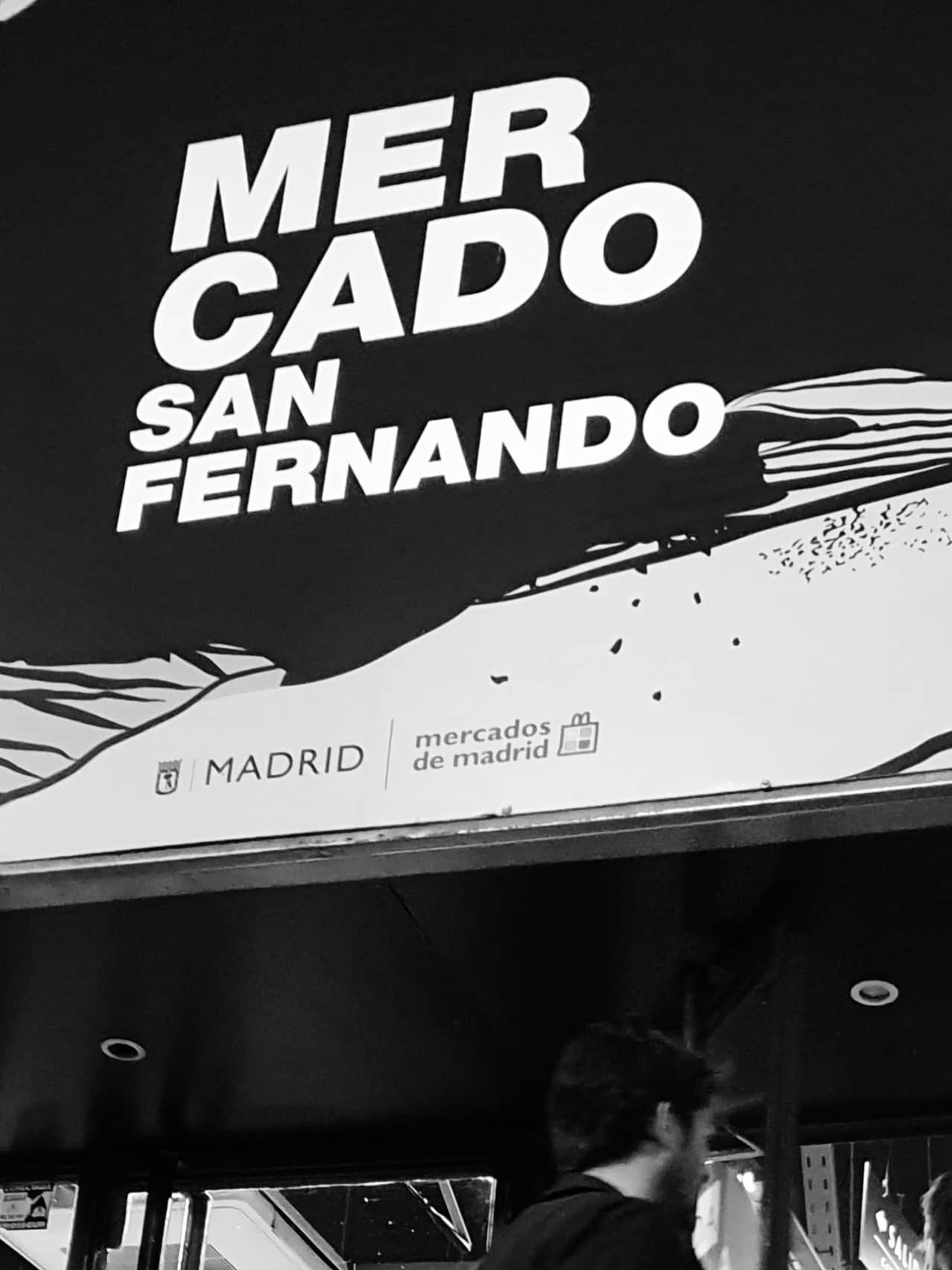
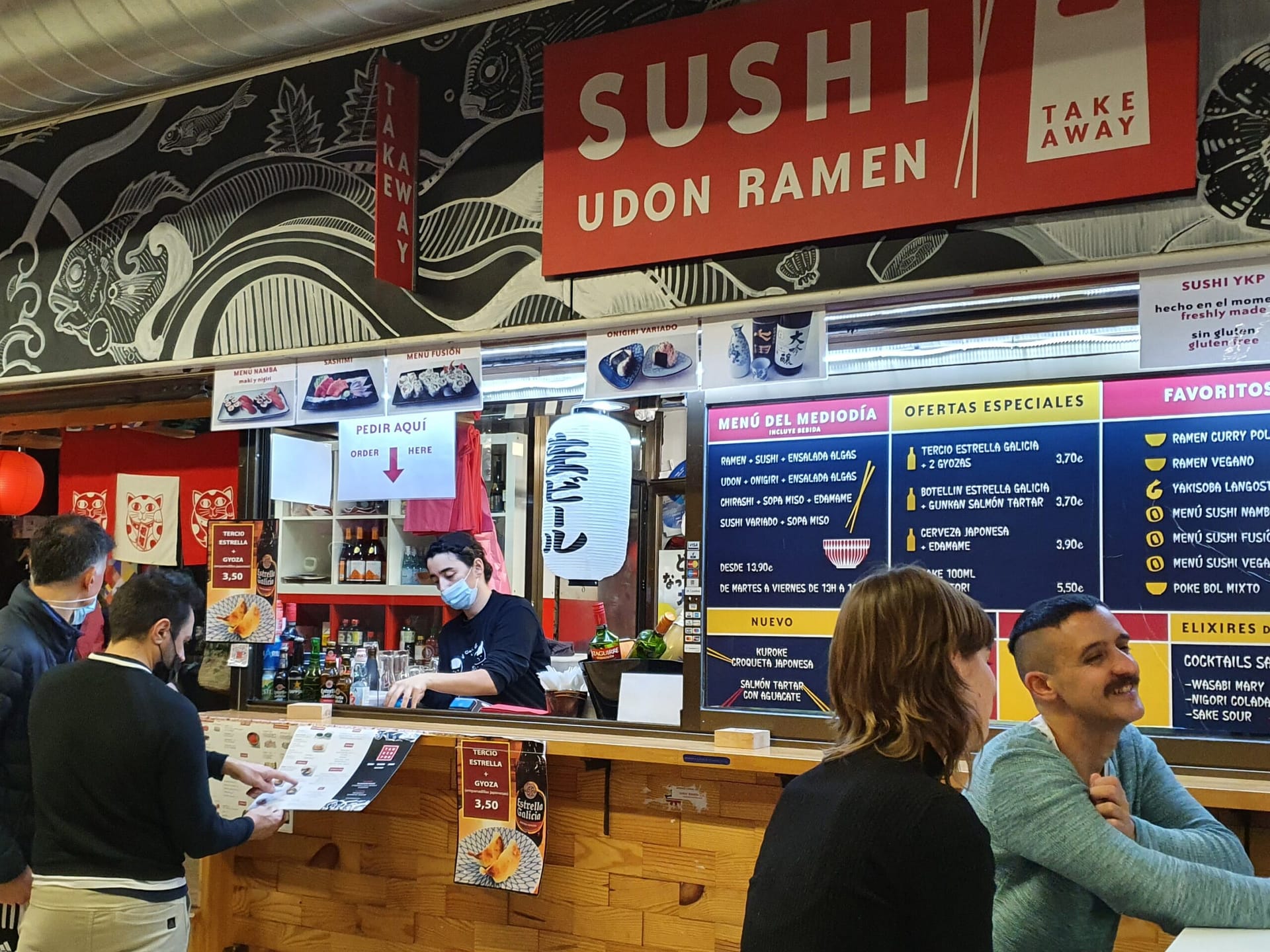
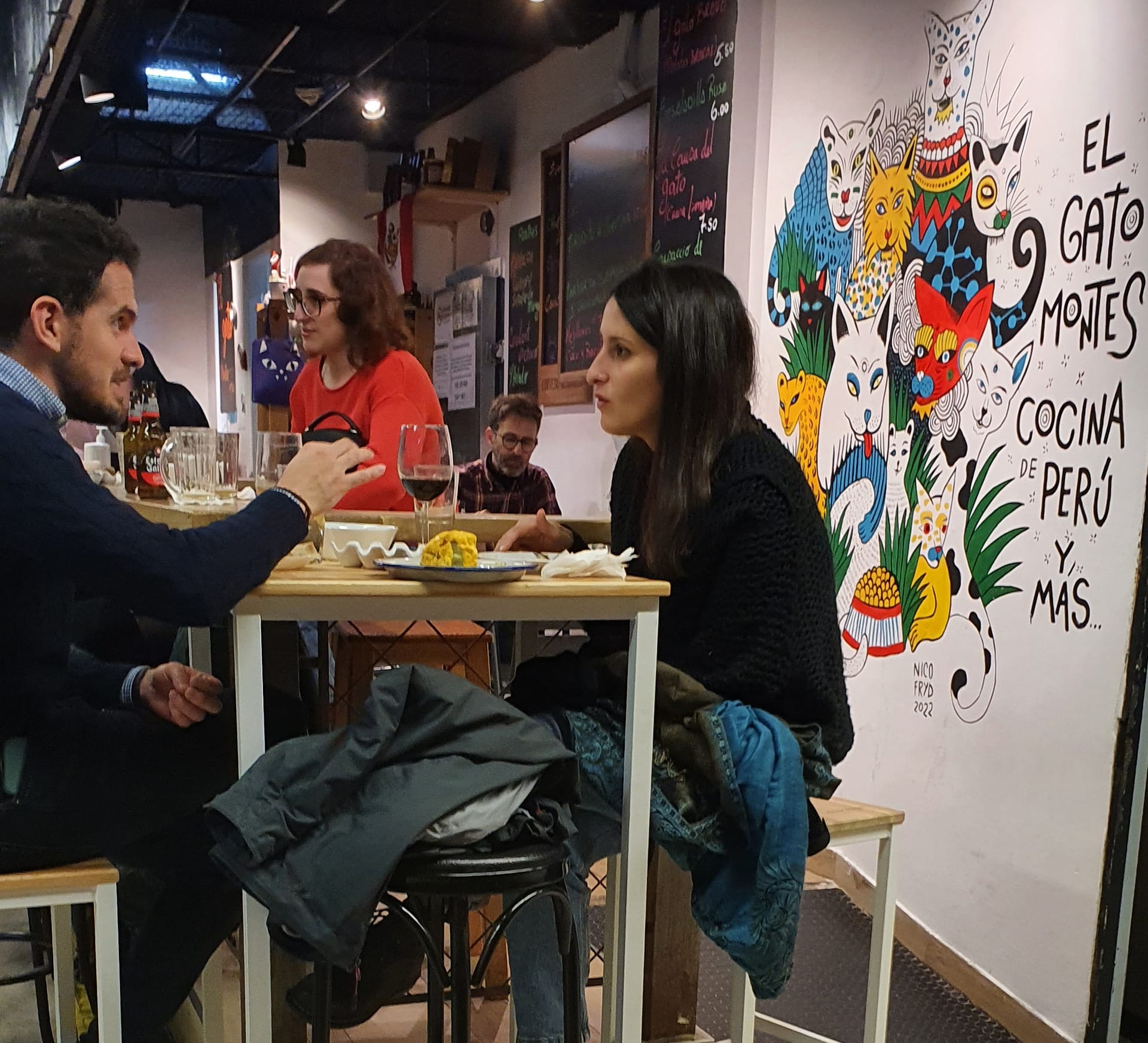
Bendito Vinos y Vinilos (wine and vinyl) is an all natural wine bar in Madrid’s Lavapiés barrio. This hilly neighborhood was earlier a cheap place that attracted many immigrants. (Here is a link to another restaurant, to be published.) Bendito is located inside the multicultural San Fernando market, that looks like a gathering place for the cultures they represent. Lavapiés is now the most international neighborhood in Madrid. Once the Jewish quarter, much later the immigrants actually established many bars here. After Spain’s entry into the EU, there was a new wave of migration. Therefore Bendito is a good place to get to learn about the changes in Spanish culture and gastronomy.
Owner José González selects cheeses and hams from many places. These are served with economic down-to-earth wines chosen by Ilan Saltzman, wine responsible, while the vinyl records spins in the background. By the way, Bar Bendito means the blessed bar, with all the allegories that it is possible to derive from that name.
I was there last Friday and the following Sunday and enjoyed a handful of wines both days, all served with small bites of cheese or charcuterie. This report is mainly based on the first visit.
One of the wines that night was Pampaneo Airén 2020 from Esencia Rural, a very fresh, lemony sparkler from Toledo. Read more about it here.
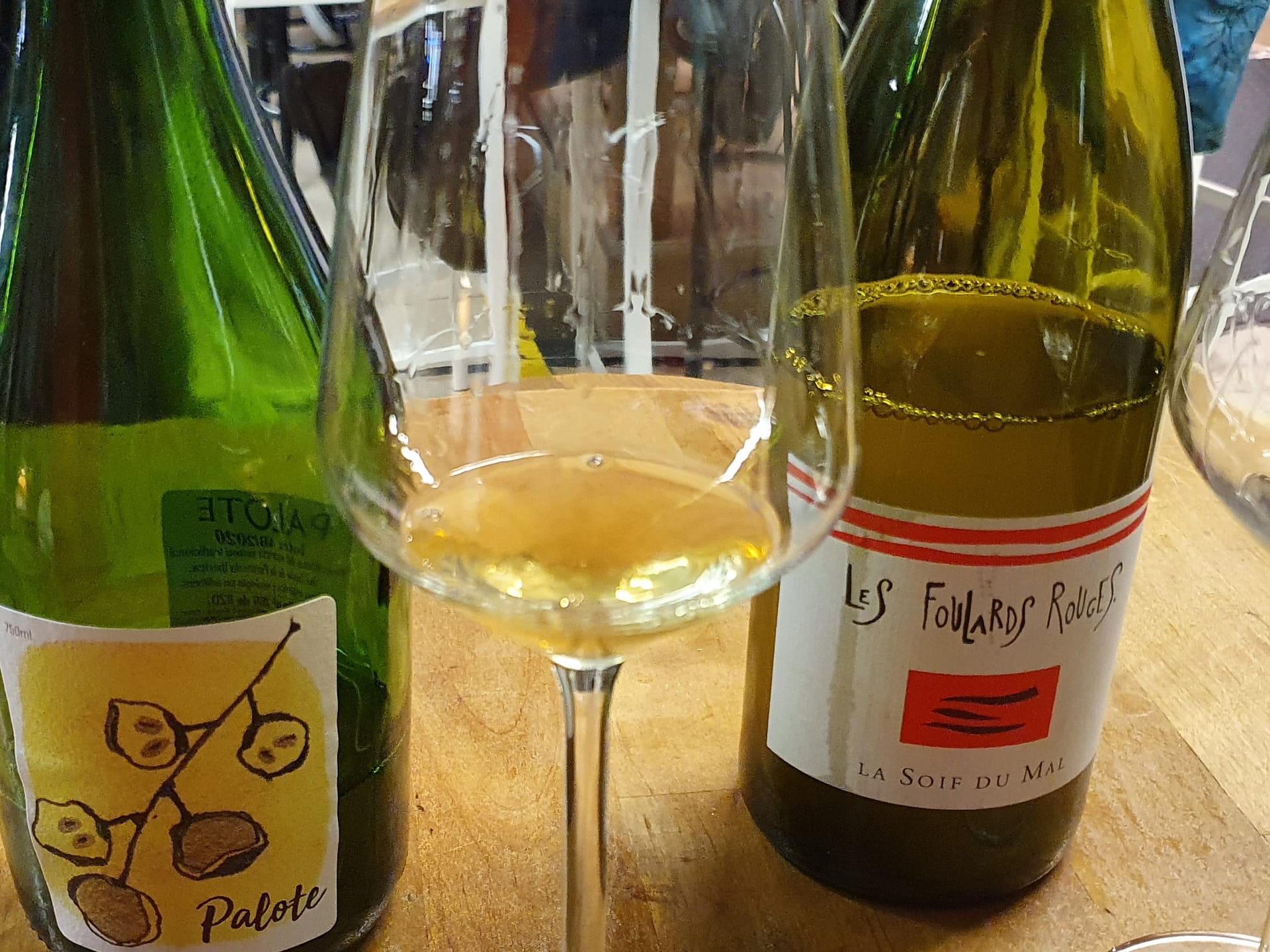
A delightful habit of the wine bars is when the waiter gives you a couple of sips, before you decide which wine you want in your glass. Here my waiter Ilan poured three samples. One of them Soif du Mal Blanc 2020, a muscat-dominated wine from Les Foulards Rouges, over the French border. I chose to wait until some other time, and go for a Castilian wine. Palote 2020 from Microbodega Rodríguez Morán in the province of Salamanca was made from palomino grapes. It rested one week with skins and stems. Thereafter it was aged in clay, finally bottled unfined, unfiltered and without sulphur. The colour was light orange/amber, slightly turbid; nice aroma of yellow fruit, elderberry, flowers and a touch of figs; good acidity, it plays with bitterness, but it’s restrained. A blue cheese accompaned these first wines, and it went surprisingly well.
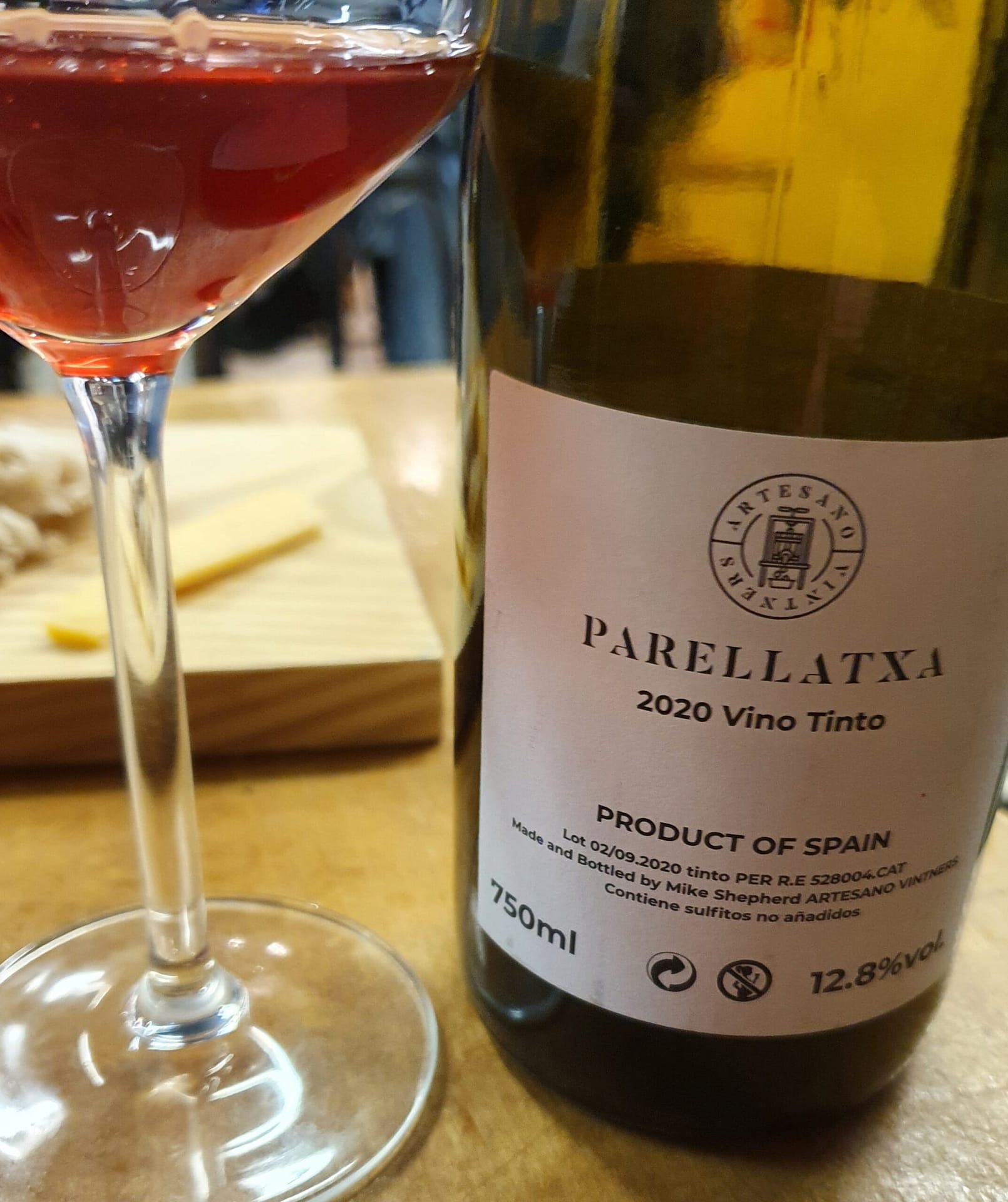
Behind Artesano Vintners is Mike Shepherd, who has a past in Australia in two important natural wine houses. Now in Catunya he grows only 2 hectares. Parellatxa 2020 is a clarete: Pale red; vibrant fruit, raspberry; very light delicate touch of tannin. The name is put together by the varieties parellada and garnatxa, but this you have already figured out.
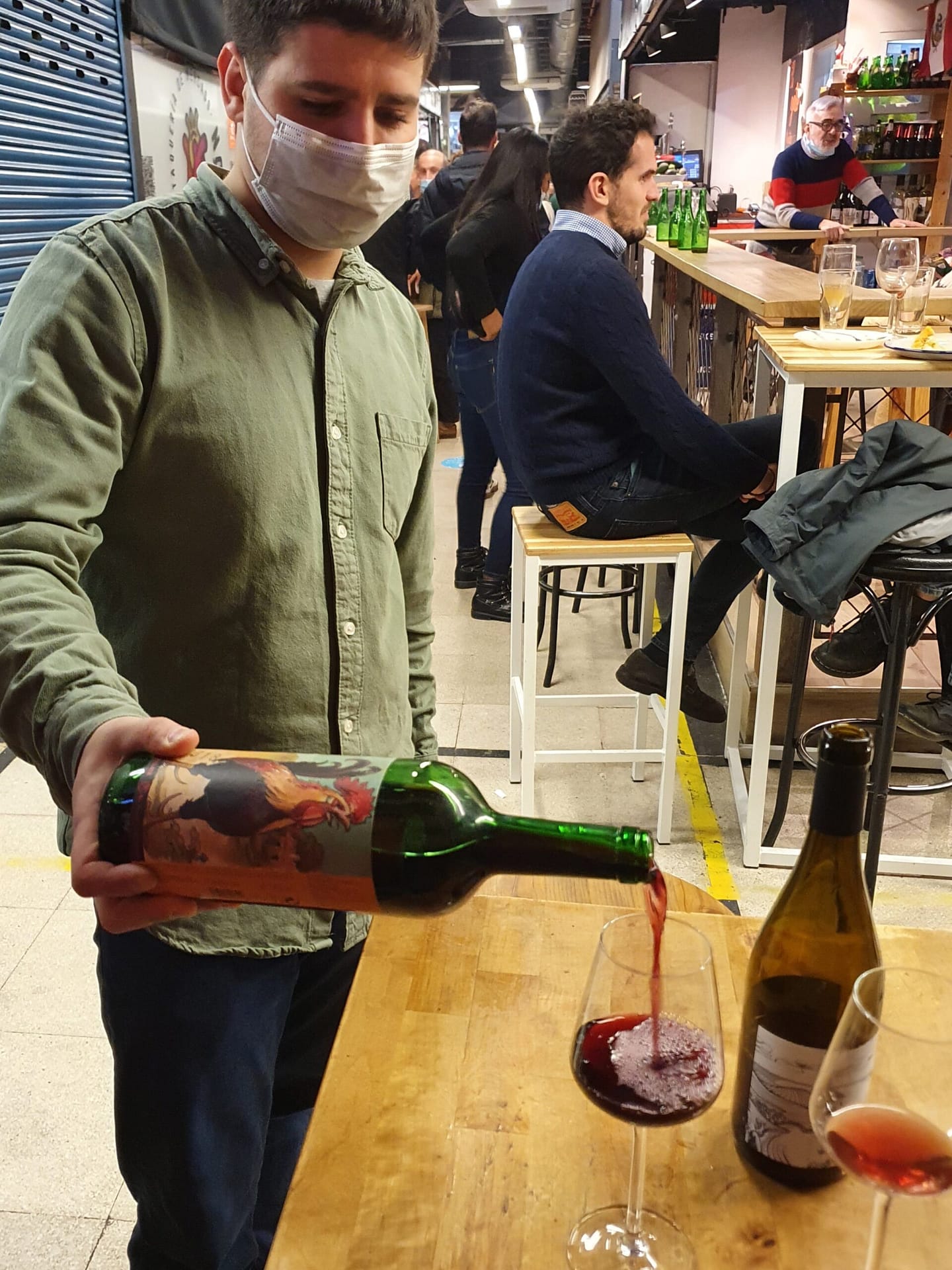
Ilan Saltzman (originally from Canada), wine responsible, serving the Kikiriki
Kikiriki 2018 is made from ull de llebre (tempranillo) and carinyena in a vineyard from 1979, by Manel Aviñó of Clos Lentiscus, Penedès. He works employing biodynamic techniques and ferment the grapes by variety before assembling the wines. Dark cherry colour; blueberry, also lighter fruit (raspberry) and a touch licorice; juicy with light tannin, good acidity, and over all truly fascinating.
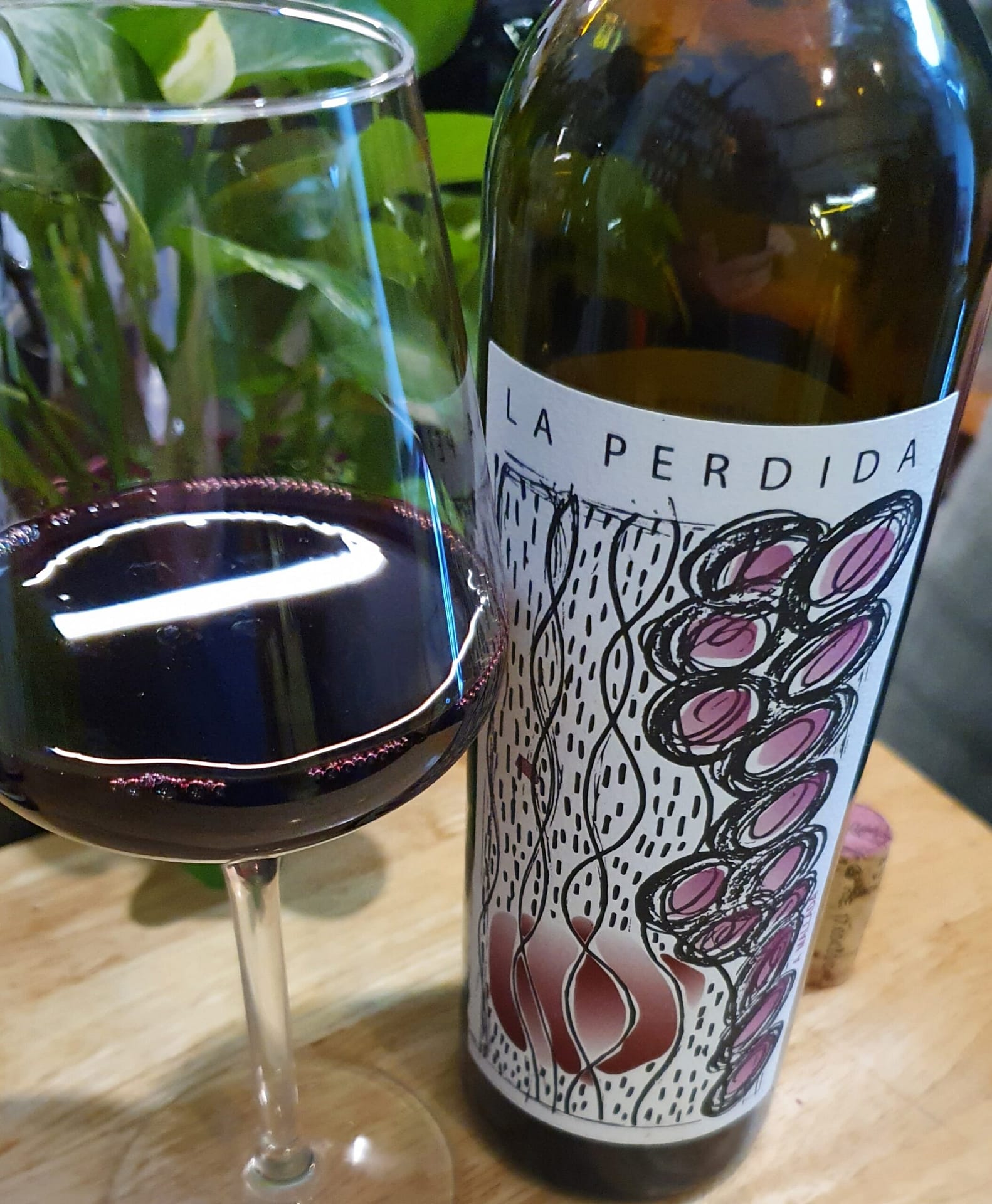
Nacho González makes his wines within Valdeorras. But he is not a member of the DO, thus his La Perdida wines carry the designation Vinos de España. A Mallada 2020 is made from sumoll and garnacha tintorera. Fermented in amphora, aged in old oak, bottled without sulphites. It’s dark, quite complex; on the nose it displays something sweet and sour (sweet cherries, acidic berry stones?) and very fresh fruit; there is a young dryness in the mouth, lovely acidity.
About the second visit I will report very briefly. It went more or less like the first visit. The two absolutely brilliant wines were Jordi Llorens‘ Ancestral de la Cristina and Oriol Artigas‘ El Rall, both from Catalunya, both from 2019. The former is from the Conca de Barberà area in the province of Tarragona and lived up to normal standard, light yellow with its clean appley and mature lemony easy-going character. The latter I didn’t know. It’s a sumoll (the grape) from DO Alella, north of Barcelona city, and showed a cherry-dominated red fruits side, with a pleasant juicyness in the mouth. The best of the rest, and a surprise too, was Sin Prisa 2018, a forest fruits-coffee-scented monastrell without added sulphites from Bodegas De Fábula, Murcia, near the regional capital.
Below: Only two of the many international cuisine restaurants in the San Fernando market.
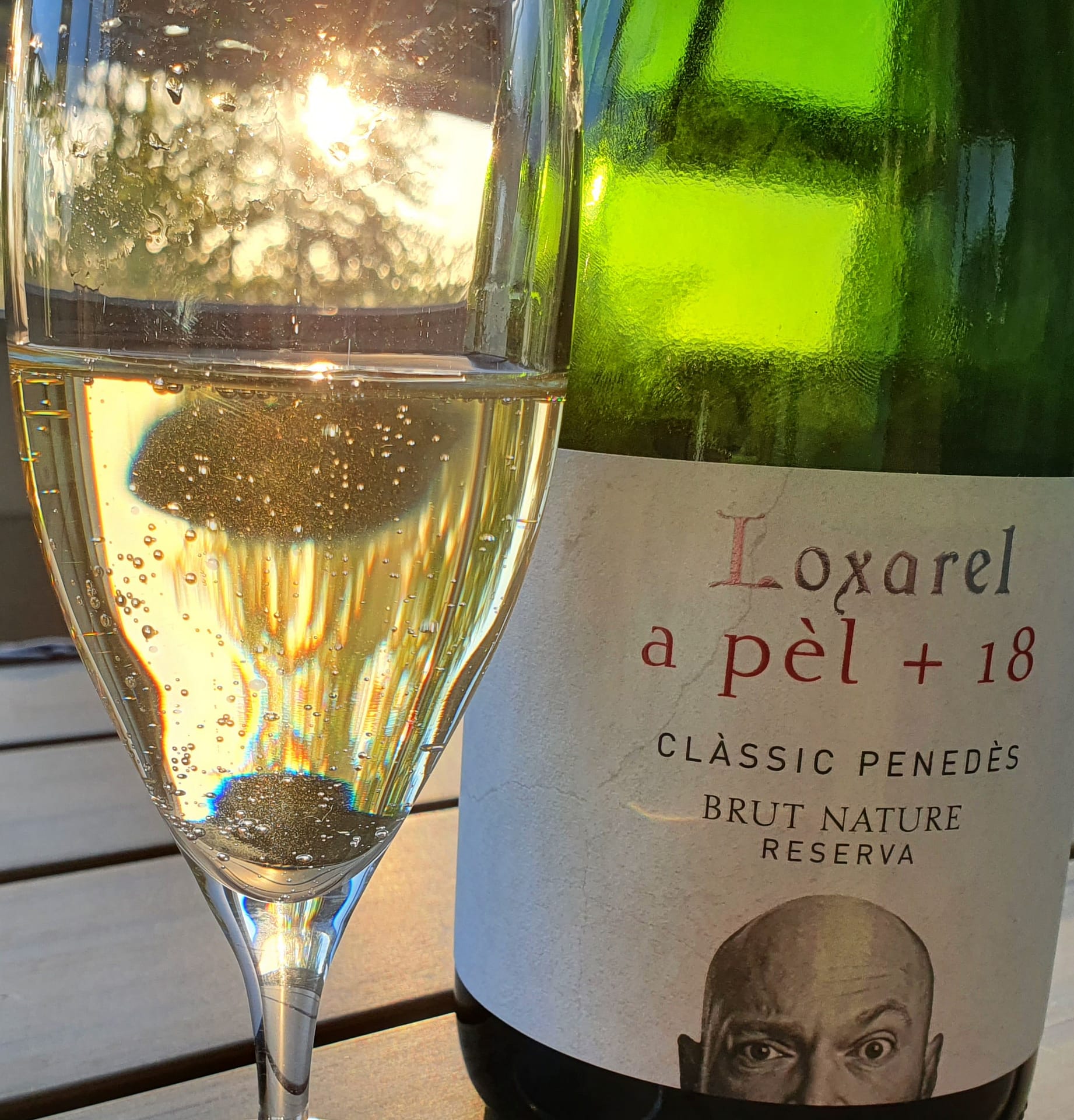
Loxarel I have met at a couple of artisan fairs, in Barcelona, and as far as I remember, in London too. Masia Can Mayol, the official name, is Josep Medios, fifth generation. When he got in charge of the family firm at a young age he changed the philosophy of this old winery. He started bottling wines, converting to organic, then implementing biodynamic techniques. (Here is another good sparkler from the house.)
The winery is located in Villobí, on a plain not far from Vilafranca del Penedès, but they have also plots in El Pla de Manlleu, higher in altitude and a bit further west.
This winery is among the many that are now abandoning the DO Cava. Among the reasons for this can be a challenging reputation that the appellation has gained over the years, and the fact that it is not dedicated to one specific geographical area. More about this in a future article.
This particular sparkler is made up from xarel.lo 55% (now widely recognized as the best of the “usual suspects” for ageing), then macabeo 30%, parellada 5%, and the rest chardonnay, a grape that I have nothing against, even not here, even not native. I interpret the name a pèl +18 as the time spent on lees (and not skins).
A Pèl +18 Brut Nature 2016(Loxarel/ Masia Can Mayol)
Light straw, greenish tones, creamy mousse. Mild Mediterranean smell of aromatic herbs, yeast, mature lemons and yellow apples. Creamy, tasty, rounded but dry.
Price: Low
Food: Apéritif, Iberian cured ham, light fish and shellfish…
Time to celebrate. Maybe not the year that lie behind us, but rather a toast to life, art and good wine itself. There are many possibilities; champagne, crémants, cava… Cava? All right, listen.
Agustí Torello Roca (AT Roca) belongs to the family that gave us Kripta and other great great cavas and wines from Sant Sadurní d’Anoia. While Agustí Torelló Mata (ATM) has turned to organics AT Roca goes further; with a more natural approach, and has also joined the ranks of those who leave the very strange DO Cava, that in reality stands for a way of making wine rather than a sense of place.
Agustí Torello Roca and his father and aunt Agustí and Lali founded AT Roca in 2013. One of the first priorities was to join DO Classic Penedès, a subdivision under the DO Penedès formed in 2012. It started with just 10 members, and has been growing ever since. DO Classic Penedès is perhaps the first governing body that requires organic certification in order to be a member. In addition to the farming requirements, 15 months aging on the lees is the minimum (while only 9 months within DO Cava), and all wines must be made by the traditional method and vintage dated. AT Roca goes further by only using indigenous yeasts and harvesting 100% of their grapes by hand.
For their single vineyard wines, they ferment in used barrels and age the wines on the lees under natural cork instead of crown caps, both of which are rarities in the region. Sulfur is only used once to block malolactic as an effort to retain the acidity. All their wines are zero dosage. They only work with indigenous Catalan grape varieties, with a focus on macabeu.
AT Roca Reserva 2016(AT Roca)
Yellow with greenish hints. Aroma of fennel, lime, breadcrumbs. Good body and concentration, nice acidity, and a salty dry finish.
Price: Medium
Food: Good Spanish ham, light meat, salads, dried fish and tasty shellfish
Oníric and Entre Vinyes marks a new organic project from Maria and Fernando Barrena, also partners at Azul y Garanza, with headquarters in Navarra.
The Catalan word oníric means a dreamer and denotes the dream that the couple had, to take over and rescue old parcels and vines that had belonged to their family.
The grapes for this wine come primarily from an old vineyard in the the Baix Penedés with poor soils and naturally low yields. The grapes were pressed before a fermentation in steel tanks. After a 20 days fermentation the wine rests on lees for 6 months. It also undergoes a partial malolactic fermentation. Then it’s bottled with a small addition of sulphites. Unfined, unfiltered.
Yellow with greyish green. Floral aromas with yellow apple and apricot, a touch of almond. Good volume in the mouth, good acidity and a slightly bitter finish.
Price: Low
Food: White fish and white meat, shellfish, hard and mild cheeses, salads
Here is the last account in this round from A Emoción dos Viños, 10th edition. There were a number from outside of Galicia, from Portugal, even from France – and Titerok-Akaet from even further away, Lanzarote (in the same country though). Here are some great wines from very reliable producers.
Ismael Gozalo is nothing less than a legend within the natural wine world, and famous far outside the borders of Spain. From Nieva (Segovia), Castilla y León, he disposes of centenary pie franco verdejo vines that has been used for the wines of Viñedos de Nieva, and later Ossian. Now he is “travelling alone”, with two lines, one called MicroBio, and the other bears his own name. Well, centenary is here an understatement: Some vines are no less than 280 years old. I have written about his wines many times, so you can search through this pages, and you will find a lot more information. I didn’t taste all the wines either, because I have done so several times. A short post about one of his lovely Nieva York pét nats was published in late May this year (read here).
Ismael met up with Iría Otero (more from a visit to her place in Ribeiro here)
Ismael is a very hardworking, dedicated bloke. But he also like to play with the rock’n’roll myth. Correcaminos is a lovely unpretentious wine, light, unfiltered, open, “mature grapefruity” and thirstquenching. And naturally enough, because of the name (“roadrunner”), it gave name to his “coronavirus tour”. I guess because of the virus there has not been too much touring, but it’s a cool nod to the rock merchandise business anyway. La Resistencia 2019 (an amphora wine from two different parcels and 4 months on the lees) is also slightly turbid, vibrant, with a lovely acidity. MicroBio 2019 (whole clusters, aged in old barrels): Very light in colour; aroma of green apples, flowers; full, rich, juicy, and tasty with a slight touch of sweetness. Sin Nombre is a favourite, and a house wine by me (when available). The 2017 vintage had some colour, golden with green; aroma of stone-fruit, yellow apples, a touch of cinnamon; it’s creamy, a bit buttery, cidery, juicy, and just lovely. I also tasted a Rufete (don’t remember if it was the Rufian or a sample), delicious anyway, a light red wine, packed with red fruits, before I moved on.
Ismael with his Coronavirus TourT-shirt
Marc Isart was there, both on behalf of himself and Bernabeleva, where he is co-founder and winemaker. I have followed Bernabeleva for some years. They are located in San Martín de Valdeiglesias in the Madrid part of the Gredos mountains. They work the land according to biodynamic principles, and in the cellar they use whole bunch fermentation and ageing in neutral wood. They generally use low extraction, and I would say their wines are among the most elegant in the area. For the records: They also make white wines, mostly from albillo. Highly recommended. But because I know them well, I chose to concentrate on Marc’s own range this time.
His own project is further east in the DO. Vinos de Madrid, in the subzone Arganda del Rey. Here he grows both tinto fino, or tempranillo, and the white malvar between 700-800 meters of altitude, on calcareous soil that contains gypsum and clay.
In the La Maldición line we tasted the Cinco Legua Malvar 2019 from calcareous soil, with 40-50 days skin-contact, made in neutral barriques. Malvar is related to airén, but is more aromatic and has more acidity. This wine is technically an orange wine, but is light golden in colour, has a flowery nose (roses), also nuts, lightly textured and full in the mouth. I also liked the clarete of the same name and vintage, made with 15% tempranillo. The majority of the rest is divided between malvar, airén and various other white varieties. The wine is light red;, with aromas of raspberry. In the mouth it is lightly textured, with fruit to the end. The red version, again with the same name and vintage, has 85% tempranillo and 15% malvar, and was blended in the cellar. Cherry red; dark fruits (blackberry), some spice; very clean fruit, and good structure. Gleba de Arcilla 2018 is a wine only from this local form of tempranillo, with one year in used oak. It’s dark red; again with blackberry, some spice and coffee; round in the mouth, with a touch of wood, that will easily be integrated.
Marc Isart, representing himself and Bernabeleva
Germán Blanco makes wine in Rioja and Ribera del Duero. You can read more about this here, in a report from the Simplesmente Vinho fair in February. Albares de la Ribera, just outside the boundaries of the DO Bierzo to the east. Casa Aurora is a tribute to his great-grandmother who handed down the first vineyard. Albares is in a transition zone between the valley and the Bierzo Alto at 850-900 meters of altitude.
Germán grows three hectares of own vineyards. He also buys grapes from two local farmers. These go into the Clos Pepín, a straightforward red fruits-fruity wine that is pure joy, also in the 2018 version that he presented here. Most wines contain many grape varities, including white ones, and I don’t list all of them here. Poula 2018 is a village wine, a mencía blend from various plots. I found it quite fine and elegant, juicy in the mouth with fine-grained tannins. La Galapana is the vineyard handed down from his great-grandmother, almost 1.000 meters altitude. In the 2018 vintage this was darker, with more menthol, but also red fruits, and in the mouth more structure than the previous wines, with an amount of tannins, though very fine-grained. More structured is also Valle del Río 2018, a 60-65% garnacha tintorera: Deep red, blue tinge; red fruits and forest fruits (blackberry), solid tannins and with a vivacious acidity. The most obvious wine of guard among these.
Germán Blanco, Castilla and Rioja
Alfredo Maestro and his wines I have known for some years now. Originally from Peñafiel in the heart of Ribera del Duero, where he has his bodega, but disposes of magnificent vineyards in both Segovia and Madrid provinces. This time I took the opportunity for an update of some of his wines. There is a lot about him on this blog, but I recommend this article as an introduction. El Marciano is a high altitude (1.150 meters) wine garnacha and albillo land, where Alfredo is doing a great job on behalf of the Gredos community. It’s a fresh red-fruity wine, a bit earthy with some texture, generous in the mouth and lovely, lively acidity, and the 2019 is no exception. El Rey del Glam, now in 2019 vintage also, is his take on carbonic maceration. The grapes come partly from the high Gredos vineyards, partly from Peñafiel. There is no pressing, nor destemming. Carbonic maceration is carried out in steel tanks, then malolactic in the same tanks. This wine is also very fresh, with cool, red fruits, and a touch of carbonics in the mouth. It has just a bit of structure, and can be served slightly chilled.
A Dos Tiempos 2019 is from Navalcarnero, a high altitude village in the province of Madrid and the name refers to the fact that the grapes are harvested twice. Alfredo explains that the idea is that the first harvest gives a lot of acidity and low alcohol, while the harvest one month later gives less acidity and a richer alcohol. Then the two are blended and one gets a fresh wine with balanced, ripe fruit and tannins and just enough structure. It was aged six months in used barrels. Here the garnacha is complemented by tempranillo. By the time I got to his table it had been a long day of tasting and accumulated tannins, so Alfredo recommended a taste of his Brut Rosé to rinse the mouth. A delicious strawberry and red fruit-driven sparkler, by the way. Then I tried his classic ribera del duero Valdecastrillo 2018, from various plots between 750-1.000 meters of altitude. This wine had been ageing in half French oak, half chestnut for one year. A super, classic, yet individual ribera; cherry red, potent aroma of berries with a touch of dried fruit (figs), and a long, fruity finish. After this I had decided to leave, but I couldn’t resist tasting a long-time favourite, the lovely fruity, non-oaked Viña Almate. A really interesting one is the white Consuelo 2018, a full-bodied, citric albillo mayor from more than 100 year old vines in Valladolid and Burgos, with 7 days of skin-maceration and fermentation in French oak.
Alfredo Maestro, Castilla y León
After all these Castilians something from Catalunya: Can Ràfols dels Caus I visited in the Garraf zone of Penedès many years ago, when Carlos Esteva was turning his family estate into one of the most dynamic properties of the region. But they have somehow been neglected by me for many years now, for no particular reason. It’s not that I haven’t tasted any wines, but it was nice to get the chance to meet present manager Rosa Aguado for a real update here. The estate comprises 90 hectares of vines, and other crops in addition. The oldest vineyard is one with xarel.lo from 1948. It was in 2008 that they went organic, and at present biodynamic practises are introduced too.
Here is a brief account of some of the wines: Gran Caus 2018, xarel.lo 50%, chenin blanc 30, chardonnay 20:The colour was light golden, citric on the nose, with yellow apples, and quite fat in the mouth. Xarel.lo Brisat 2019: Brisat is a Catalan name for orange wine, and as the name implies this is deeper gold; it has an aroma of flowers, lemon, wax and honey; full on the palate. El Rocallis 2016, from manzoni bianco: Light golden, greenish; aroma of mature apples, aromatic herbs, lime, mothballs; lightly textured, good acidity, long aftertaste with some nuts. Rosa had brought two vintages of their merlot rosé. Gran Caus Rosat 2019 was very light cherry red; raspberry, some vegetal hints in the aroma; very juicy, with a fresh acidity. The 2018 was more towards peach colour; more forest fruits on the nose; and it showed some evulotuion, some “positive oxidation” we could say. Sumoll 2017: “Fine like pinot, rustic like nebbiolo”, I think this was how Rosa described the sumoll variety. The wine showed cherry red colours; red fruits (raspberry, cherry) on the nose, a little spice too; and surprisingly structured in the mouth. Finally Caus Lubis 2004, 100% merlot, one parcel, oriented towards the mountain: Good colour, a bit brick; good evolution, plums, dried apricot, some cinnamon and tobacco; round, complete, still some fruit and acidity. In good shape. “Pomerol del Mediterráneo”, she called it. Not bad.
Rosa,Aguado, Can Ràfols dels Caus
João Roseira of Quinta do Infantado I met for the first time in the late 1980’s, after he had become the first one to break the monopoly of the Porto/Gaia shippers and exported directly from his estate in the Douro. I started this series with Antonio Portela, organizer of this fair. And I round it all off with João, who runs what we can call a “sister” event in Porto, the Simplesmente VInho, where Antonio also participates. (Look around these pages for many accounts, you can maybe start here with a report from this year’s fair.) João admits that it’s difficult to sell port wine these days. But while you are thinking that port is out of fashion, I assure you: Quinta do Infantado is different. The Roseiras, João and now his nephew Álvaro, who has taken over as chief winemaker, want a dryer style. They ferment longer than usual, so there is less residual sugar and more alcohol. Therefore less addition of alcohol is needed, and it is also added gradually. This makes them more dry, and the alcohol is balanced with the fruit.
I visited his farm in February, so I just tasted a few wines this time. I simply had to re-taste their fabulous organic Ruby Reserva, that you can read about here. Then I sipped to some of the standard reds and ports (among them the organic tawny) while chatting with João about the times, especially with reference to the coronavirus and the destiny of port in general. Other than that I tasted the wines João had brought from 2010, the year. Quinta do Infantado Colheita 2010, the first ever vintage dated organic port, did not disappoint: Red fruits, figs, dried fruit, a vibrant acidity, balanced alcohol.
João Roseira, Porto and Douro
This was a much too short report over three articles from this initiative in the wonderful Atlantic environment. Watch out for small reports, wines of the week and other stuff. See you again!
There were several wine fairs that were postponed due to the uncertainties around the coronavirus outbreak. But as far as I know this was the first major fair, and the only one so far that I planned to attend.
Luckily there were many danger-seeking people like me, who decided to go anyway. One of them was Carles Mora Ferrer of Penedès, one of the heroes in this story.
Me and Carles at Elliott’s
As readers of this blog may know, Raw is a fair for natural, artisan producers and seeks to highlight the “poetry” in the wine. And it has become something of a worldwide community, as the fair has expanded to places like Berlin, New York and Toronto.
Sager & Wilde, Ries & Shine, Antidote and Dandy were among the restaurants that were registered in the #rawwineweek program. And Lady of the Grapes was hosting an event on Women’s Day 8th March. I used the opportunity to visit Elliott’s, as you will soon hear more about, but also favourites like Flor, the Spanish tapas place Brindisa, and the Portuguese Bar Douro (read a post from my visit here). I attended two tastings held by several importers. And the first thing I did was making an appointment with a rising star of British wine, the Tillingham winery. (There will be more about this in the next post from the “fair”.)
Elliott’s Café
At Elliott’s Café, Borough Market I had four wines this time, the two from Clot de les Soleres offered in the by the glass-selection. Allow me first a few words on the winery. In Piera, close to Sant Sadurní (the Cava capital) lie Carles Mora’s family vineyards, abandoned since the 1960’s. Many years later Carles planted some cabernet sauvignon there, and the intention was clearly to make natural wine aged in amphora. Today he and his partner Montse hav 5-6 hectares of not only cabernet, but also chardonnay, and the local varieties macabeo and xarel.lo, that they tend organically, and there are zero additivies in the vineyard or cellar, except for a little copper/sulphur in the vineyard when absolutely necessary. The vineyard lies around 300 meters above sea level, on calcareaous soil, with small stone and pebbels. There is a Mediterranean climate with a lot of sun, but also a breeze from the sea that regulates the temperature so the grapes will not be “baked”. They want to express the terroir, but also the grape variety. So for that reason, only varietal wines are made.
Clot de les Soleres Macabeu 2018 was a pale, slightly pétillant wine, pears and flowers scented, with lovely lemony acidity. The red Clot de les Soleres Cabernet Amphora 2018 was deep dark, dominated by black fruits like blackcurrant, but also with a mineral touch, and well-structured and very vibrant in the mouth.
Cabernet Amphora
Aside from this I had the V&S Bacchus 2018, from 2naturkinder of Franken, Germany. This was golden in colour, with orange peel and flowers as dominant aromatics, and full and “orangey” in the mouth. Last this afternoon was Rivera del Notro 2018(Roberto Henríquez), from Bio Bio of Chile, made from the país variety. The wine was light cherry red, with raspberry and some ethereal note. Quite firm in the mouth, and moderate acidity.
Elliott’s has delicious small dishes to go with the wines too. After recommendations from the sommeliers I chose stratiacella (an eggsoup with cheese and nutmeg) culatella (a cured ham from Parma) and hake ragu with the four mentioned wines.
Outside Weino BIB (Fernando 2nd from right)
Tasting at Weino BIB
Fernando Berry from Elliott’s is involved in the import company Otros Vinos. Together with a couple of other importers they invited some of the visiting producers to the small wine bar Wineo BIB near Dalston Junction.
So let’s go back to Clot de les Soleres. At Weino BIB Carles served both white, rosé and red wines, still and sparkling. Some were samples, as far as I remember. I hope I have got the names and vintages right. All the whites have been pressed before they ferment in steel, spent the winter in tank and bottled in spring. After the same Macabeu as at Elliott’s the other afternoon there was the Chardonnay 2017, a light, clean and citric wine, mellow in the mouth and with a year more it has achieved a good balance between alcohol and acidity.
The Xarel.lo pét nats (Ancestral I think the name is), vintage 2015 and 2017, were fascinating. With 30 grams in the 2015 when it was bottled (less in the finished wine because it continues to ferment) golden yellow in colour, with an aroma of mature apples and lots of bread from the autolysis; rich and mouthfilling, with a sweet touch, but nice acidity to match. The 2017 was made in the same way, but behaved differently. There were muh less bubbles, more green apple character, citrus and pineapple, some ginger and herbs too, and also some toast, and an excellent acidity. The Chardonnay 2018 pét nat came from two tanks. It showd ligh yellow, more fruity and citric; still with an unfulfilled potential, but with time this will also get a good balance between sugar and alcohol.
Carles of Clot de les Soleres
I tasted the Rosé Cabernet Sauvignon 2017, a very pale, peach-coloured wine (pressed less than one hour), flowers and strawberry-scented, quite soft but with good acidity, before turning to the reds. The Cabernet Saugivnon 2014 (from 22 year old vines) had only been in tank. It was dark after six years, with typical cabernet aromas such as blackcurrant and a vegetal component; slender in the mouth with a nice structure. Cabernet Sauvignon 2016 had stayed 13 months, then bottled. Also dark, and very fruity, with blackcurrant, green pepper, sour cherries, and an inspiring acidity. It comes with 14% alcohol, but it’s well integrated. The Cabernet Sauvignon 2017 were made in the same way, except for a period in three amphoras of 700L (from Extremadura, because of the quality and type of clay): This one was a little more on the “wild” side; more sour cherries, also with more red berries; quite big in the mouth (13% alc.).
Near Clot de les Soleres, in the tasting room but also the Catalan bodega itself, is Ferrán Lacruz. He runs the Bodega Clandestina in the village of Sant Martí Sarroca, not far from Vilafranca del Penedès. The farm has 8 hectares, of which 3 is planted with vines. The bodega name has inspired the titles of the wines too, Blanc Sence Papers, Fugitiu, Censurat and Confiscat. I think there is no need to translate, please tell me if the contrary is true. The first vintage was 2018. It’s an organic and natural project, no additives, not even SO2, and he works outside any appellation.
Ferrán Lacruz of Bodegas Clandestina
All the wines are samples from the 2019 vintage, so I will just go briefly through them. Blanc Sense Papers 2019 comes from a more than 50 years old xarel.lo vineyard. The grapes from the three plots were harvested seperately at different times to ensure perfect ripeness, the different harvests are fermented in steel and aged in demijohns for different periods of time, and the last harvest kept in oak for 4 months, before blending it all and bottling unfined and unfiltered. -I base my wines on acidity, says Ferrán, -and I like Bourgogne Aligoté, he answers to my question what he tries to achieve. And acidity he has managed to retain. It really is acidic. I am not sure if it has the body to match, but time will show. The Blanc Fugitiu is another varietal xarel.lo with three weeks maceration. The skins are always inside the wine, as it is held down with an inox net. It finishes in 500L barrels and amphoras from the French side of Catalunya. This one is much more textured than the former, in the sense of tannins. It’s a bit more funky too, but has nice flowers and citrus peel aromas. Orance Censurat is a carinyena blanc with 4 weeks skin-contact, then aged in amphoras for 5 months. Also a bit on the funky side, but very nice citric notes and quite floral too. The Ancestral Confiscat is a xarel.lo sparkling wines with one year and three months ageing in bottle. The colour is yellow, and there is an abundancy of bubbles; very fruity, appley character with evident autolysis. A promising sparkler.
Le Quais á Raisins is a producer from Aubais in the Languedoc, started in 2015. They are Imogen and Robin, from England and Alsace respectively, who met there while studying. They have also worked abroad, being inspired by and have worked with the Swartland Independent Producers of South Africa, to name just one of the places they have experienced. Imogen was represented here. They only own 1.5 hectares, but use grapes from friends in Languedoc, Roussillon and Rhône. Everything is organic, and some places biodynamic practises are also employed.
Imogen Berry of Le Quais á Raisins
Among the wines were Umami 2019, a pét nat with 9 months on the lees from muscat and grenache with no sugar, and no SO2 added. A very nice wine with aroma, a bit peachy, some brioche; it was mouthfilling, with nice acidity, and a saltiness at the end. Méridional 2018 from rolle, grenache and muscat, was floral, but also mineral, and very fresh, – fermented in tank, and some 15% in neutral wood. Embruns 2018, made from macabeu in alluvial soil, was light, pear-like in aroma, there was a little more oak-influence there, and some smokiness. A really interesting one was Syrault 2018 (from syrah and cinsault) from calcareous loess: Cherry red; aroma of blueberry, flowers, mint, pepper; a little sweet sensation in the mouth, but after all an easy-drinking wine. Then a delicate, yet fleshy amphora-aged cinsault called Lopin 2018. Before we rounded off with the Garmatcha 2018 (a grenache, or garnacha grown on limestone and gneiss): Darker colour (because of small yield, more extraction, more punch-down), 18 months in 400L oak (some young, some neutral): It had a intriguing smell of chalkiness, red fruits and herbs, a fruity and well-structured, concentrated taste with some coffee/lickorice towards the end.
Matthias Hager
Matthias Hager is located in the northern part of the Kamptal, and is known as one of the most creative producers in the area. He produces terroir-driven wines from his 14 hectares of vineyards, from Mollands, his hometown. He has had a biodynamic certification since 2005. He works with different soil types, like loess and clay. He uses different product lines, literally speaking: A label with a blue line represents a fresh and young wine, while a brown line denotes more earthy, flavorful characteristics. Red line stands for no sulphites.
Here are the wines he brought, in brief: Grüner Veltliner Mollands 2018: Light colour; fruity, with pepper and other herbs; smooth, quite concentrated, dry and salty. Grüner Veltliner Urgestein 2018, from schist soil, 10% skin-fermented, made in old oak and steel: This one is more yellow, more mineral, also with peppery tones; good weight in the mouth, and evident acidity. Completely natural. Riesling Alte Reben 2016, 10% skin-fermented for 6 weeks: It’s light yellow; flowery, fruity (but also some mineral); in the mouth it’s textured, rich. A nice take on a riesling.
Red line denoting no additions
Riesling PUR 2015 is a wine with 100% skin-contact for 3 weeks: Golden colour; a bit waxy, appley, with ginger and some honey; full in the mouth, textured and with a good acidity. Lastly the Zweigelt Blauburger 2018, an “Austrian merlot”, as Matthias called this second variety (a cross between blauer portugieser and blaufränkisch, noted for colour, not tannin or acidity). The grapes were grown on clay (the zweigelt), loess and schist soil. The wine is blueish; smells of red berries, some green components (pepper), herbs; it’s clean, soft, luscious and also crispy.
Stay on this channel for more from the first restaurant.