This wine concluded a jazz club meeting with tasting at my local wine bar, called Tempo, after the famous bicycles that were once produced in the building.
Scar of the Sea is ru by Mikey and Gina Giugni in San Luis Obispo, California. They work with farmers who practise low-intervention in an attempt to make the viticulture as sustainable as possible. As they say, they want their wines “to tell a story of where they come from, the people who farm them, and reflect each vintage under the California sun.”
You have by now understood that they work organic, and ferment with native yeast. The wines see only a minimum of sulphur additions, and they are not fined or filtrated.
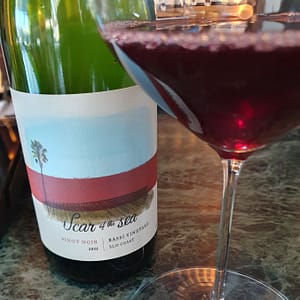
The Bassi Vineyard Pinot Noir is produced from around 25 year old vines on the hillsides of Avila Valley by the coast. It’s in transition to biodynamic certification. It was The fruit was fermented with 70% whole-cluster. The wine was pressed once dry in a wooden basket press then aged for 10 months in old French oak.
Bassi Vineyard Pinot Noir 2022(Scar of the Sea)
Ruby red. Fruity scent, aroma of raspberry and strawberry, white flowers and herbs. Fine tannins, good body and concentration, fresh acidity. A Californian with class.
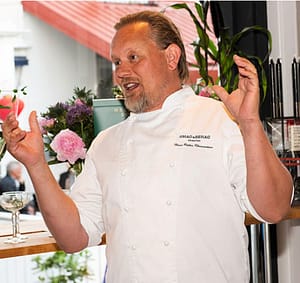
I have been a couple of days in Grimstad, Norway, the beautiful seaside town of my childhood. The most inspiring restaurant these days is Smag & Behag. They have also opened another restaurant in neighbouring Kristiansand. But this is the original. The wine list is not very extensive, but they have a magnificent underground cellar, high ambitions – and the selection is well-crafted and consists of organic and natural wines of good quality.
Hans Petter Klemmetsen, founder and chef (Credit: Smag & Behag)
For a four course meal I selected four wines together with the waiters. The three first wines -young and beautiful- were Brocard‘s saline Chablis Sainte Marie 2022, Domaine de Nozay‘s flinty Sancerre 2022 and Olivier Merlin‘s raspberry-scented Bourgogne Pinot Noir 2021. Instead of going for a dessert with a sweet wine I chose a selection of cheeses and this week’s wine, a classic style Chianti
Castell’in Villa is located in the south of Chianti Classico, just outside the village of Castelnuovo Berardenga east of Siena in Tuscany. The farm is run by the Greek-born Princess Coralia Pignatelli della Leonessa, who lives in a medieval tower on the property. Out of a total of 300 hectares, 54 ha are vineyards that are all grown organically.
The sangiovese grapes are grown in old river deposits with pebbles and sand, in a vineyard planted in the 1960’s. The grapes were picked by hand and spontaneously fermented, before 3 weeks’ skin maceration. The wine is aged in large oak barrels. Unclarified and unfiltered, and low sulfur (<40 mg/l).
Serving the Chianti
Chianti Classico 2018(Castell’in Villa)
Dark cherry red, with a beginning hint of brown. Aroma of red berries, herbs, leather, mushrooms. Firm and fine-grained tannins, good acidity, notes of tea and plums, with a decent concentration and length.
Clos des Vignes du Mayne in the Mâconnais (southern Bourgogne) has been owned by the Guillot family since 1952. The land has been used for farming for more thousand years, and no chemical products have ever been used. Now Julien Guillot makes the wines in the most natural way possible, and according to a biodynamic philosophy.
The Bourgogne Rouge Les Crays comes from a small plot of vines aged around 40 years old in calcareous soil. Certified by Demeter, Guillot uses natural treatments and preparations. The harvest is manual and the grapes are selected in the vineyard itself.
The pinot noir grapes are macerated in whole bunches for about 8 days. Following spontaneous fermentation with native yeasts, the wine ages in wooden barrels for 12 months. It is finally bottled without being filtered, clarified or any sulphur added.
Bourgogne Rouge Les Crays 2020 (Julien Guillot/ Clos des Vignes du Maynes)
Cherry red. Dark and red fruits (dark cherry, raspberry), tart plum and tea against a mineral background, and a hint of acetone. Good volume, meaty, lovely texture and good length.
In naming a restaurant, managers can provide a headline, if the content follows suit. Here it does. The relatively new restaurant Bravo of Stavanger’s ever more trendy eastern district can be summed up like this: Good food, a select wine list at good prices in a cosy atmosphere.
The food is down to earth but it comes with a creative twist. At the moment the menu consists of eight medium-sized dishes from mainly local ingredients, and a number of snacks. The by-the-glass wine list contains around 20 references, and there is also a longer wine list. The selection largely consists of what you would call natural wines, and all of them are made in an organic, sustainable way. To call the pricing moderate would be an understatement. Look carefully and you can find wines at only 1,5 times the price of the state monopoly.
We were there last Friday, and one of the owners, Rakel Juklestad Helgheim, guided us through four courses and nine wines, assisted by her partner and chef Daniel Vigdel Hansen. Eight of these were chosen from the glass menu and the last one was kindly offered from the longer list by Rakel and Daniel. The platters were shared and most of the wine glasses too.
While enjoying some Spanish olives from the snack menu we decided to go with smoked salmon from producer Jana, right down the road, with carrot and a creamy cheese. It was followed with beetroot with almonds and guasacaca (a Central American sauce), for me the best dish of the evening. Tender cucumber slices struggled to compete with the tasty crab with mustard and lime. Then the kitchen excelled again with a seafood platter with baked ling and spring onion in a mussel sauce with celery and soy.
Knochentrocken 2021(Der GlücksJäger), a sauvignon blanc-chardonnay-riesling from Pfalz, had the volume and roundness that often come with the varieties, with matching acidity. It has some yellow colour, an unfiltered appearance, with melon and lime aromatics.
Smoked salmon with carrot and a creamy cheese, and La Mer, a mineral Muscadet
More mineral with a stony character, sea and salt and some pear was the next, La Mer 2022(Dom. de la Fessardière), a Muscadet, before we with Alsacian Sons of Wine’s Soulographie 2021 were back in a darker and richer style. Made from all the so-called non-aromatic grapes of the region (pinot blanc, chardonnay, auxerrois, pinot gris and riesling) it was nevertheless aromatic, with mature apples, flowers and fennel, and full on the palate with a fresh acidity.
Beetroot with almonds and guasacaca, accompanied by Pommier’s Chablis
It’s not every day that we can add a new Chablis to the repertoire. Pommier‘s 2021 would deliver. It’s light yellow/golden, and smells of green apples, lime – and luckily only a touch of butter. In the mouth it’s concentrated and full of flavour, and has a long, saline finish.
Malterdinger 2020(Bernhard Huber), a chardonnay-weissburgunder (pinot blanc) from Baden came in a light, greenish robe. It showed a richness on the nose, with herbs and butter. The oak was maybe more evident on the palate, and added to the feeling of fullness. I would have given this wine a few years in a cellar.
Scions of Sinai is located in Stellenbosch, South South Africa. Nomadis 2020 is based on cinsault, with contribution of pinotage. Ruby red with red and dark fruits (blackberry, raspberry) and spices. Luscious and savoury. North to Germany and Pfalz, Lebenshilfe is an ecological and social organization, offering work for people with intellectual disabilities. Together with the professionals they have here made the fruity Spätburgunder Trocken2020, a wine with cherry and raspberry fruit, combined with spices and a touch of vanilla. On the palate the fruit follows up, a bit spicy and with a light structure.
Clotaire Michal offered a structure and dark entry for a beaujolais gamay. Maybe not strange, as he had worked several places in the Rhône Valley before settling there. A Fleur de Peau 2019 opens with an animal whiff together with raspberry, plums and spices. It follows up with an impressive structured palate. It’s first of all impressive to taste now, and a terrific gastronomic wine for tasty dishes. However it would easily benefit from a few years more ageing. Back to a white wine, or to be exact… Matassa of Roussillon makes all their whites with skin-contact, so the colour would be darker. Cuvée Marguerite2021 (predominantly muscat varieties and some macabeo) is no exception: Light orange or amber colour, slightly turbid. On the nose there is citrus, white flowers and peach, and in the mouth it’s grapey and quite full, also with a slight tannin.
Last Monday our local wine club tasted German pinot noirs. The tasting was hosted by Erlend Egeberg Aasland, a musician who tours quite a lot in Germany. For the tasting Erlend had selected personal favourites and other interesting wines.
Pinot noir has a long history in Germany under the name Spätburgunder. Today it is widely planted across the country in reaction to the effects of climate change. The tasting showed a generally high level. And for those seeking an alternative to Burgundy, the wines surely offered something, although they are not necessarily much cheaper. The aged wines were maturing well. I found no bad wines among the 12. It is just a question of style; for instance I found a few wines wines too heavily oaked or extracted. Here are four of the best:
Ahrweiler Forstberg 2018(Bertram-Baltes)
For me this was the big revelation of the tasting, and I must taste the other wines on the market. Julia Bertram is a huge fan of the spätburgunder grape and practises organic farming, spontaneous fermentation, minimal sulphur additions and no filtering. Together with her husband Benedikt Baltes she now owns 7 hectares in Dernau, Ahr. The Forstberg is a south/southwest-oriented vineyard on soils of greywacke and sandstone. The grapes were partly destemmed and fermented in large used oak.
This wine was amazingly expressive; garnet colour, a bit reductive at first, then giving way to raspberries, cranberries, herbs/cloves and a hint of smoke. In the mouth it’s highly energetic, with a delicate juiciness, integrated acidity and some structure. Long and fruity finish. Seductive and elegant.
Köningsbecher 2010(Weingut Heitlinger)
Heitlinger is one of our host’s personal favourite producers. They cultivate their vineyards organically with biodynamic practises. I have enjoyed their delicious economic pinot at several occasions. This one is a more serious grosses gewächs from the south face of the Kraichgau hills, on limestone-rich sedimentary soils.
Light red with shades of brown. Mature red berries, autumn leaves and some dried fruits. Full-bodied with good structure and concentration, some bitterness in the finish. It’s lovely at the moment, maybe at its peak. I would not cellar it.
Rheingau is a riesling bastion with a long tradition for long and winding wine names. Mineral fertilizers and herbicides are never used at J.B. Becker, and the company has carried organic certification since 2008. Hans-Josef Becker, who is currently in charge, believes in long maturations and says, ‘time is the best filter’.
Clear red with a somewhat developed rim. Mature red fruits (cherry), mushroom, a bit earthy. Full-bodied, structured with good acidity and concentrated fruit.
Weiler Spätburgunder 2019(Weing. Claus Schneider)
This wine originates from southfaced limestone vineyards in Weil, Baden. The grapes were handpicked and spontaneously fermented, and the wine aged for 18 months in big oak barrels.
Ruby red. Red fruits (raspberry, cherry), some smoke and earth. Full-bodied, fresh and juicy in the mouth, tasty, with some carbonics and a touch wood (pun intended). Due to the oak and the concentration of flavours this is for me a wine for medium term ageing.
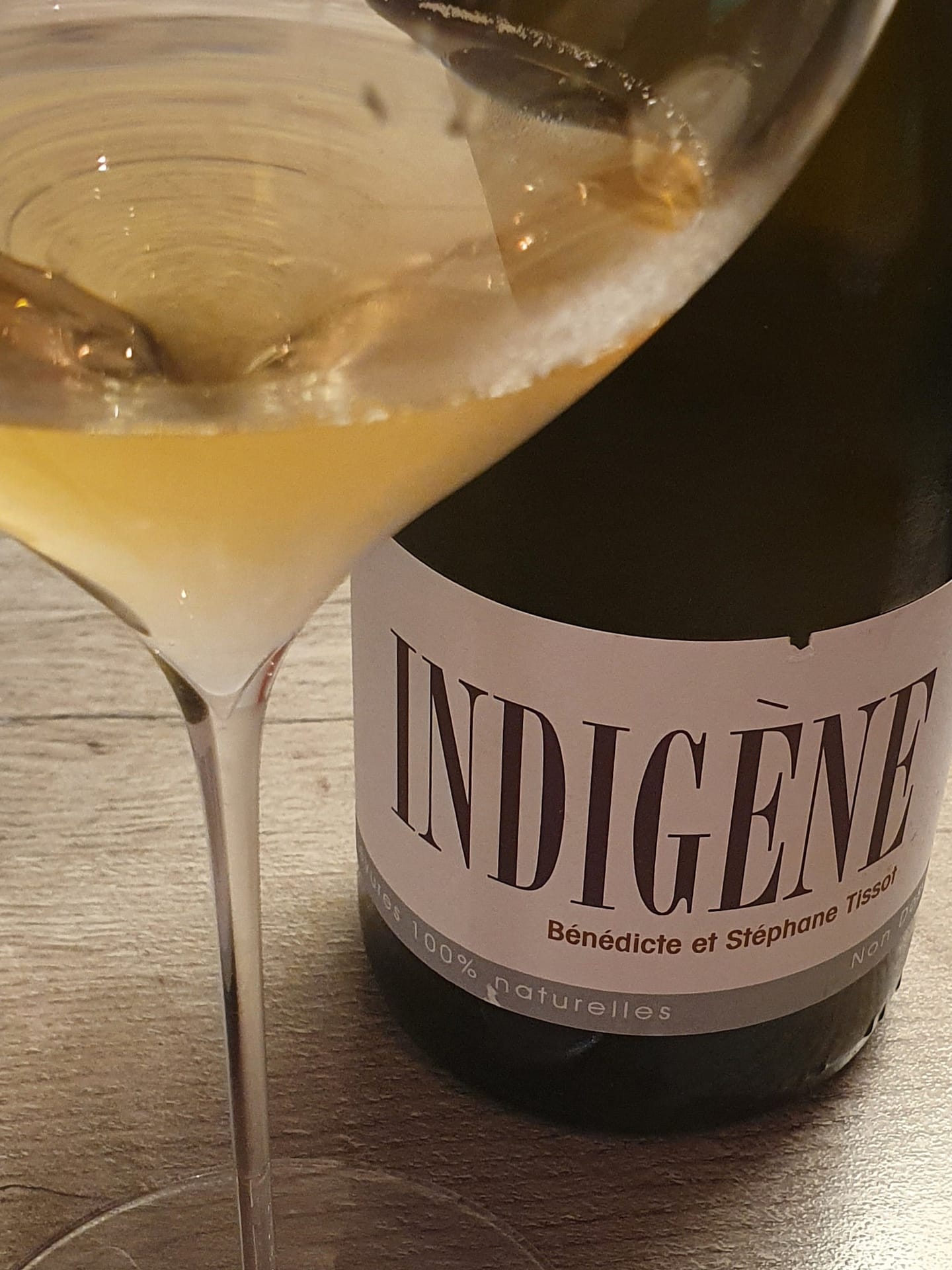
Jura is a small, yet diverse wine region. Stéphane Tissot is one of its most dynamic and creative producers, and boasts a huge varieties of styles. Here he has made a sparkling wine with vin de paille in its dosage. And vin de paille? A traditional Jura thick and sweet dessert wine made of dried grapes.
Indigène ferments with indigenous yeasts, hence the name. Then the second fermentation is begun with vin de paille. This wine has the same grape composition as Tissot’s crémant Normale: 55% chardonnay, 35% pinot noir, the rest poulsard and trousseau. These two wines are separated after the first fermentation, when Indigène is dosed with vin de paille, added daily in tiny amounts. The second fermentation takes six months – and adds to the richness and complexity of the wine.
Indigène(S. Tissot)
Straw yellow. Aromas of clementine, yellow apple, spices, dried fruit, bread and nuts. Glyceric, smooth with good concentration, and a long salty finish.
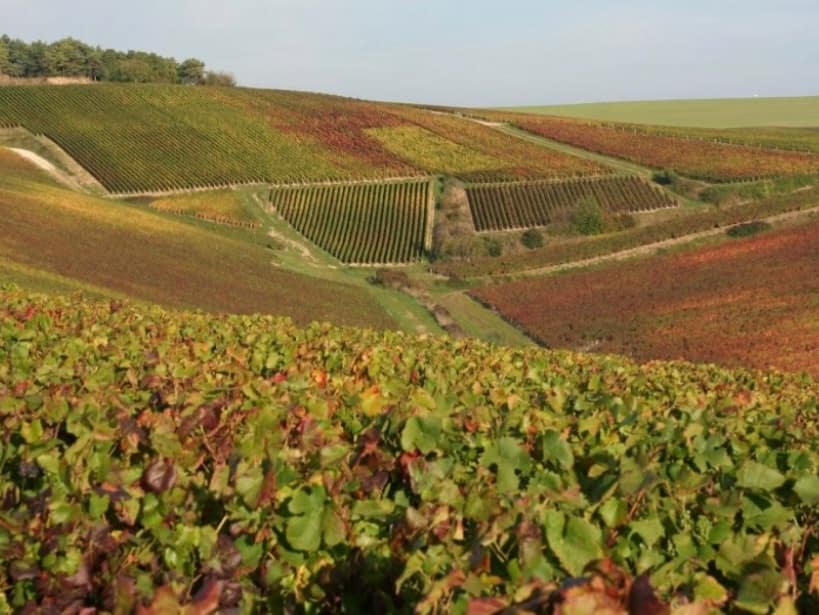
The Olivier Horiot domaine is located in Les Riceys, a commune in Côte des Bar. We are in the southern part of Champagne, and it’s an area that has once belonged to Bourgogne. Here in the Aube département the vineyards are more scarce than in central parts of Champagne, and interspersed with forests, waters and farms.
The Horiot family continues to produce wonderful natural wines from biodynamic viticulture, and has by the way also done a great job to recover the region’s indigenous grape varieties, like arbane.
Credit: O. Horiot
Maybe inspired by nearby Bourgogne, the domain separats its different terroirs into distinct cuvées. The result is champagnes with strong individual character.
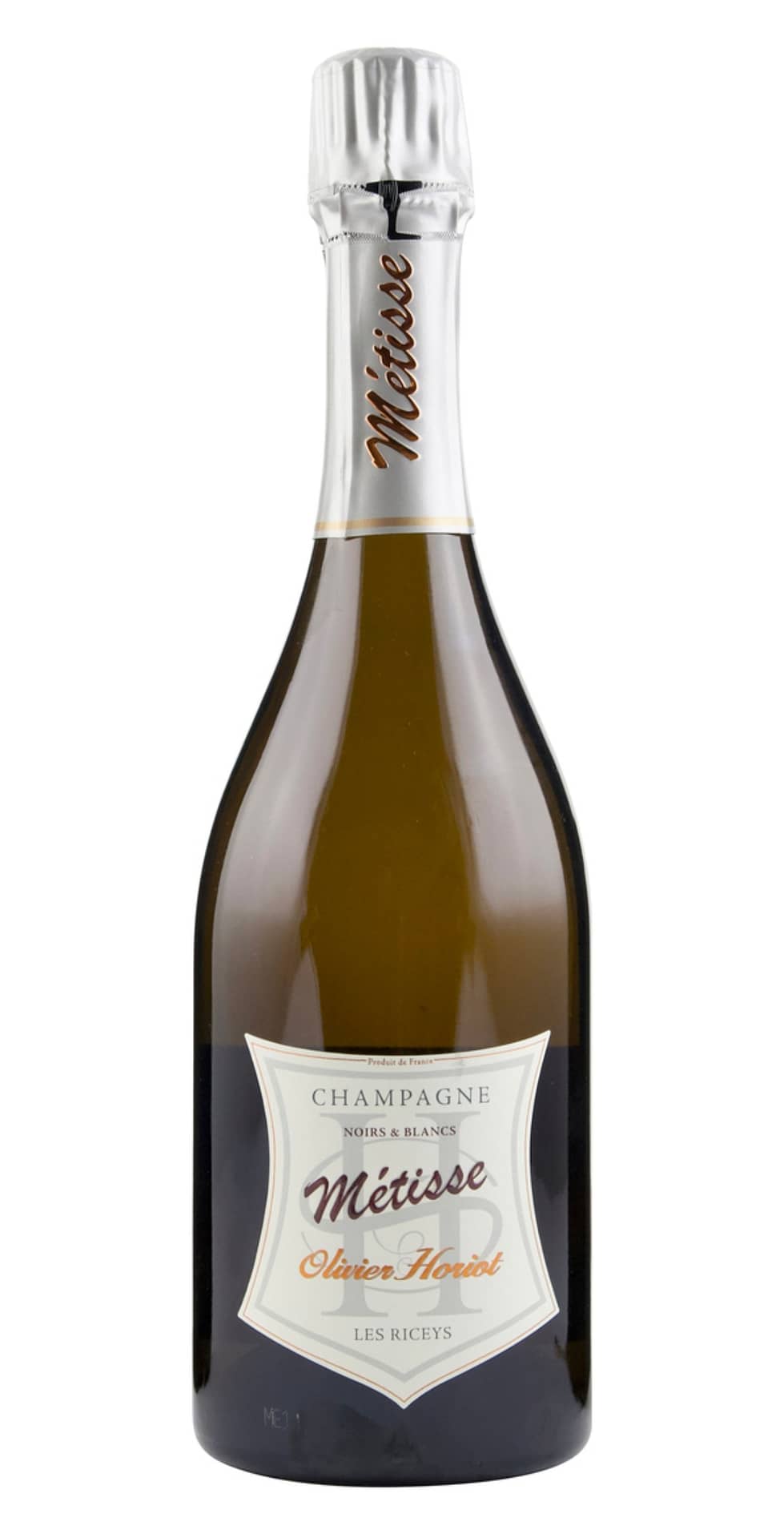
The name Métisse refers to the fact that this cuvée is made from several different terroirs in the village of Les Riceys. It’s a non vintage, made from pinot noir and pinot blanc. It has a minimal addition of sulphites and undergoes neither fining nor filtering.
Métisse Pinots Noirs et Blancs Extra Brut(O. Horiot)
Pale yellow, small, delicate bubbles. Aromas of apples, pears, citrus, flowers, brioche and spicy notes. It’s fresh and lively on the palate, with a fine-tuned interplay between the autolysis and the fruit. Completely dry, good length.
This was the cheapest and, for me, the most rewarding in a local wine club tasting of Oregon pinots. The wines were generally attractive, though expensive, and far from the stereotype that says pinot from overseas are heavy, dull and oaky.
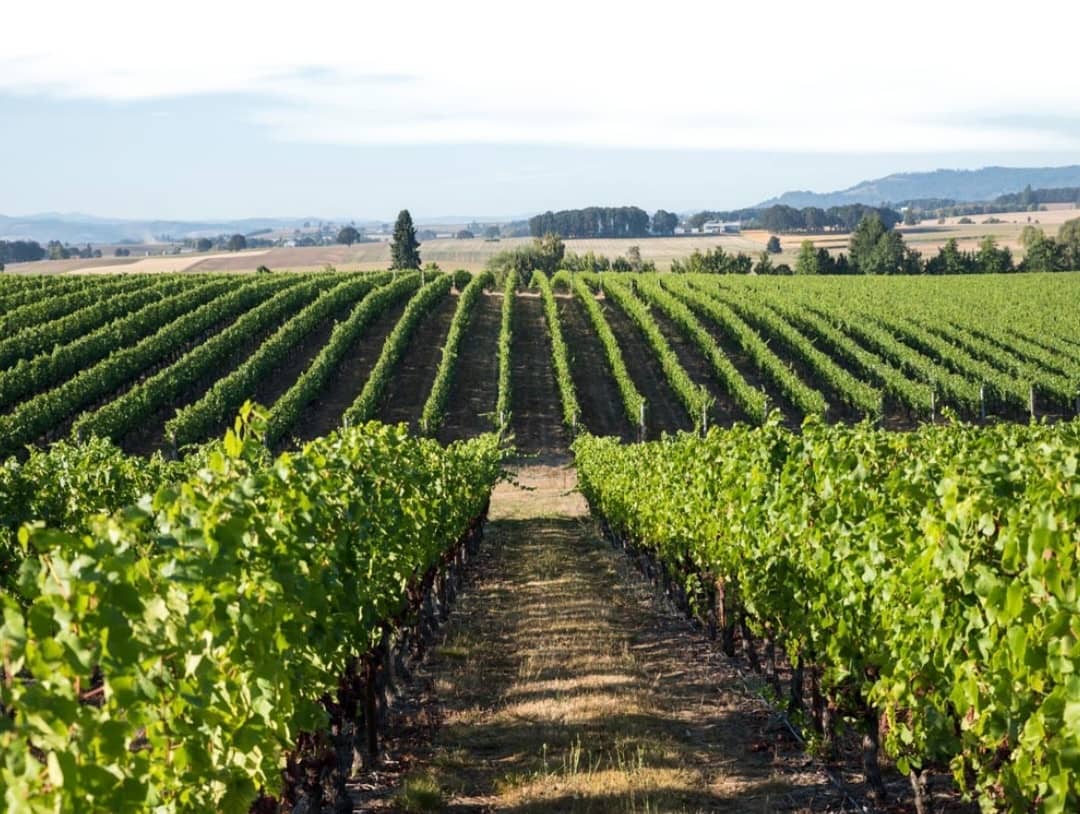
Johan Vineyards is located in the Van Duzer Corridor AVA of Oregon. The corridor stretches east to west towards the Pacific Ocean, which gives cool temperatures and winds from the Pacific. The calcareous sedimentary soils with granite contrast with the more normal iron-rich volcanic soils in the north Willamette Valley.
Credit: Johan Vineyards
Johan is Dag Johan Sundby, a Norwegian who came to Denver, Colorado, to study economy. Sundby wasn’t particularly interested in wine at the time. But when he received an offer to invest in a vineyard in Oregon and went there, it was love at first sight. So he and his co-investor had no doubts. This was in 2004. He was supposed to go back to Denver to fulfill his plans. But in 2007 his partner got sick. He moved to Oregon, hired a winemaker and took over the entire winery.
There have been many ups and downs, and a lot of responsibility. It is not a job, but a way of life. In 2009, Sundby built a house on the farm and since then he has lived in the Willamette Valley in Oregon. The original farm was just a garage and one planted vineyard. The rest came later. In the beginning he grew three grape varieties which he mostly supplied to other producers, but today, on his 70 hectares of vineyards, he grows 14 different ones from which he makes wine himself. All the vineyards are grown biodynamically, and the farm was certified in 2010.
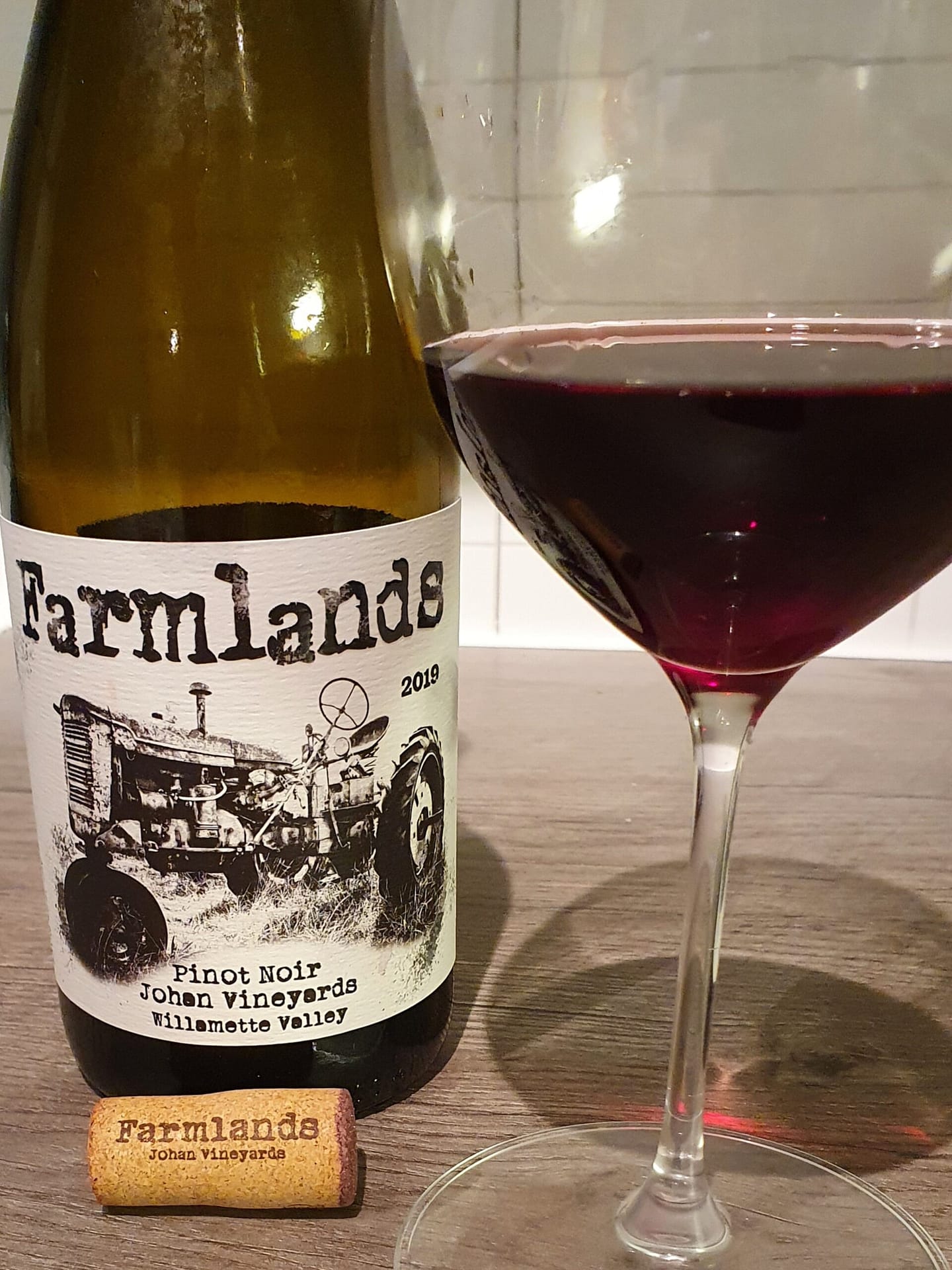
This wine comes from all estate-grown fruit. Vine age averages 10 years. It is native yeast fermented in stainless steel and aged for 9 months in neutral oak barrels.
Farmlands Pinot Noir 2019(Johan Vineyards)
Cherry red. Aroma of red fruits (raspberry, cherry), flowers and an earthy touch. Medium-bodied, fine and elegant texture, super pinot fruit and good acidity.
Alexander Pflüger is third-generation owner and winemaker of Weingut Pflüger in the Pfalz. The name Pflüger means he who ploughs, and implies that the family has a long tradition as farmers. They were pioneers in organic farming in Germany, and the vineyards were certified in 1989. In the early 2000s, they switched to biodynamic. Today, Weingut Pflüger is the producer in Germany with the largest Demeter-certified vineyard.
It’s an all pinot, spontaneously fermented and raised in steel.
Buntsandstein Pinot Noir 2020(Pflüger)
Cherry red with blueish hint. Aroma of red berries (raspberry), plums, anise, an earthy touch. Juicy, fresh, medium-bodied, with fresh acidity.
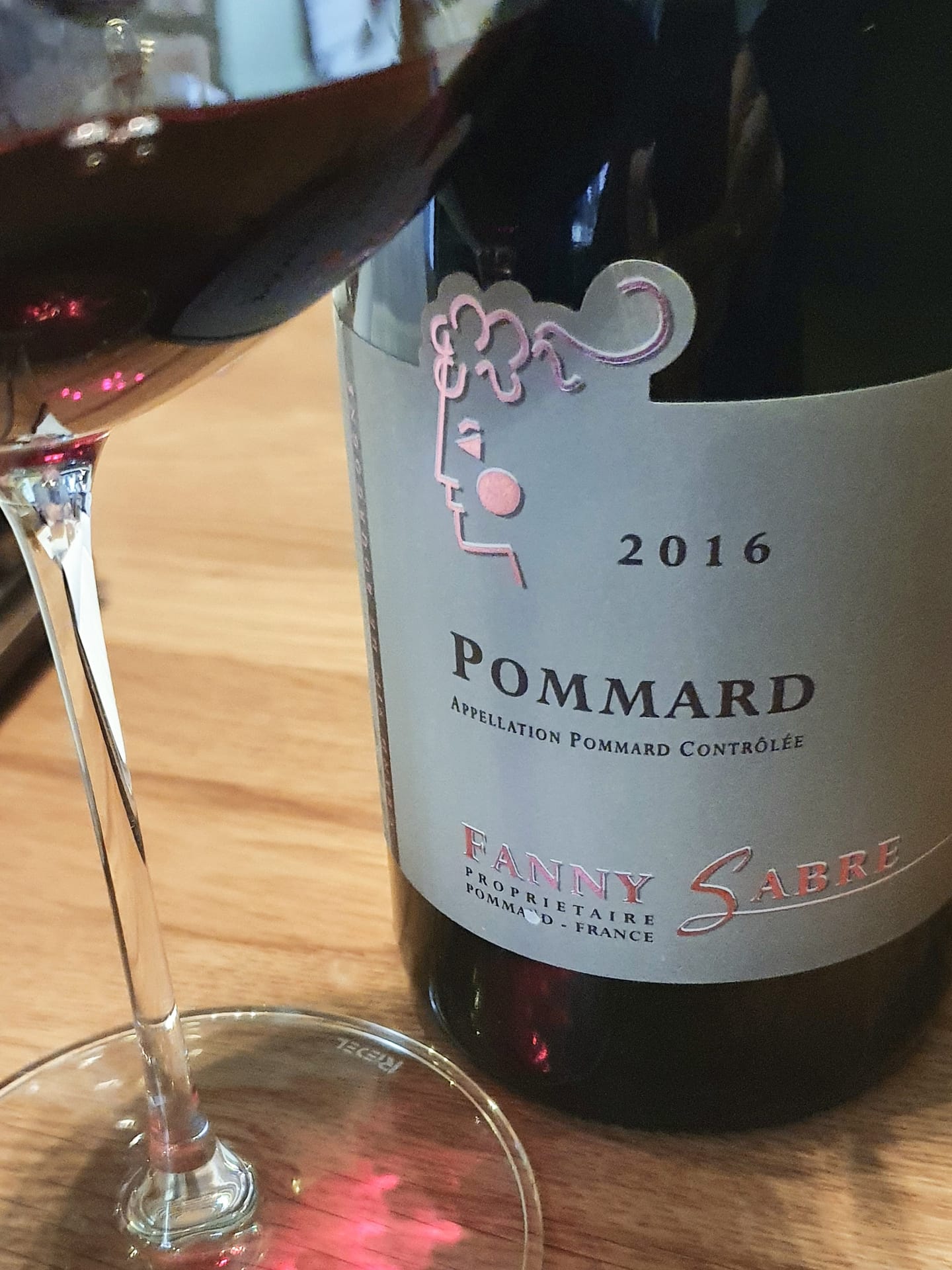
Fanny Sabre has in short time, and at a young age, become a respected producer in Bourgogne. After her father passed away in 2000, she and her mother have run the family domain in a magnificent way. (Read about another wine here, also with an introduction.)
Today she manages the 5-hectare domain from her cellar in the heart of Pommard. And the grapes for this week’s wine are sourced from plots in that commune. We enjoyed the wine at “the wine office”, Vinkontoret, in Stavanger, Norway.
Like for all her reds she has here used 100% whole clusters and matured the wine in mainly 400 liters and mostly used and partly some new barrels.
Sabre’s Pommard at Vinkontoret
Pommard 2016(Fanny Sabre)
Light cherry red. Aroma of red (cherry) and dark berries, touch underwood. Juicy in the mouth with fine-grained tannins, concentration in flavours, good acidity and length. Very delicate. Will keep.