Vella Terra, now in its 4th edition, is organized by Alejandra Delfino and Stefano Fraternali. In Barcelona’s Estació del Nord there were on 10-11th February gathered more than 100 producers. In addition there were several activities linked to the fair. One of these was an Asian-Catalan fusion kitchen with orange wines, presented by the Casa Xica restaurant and held at the festival’s own Garage Bar, and a tasting of natural sparkling wines at the Toto restaurant. Another was a presentation of aged natural wines from the Catalan pioneers, also at the Garage Bar, where I was lucky to get a seat.
I would say that this event has a more international air to it than the Vins Nus, held in the city at the same time. Here were many winemakers from Catalunya and other Spanish regions, but the features from other countries were much more evident. France, Italy, Portugal and Austria were among the well-represented places. Just like the Vins Nus the objective is to raise people’s awareness of natural and organic wines, and to eat and drink healthier. Like at the other fair, the goal is to present wines made by minimal intervention. But I would say that there is a slight difference in approach, and that the producers here are, well maybe not more open, but could we say: less strict in their view of the use of SO2 (to say it simple, or maybe over-simplified).
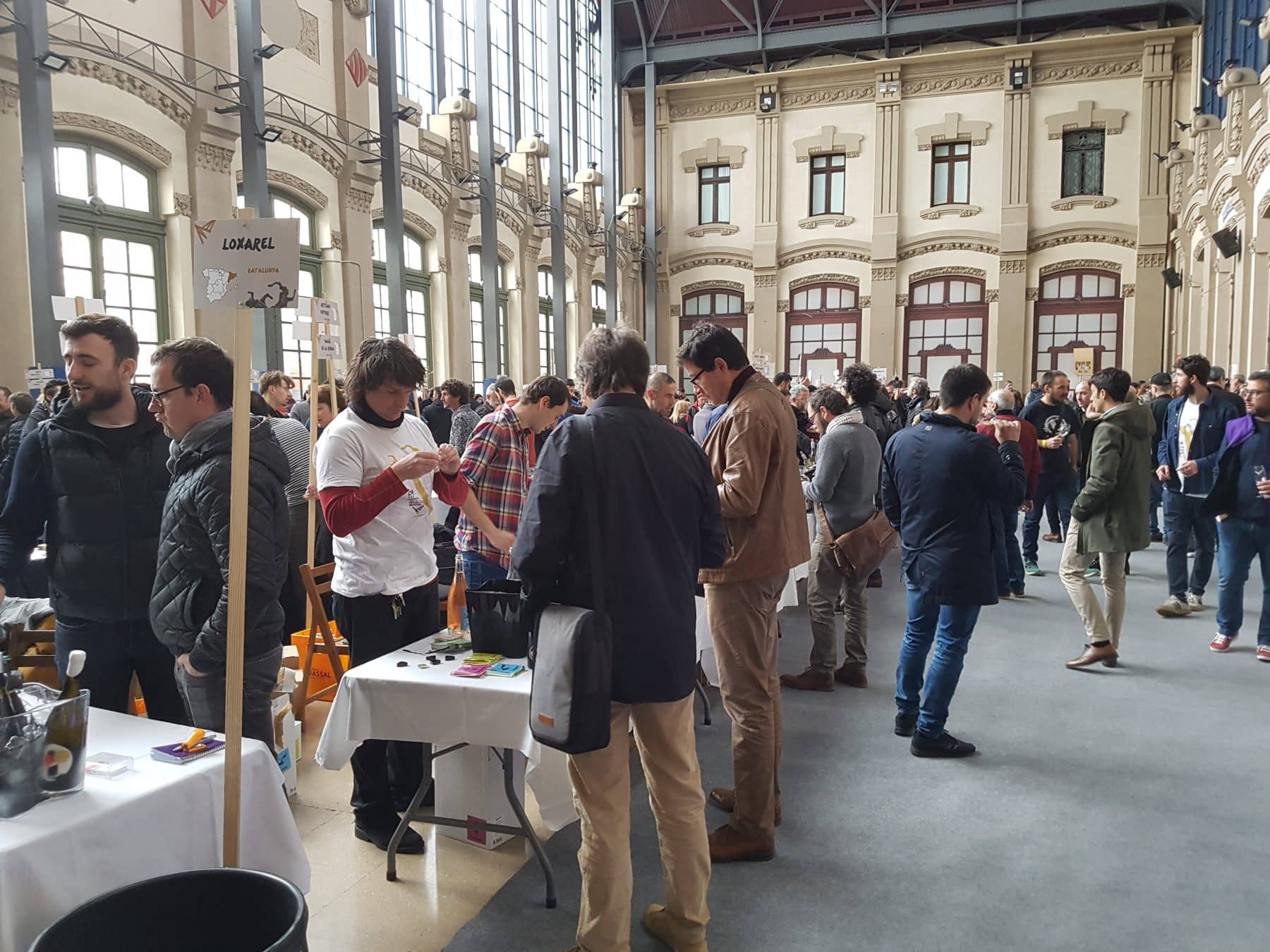
Vella Terra at the Estació del Nord
There were so many interesting, personal wines, that I can only present some highlights. And again, I will try to limit myself to one wine from each producer, though I know that again it will not be easy.
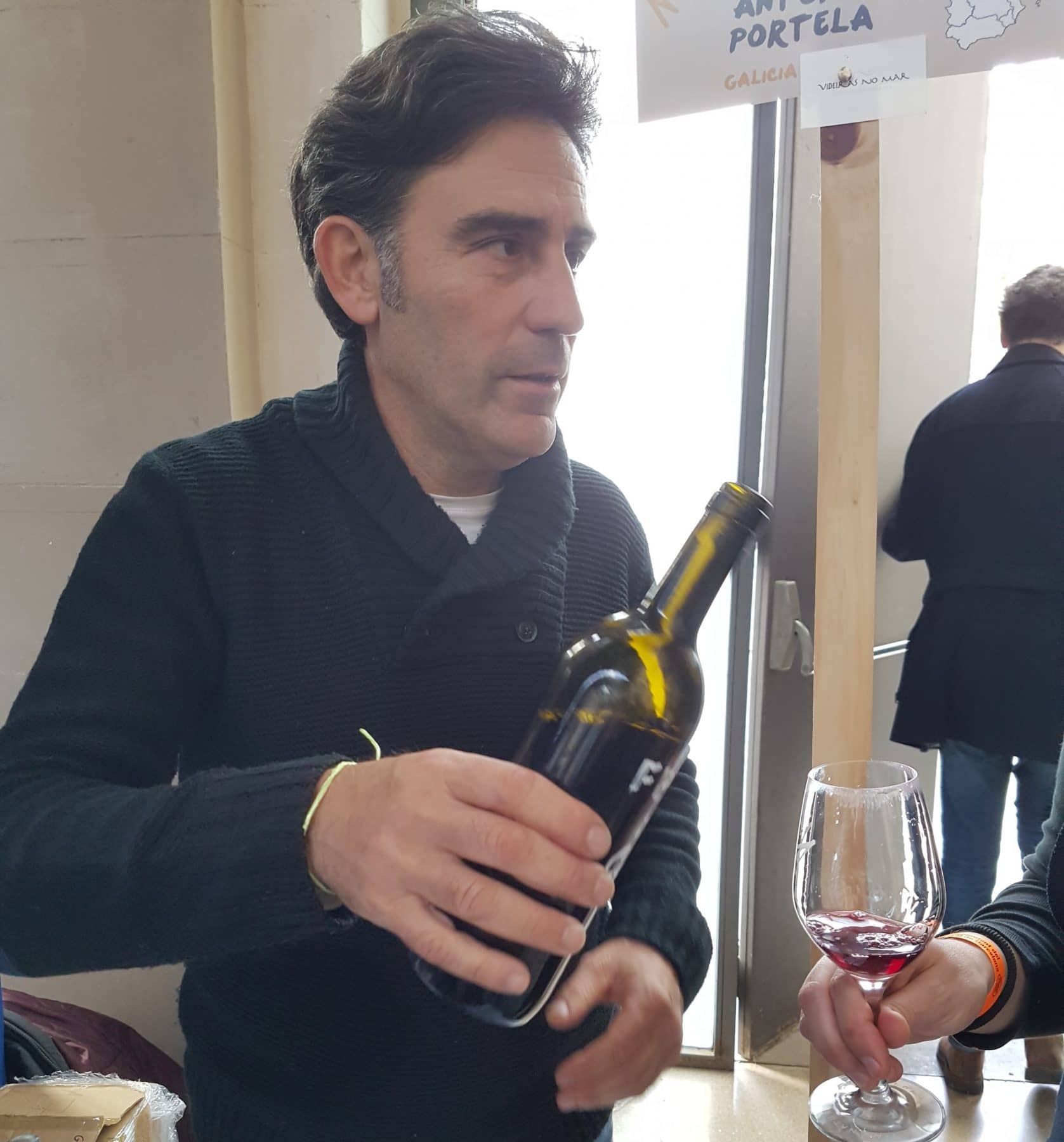
Antonio Portela
While the albariños of coastal Galicia should be well-known the reds don’t have the same recognition. Forget the images you may have of dark, sturdy, bubbling, bitter wines from the old days! Now there are several producers who show how fine, elegant and cool the coastal reds can be. Two of them were represented here. I will tell more about Antonio Portela later, whom I visited a couple of weeks after this fair. Although he is not far from Cambados, where the headquarters of the Consejo Regulador of Rías Baixas is located, his farm on the Morrazo peninsula is outside the delimitations of the DO area. So he uses terms as ‘tintos marineiros’ (something like ‘reds from the sea’), he uses grapes like espadeiro branco (related to the loureiro), tinto caiño, and he is a defender of the local grape tinta femia (related to the caiño redondo). His low vineyards in or near the beaches are the most atlantic in the whole of Galicia.
His red wines are from the parish of Cela in the town of Bueu, and the white wines from O Hío in the town of Cangas. They are all fresh and vivid – from the Quereres de Berobreo 2017 (called ‘viño mareiro’, mainly espadeiro blanco), with its light, green apples, citrussy fruit, via the rounder, more mellow Quereres do Hío 2017 (also viño mareiro, albariño-dominated) to the delicious, grapey Area Donón 2017. Donón is the village where the grapes grow, to the extreme west, just before you reach the island of Cíes outside the Ría de Vigo. These are practically wine from sand, from the beach. The red Namorado 2017 (tinto mareiro), fermented and aged for 12 months in used French oak, has all the virtues that this area can offer: It’s light in colour; pure, with fresh, red fruits on the nose; a vibrant flavour, a good natural acidity and in a long saline finish.
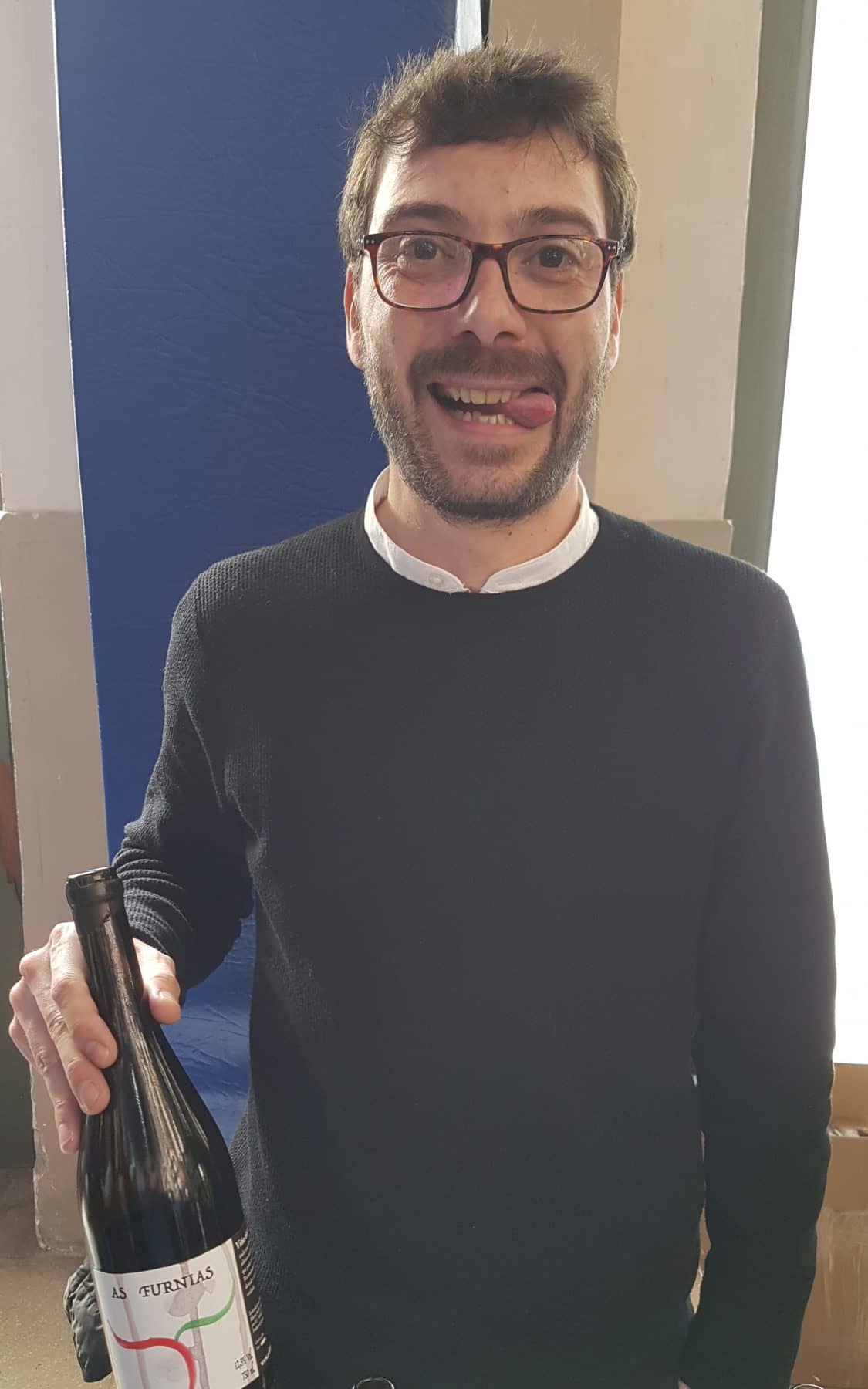
Juan of As Furnias hasn’t learned the tongue-in-cheek trick yet
As Furnias is more inland, in the Rías Baixas subzone Condado do Tea. After his studies in enology Juan González Arjones went to Barbaresco, to work with a small family producer, then also in a wine shop in Torino. Then he went back to his native Crecente to start his own project. He has also been managing a vineyard for the reknowned producer Terras Gauda, nearer to the coast in the subzone O Rosal. In 2010 he planted his own vineyard down there. Pícaro 2015 was a terrific red sparkling wine from a variety of grapes (albariño, treixadura, blanco legítimo, brancellao, sousón, espadeiro), with a lovely red fruits nose (raspberry, strawberry), and some tannin. After this came a vertical of his emblematic wine, the As Furnias, in vintages 15, 16, 17, 18. This too is a multi-varietal where each grape gives its contribution; the espadeiro gives both freshness, some herb and mushroom, and some special flavour characteristics (like cherry), while the balsamic notes come from caiño longo, and the spice from the sousón. They are typically made with 12 days fermentation in steel, and with no sulphite additions. The 16 was an early picking from a hot year, but everything went right in 15. As Furnias 2015 had all the best; quite dark, inky colour; pure yellow fruits, red berries, herbs and some menthol; a good tannin structure and a wonderful acidity.
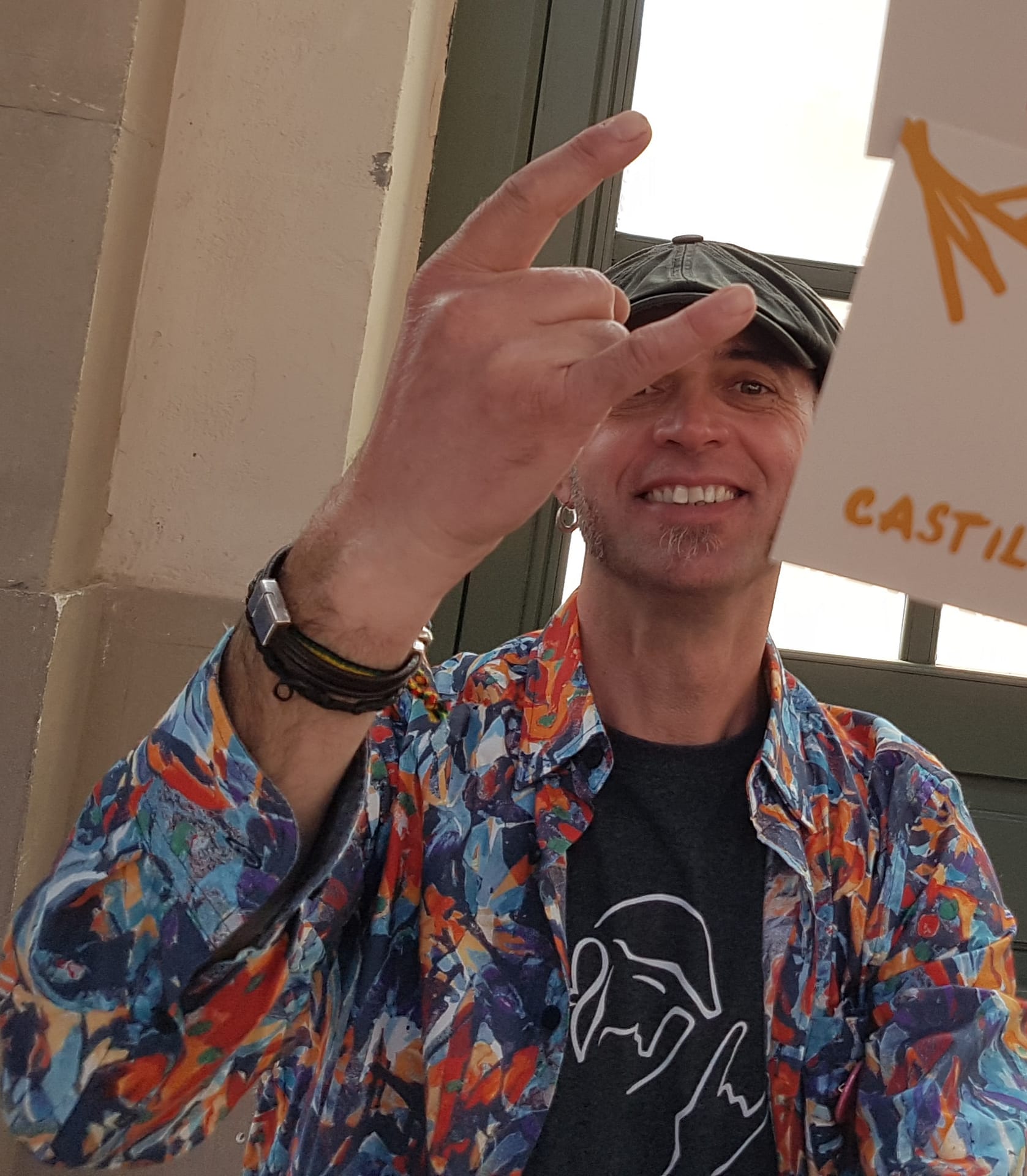
Ismael Gozalo, MicroBio
In my opinion the small settlement of Nieva has long been and interesting spot on the Rueda map. This small, high altitude settlement in the province of Segovia houses producers like the Viñedos de Nieva with their excellent old pie franco vineyards, the Herrero family’s new project, not to say Ossian. Ismael was born here, and he also was involved in Ossian. But now he goes solo, and his project surpasses it all. I have covered some of his whites here and reds here. And there are several other wines mentioned elsewhere on this blog. The whites are a study in the possibilities of the verdejo grape, mostly very old and un-grafted, combined with the extreme climate of this part of Castilla. The reds include tempranillo, rufete and syrah.
This time I tasted two pét nats, the early-harvested (and reductive wine-making) Nieva York 2018 and the younger vine (and oxidative wine-making) Correcaminos 2018, the fresh and citrussy MicroBio 2018, and the Rack 2018. For this wine Ismael has been looking for a reduction. Some gas was added to the musts fermenting in steel to raise the turbidity. No battonage. All this to keep the reduction and the wine’s selv-protection. Not a beginner’s wine, with the green-greyish colour, the cloudiness, the bubbles, the creaminess, and the acid-structured taste. Flowery, citrussy, stone-fruity too, I should add.
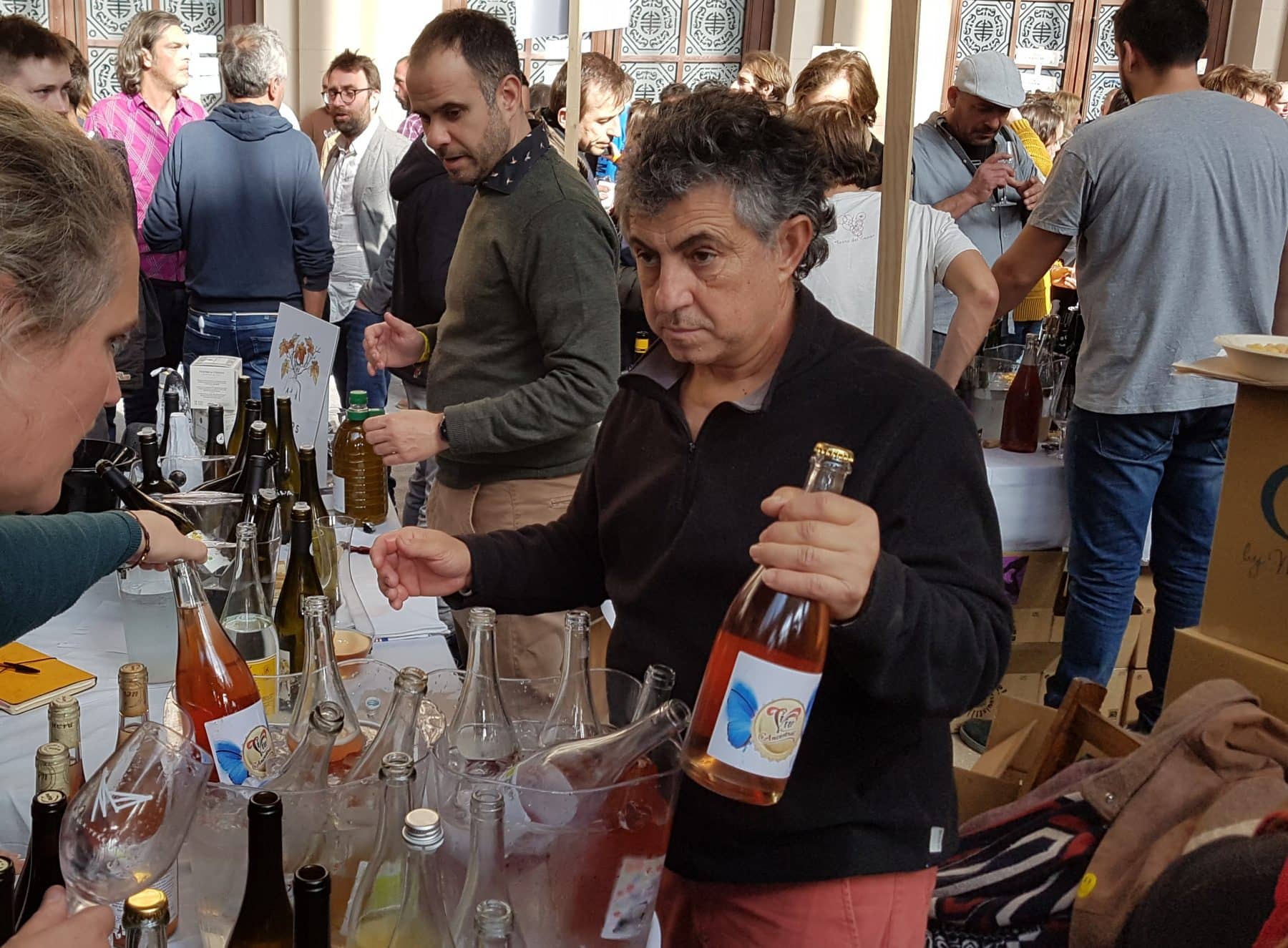
Mariano Tabernero, Bodegas Cueva
I didn’t visit Mariano’s table that day, I just took a couple of snapshots as I went by. But later that night I was taking part in a tasting at the Bar Salvage of the Gràcia neighbourhood. I was then sitting next to Mariano and his wife, and they let me taste some wines. More about this soon.
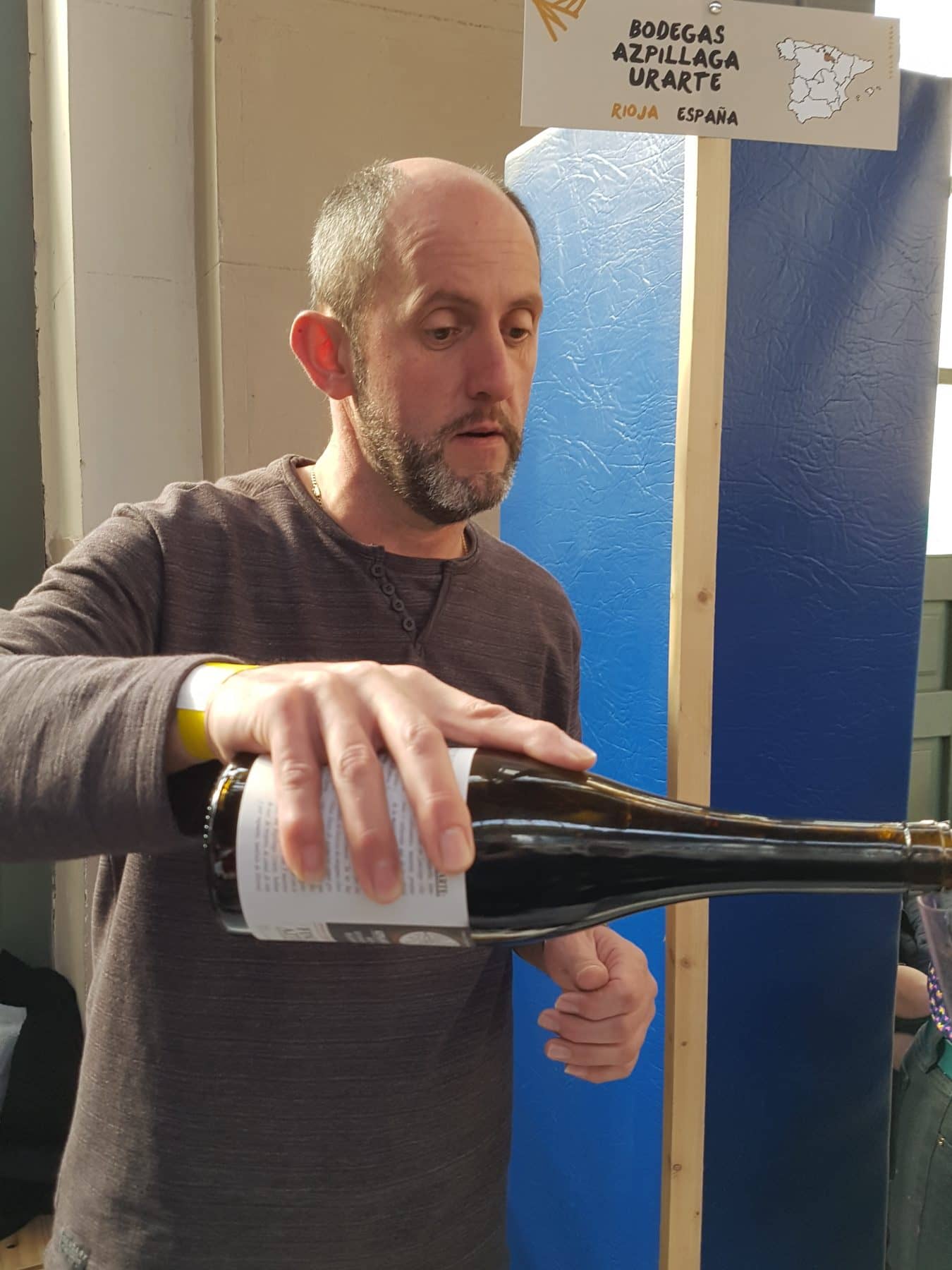
Eduardo of Azpillaga Urarte
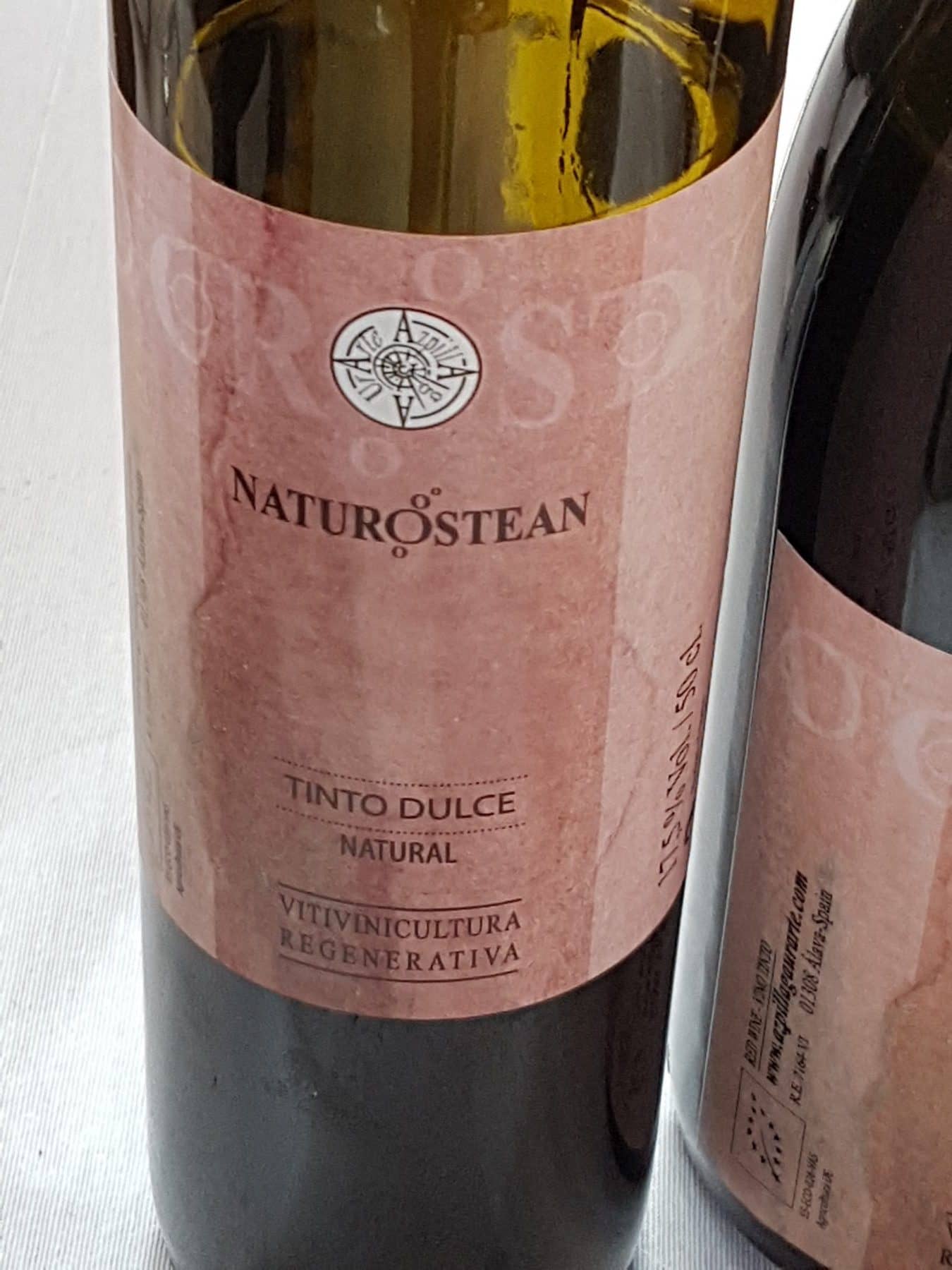
The family has a long history in wine in Lantziego, Rioja Alavesa, but it was not untill the 1970’s that they started to make their own wines. It was when Eduardo Pérez de Azpillaga Urarte started in the family company that the way towards an organic, sustainable farming began. So, in 2001 their vineyards finally got their organic certification. Maybe I liked best of all the white, non-DO Viña el Pago 2016 from garnacha blanca. It was macerated with whole bunches at 7 degrees for 72-100 hours, on stirred lees for 4-5 months. The result is a quite dark yellow wine with mature apples, some citrus, aromatic spices and a touch of dried fruits on the nose. In the mouth it’s medium-bodied with some tannin structure. The reds include a carbonic maceration wine with the same name, and an interesting clay aged wine called Fincas de Aztule 2015. Under the label Naturostean 2017 they had a dark, rich, sweet and quite alcoholic tempranillo, not from dried grapes, but with added alcohol. They stress that this was an experiment. A winery to watch.
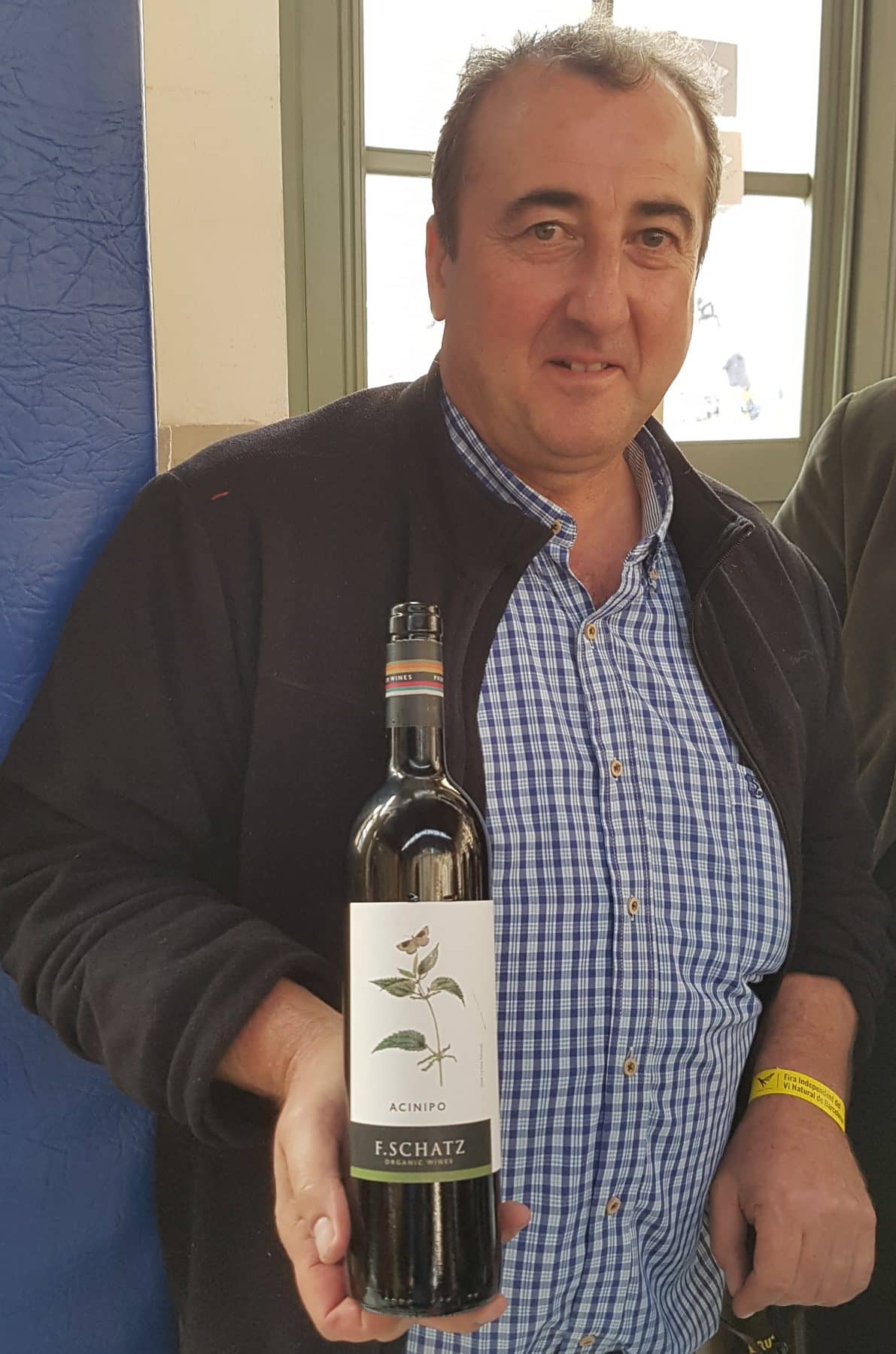
Friedrich Schatz: The Acinipo will now have a label representing the nettle, or preparation 504
Friedrich, or Federico, Schatz of Ronda has long since established himself as one of the leading producers of table wine in Andalucía. He has been in the avantgarde of organic and biodynamic farming in the area, and uses both international and local grapes. I have visited him several times, and you can read more about his whole range here. Many will know that his wines carry one special letter that together spells his name, and as such they have become some kind of collector’s items. However, this will now come to an end. Schatz presented this time the first vintages that will come on the market without that one letter. In-stead they will carry a drawing of plants used in biodynamic farming.
Other than that, the wines are the same, full of taste, with a touch of something exotic, and also with a good level of acidity. When asked I have often picked the Acinipo as a favourite, because it refers to the Roman ruins just down the road, and it’s made from lemberger, a grape from where his family can be found – and because it has been a good wine of course. This time I pick the Pinot Noir 2013 (formerly known as C), is made with 12 months of ageing in French oak on lees that has been moved a few times. It has a dark cherry colour, an aroma full of red fruits with cocoa and some aromatic spices. In the mouth it’s medium-bodied, tasty, with a lovely acidity and also with a slight bitterness in the end. The acidity can be said to come from the cool night temperatures, and it was also an extreme year with a lot of rain and snow in winter, and temperatures down to -12ºC.
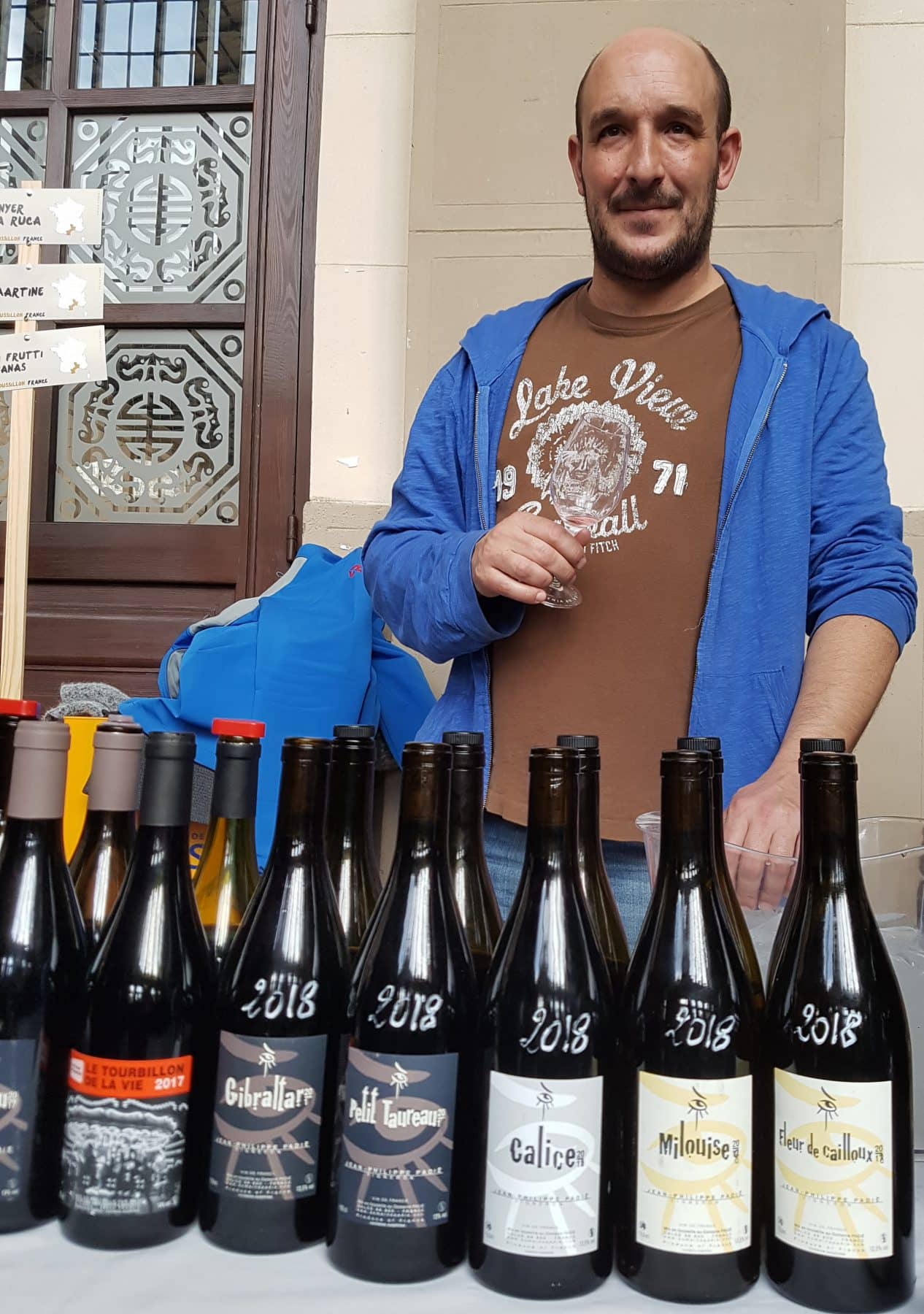
Jean-Phillippe Padié
I finally got the chance to meet Jean-Phillippe of Domaine Padié whose wines I have known for some time. From Calce north-northwest of Perpignan, Roussillon, he releases one wonderful wine after another. I tasted some samples and some bottled wines. Quickly through the 2018 samples, there was the limestone-blend Fleur de Cailloux, with its yellow colour, mature apple-scent with flowery tones, full with some tannin, the light and luscious Calice, a carignan from young vines in schist soil, the juicy Gibraltar – and finally the Petit Taureau, from older carignan plants in limestone, with its ruby red colour, and very fresh fruit.
Among the bottled wines I tasted the red Le Tourbillon de la Vie 2017, partly own vineyards, partly chosen from others: quite dark, luscioius, plums, red fruits, light tannin. Unpretentious, I would say, but very good. The Petit Taureau 2017, that originates from limestone marls (carignan) and schist (syrah), made with reduction in mind (both the grape varieties and the concrete vats environment). The wine was cherry red, with expressive fruit (red and dark berries), some flowers and herbs, and soft tannins in the mouth with a super and long, cool acidity. Ciel Liquide 2012 was made of grenache and carignan in equal proportions, from what Jean-Phillippe calls “a mosaic of terroirs” from Calce (limestone, calcarious clay and schist). It spent 5 years in barrels of 600 liters, 2 years in tank after that: Ligh cherry red; on the nose there is some warmth, the citrussy notes appear, also stone fruits (cherries, plums); good balance between the elements, with just enough tannins, and super acidity in a long finish.
There were a couple of French producers that I didn’t know, but are worth mentioning. Les Vins Pirouettes were represented by Vanessa Letort. They are winemakers from Alsace who work in close collaboration with around ten small producers, all working organically, some with biodynamics – each producers with his characteristics. Some of the most interesting wines were made by Stéphane Bannwarth, who is based in Obermorschwihr, south of Colmar. There was a lovely, appley riesling, with great acidity, and a full rose-scented gewürztraminer. I chose the Tutti Frutti de Stéphane 2016 (gewürztraminer, pinot gris, pinot blanc and auxerrois) was a light coloured wine, with a touch of gas, green apple and pineapple on the nose, medium full, and with a lovely integrated acidity.
Domaine Balansa has 15 hectares in Corbières. I tasted some clean, fruity wines from grenache blanc and gris, and syrah. A speciality was the Muscat 2018 aged in amphora, very light in colour, aromatic (both fruity and flowery), medium bodied, and with just enough acidity. Domaine Carterole was established in Côte Vermeille (coastal southern Roussillon) by Joachim Roque. The 10-70 years old cooperative plots he had bought were transformed little by little to be able to make natural wines. In 2014 he rented a winery in Banyuls-sur-Mer. I tasted a slighty pétillant white Ton Sec 2018, a well-balanced, but a bit on the “wild” side, apple, tea and ginger-smelling Esta Fête Le Blanc 2018, from 90% grenache blanc and the rest rousanne. An interesting wine was Vermentino Amphorae, that was light yellow, quite open, with apple, pear and citrus tones, and a slight tannin-structure.
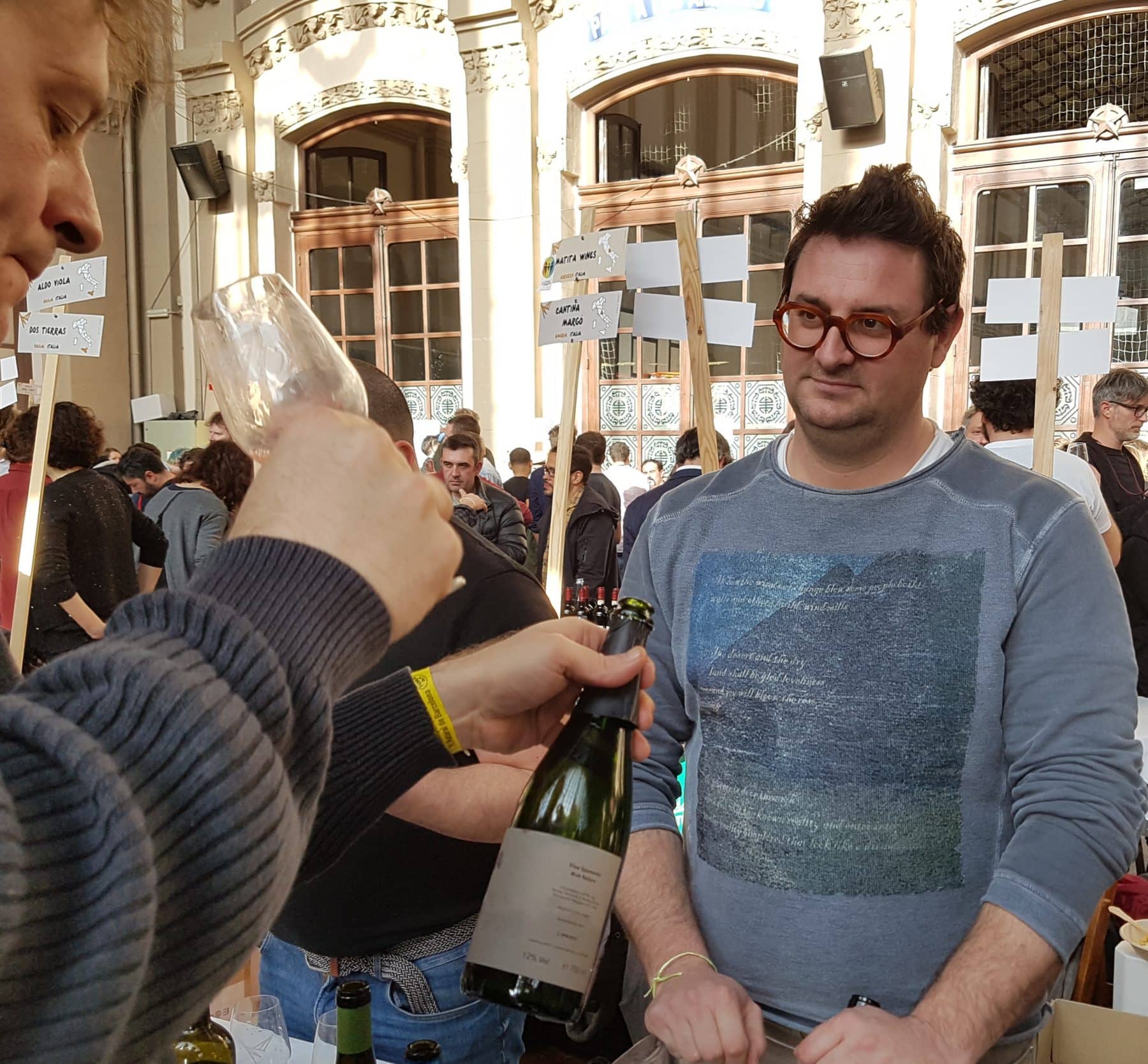
Andrea Pendin of Tenuta l’Armonia
I visited Andrea following a London wine fair last year, and you can see my report here. He has a creative approach, and makes several styles of organic wines from volcanic terroir in the small settlement Bernuffi (Montecchio Maggiore, Veneto region). His wines can maybe be characterized as inviting, simple, fresh, and very difficult to stop drinking. In spite of that they have a strong sence of place too. He uses biodynamic techniques, green manure and very little intervention, and of course always spontaneous fermentetion. Repeated from my article about them: ‘Basically there are two different lines. “Pop” consists of high quality “easy” natural wines from volcanic soil at a good price. “Cru” is a premium line from native varieties in clay and limestone.” Should I chose only one wine, let it be the Frizzi 2017, a pét nat, or col fòndo sur lie from the “pop” line. It’s simple, un-oaked, slightly bubbly, light salmon-pink, apple and strawberry-scented wine, not very structured, and oh! so delicious. In addition to a varying content of different grapes, here pinot noir 60%, the constant is the local durella, a grape providing acidic backbone, that the vintners in the area are very proud of.
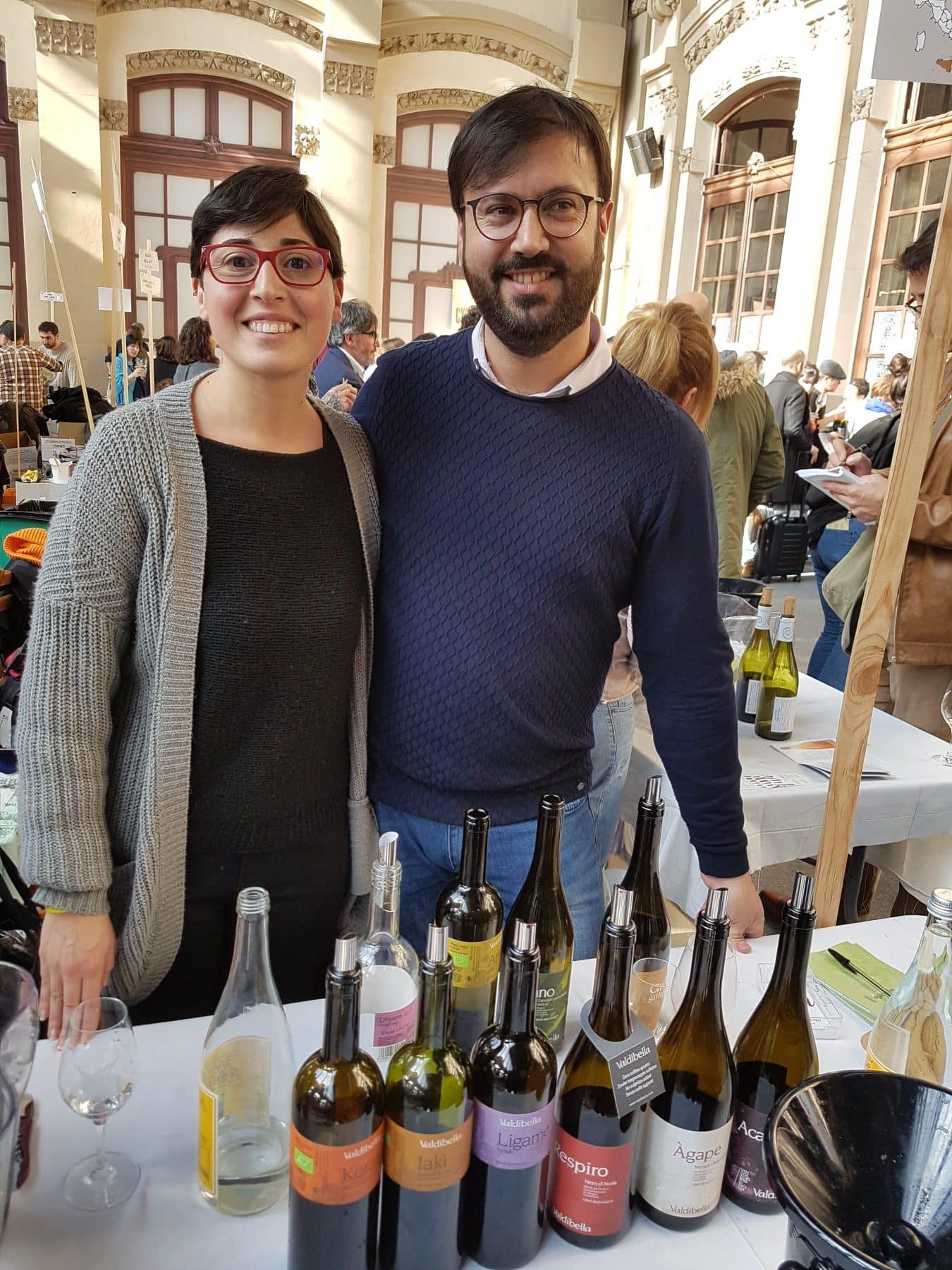
Catarina and Antonino, Valdibella
Valdibella is a small cooperative operating from Camporeale, on the north side of Sicilia. They encourage biodiversity, and they concentrate on native varieties, both for grapes and other crops such as olives. Enologue Antonino Vilardi work closely with the growers. He says they want the whole chain, from grower to consumer, to share the same values, or visions, and to know about how the products are made. Therefore they can appreciate the quality, and they will understand that the products can not have a very low price.
I tasted a couple of interesting grillos, Ariddu 2017, a light, grassy-citrussy wine, Grillo sulle Bucce 2017, (bucce meaning skins), so the colour was light orange, with aromas of flowers, peel, a touch of white pepper, and some bitterness in the finish. Zi bi Bò 2017 (from zibibbo, a synonym of muscat of Alexandria) is an aromatic, rose-mango-scented wine, slightly off-dry. A wine full of character was Dhyana 2017 from perricone, a light rosé of salmon colour; strawberry and redcurrant aromas; some warmth in the mouth, but also with an acidity that carries on to the end.
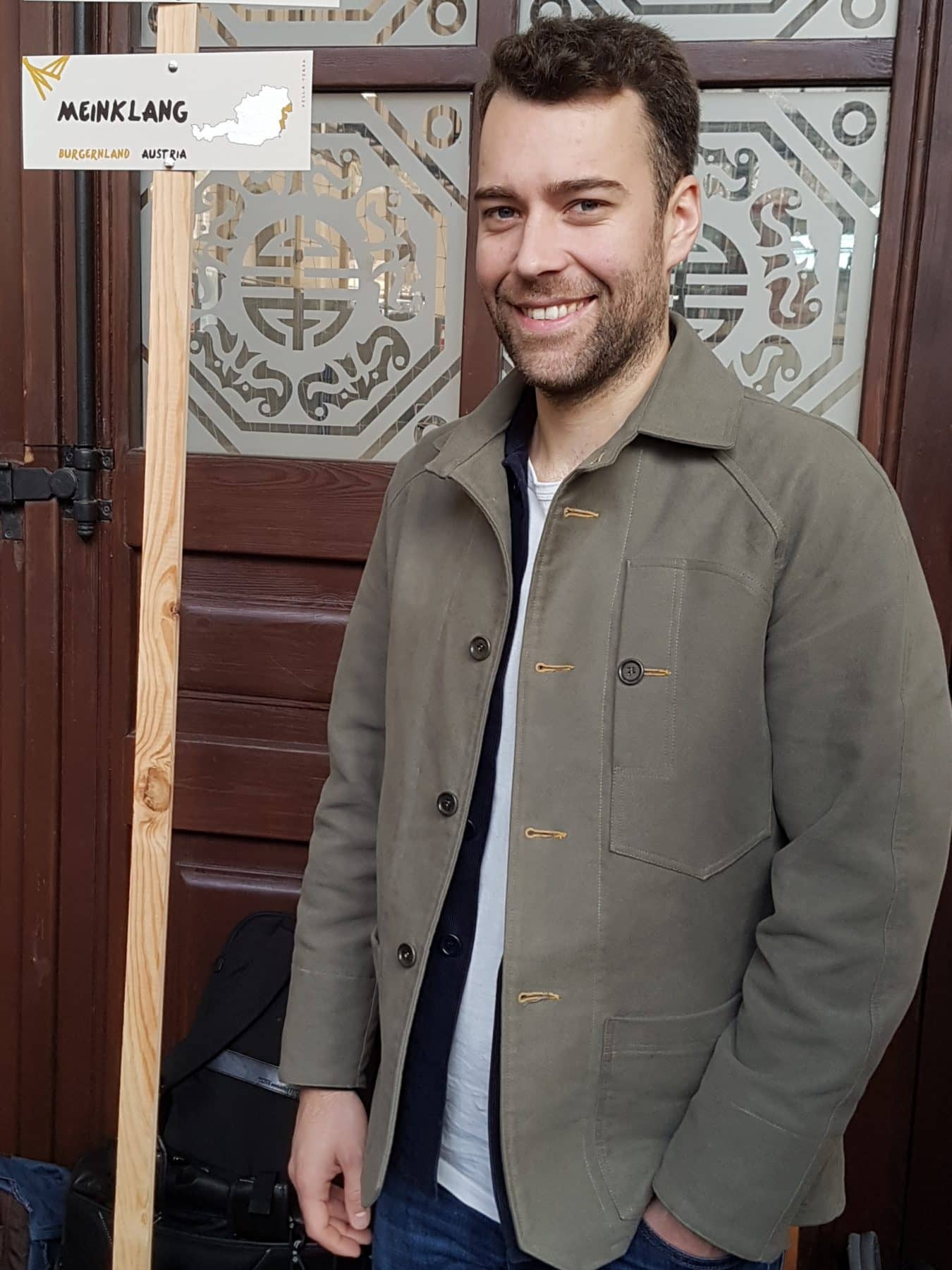
Niklas Peltzer representing Meinklang
Werner and Angela Michlits of Meinklang are found in Burgenland, Austria, in the village Pamhagen on the Hungarian border. In fact some vineyards are on the other side, and they also bottle a Hungarian wine from the volcano Somló. Here is a perfect biodiversity, vines and other crops between the natural ponds of the area. They fertilize with compost that they produce themselves, using sheep, cow and horse manure and several other components.
Meinklang has a full range of very reasonably priced high-quality wines, and is mentioned in many posts of this blog. Here is one of the wine-of-the-weekend articles, where you can also see a picture of their Angus cows. Today we concentrate on their Hungarian pét nat Foam Somló 2017. The 35-60 year old vines (6o% harslevelü, 4o% juhfark) are grown on volcanic rock with a light layer of loess. The fermentation started in tank, then it was bottled with 10 grams residual sugar, and finished fermentation in bottle. No additives, no filtering. The result is a fresh, vibrant wine, low in alcohol, high in acidity. The colour is light straw, slightly turbid; aromatic, pears and peaches, some spice (white pepper); a certain warmness (or rather: a component of mature fruits like apple marmelade), but kept alive of a long, cool acidity.
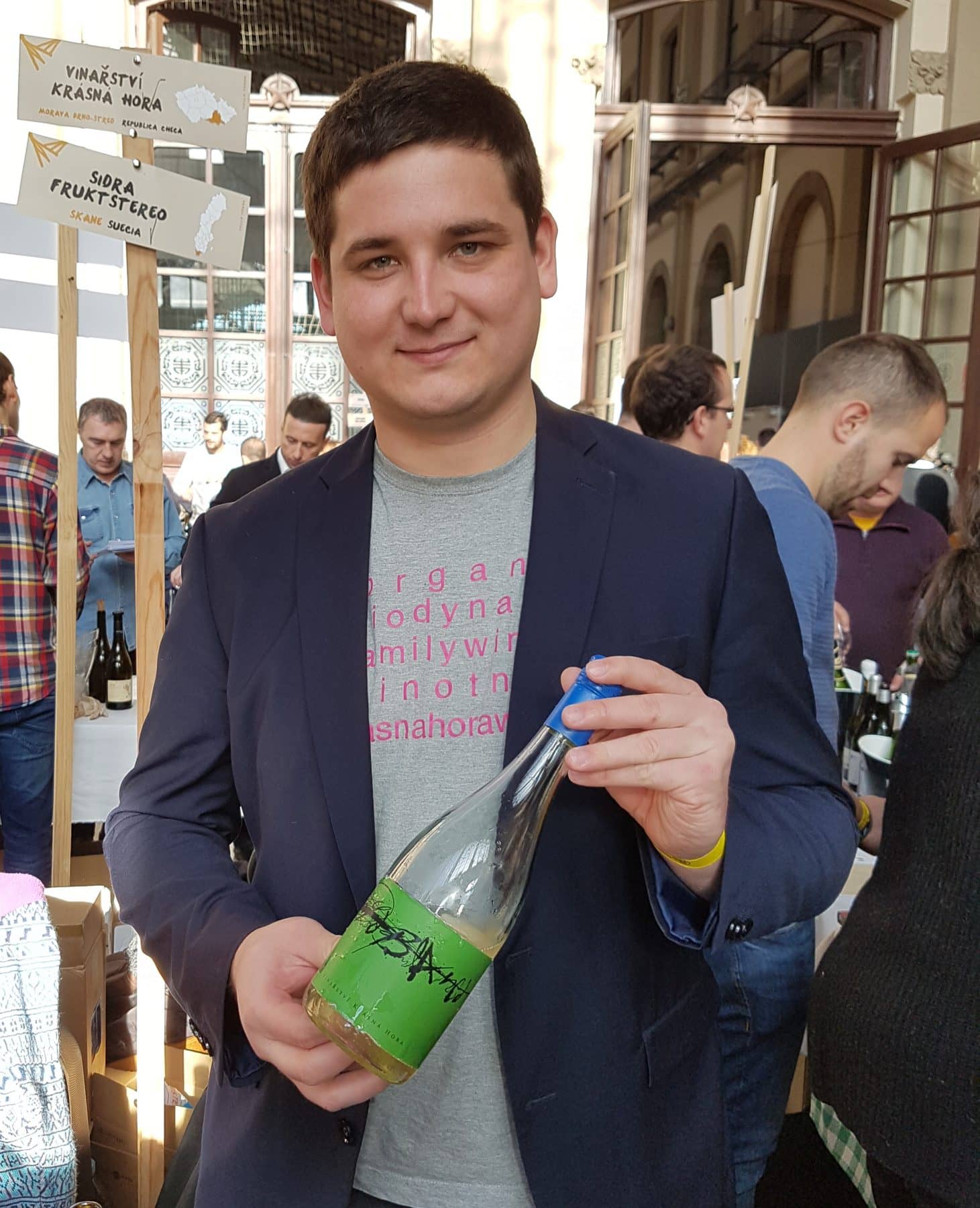
Ondřej Dubas, Krásná Hora
This is, believe it or not, another producer that we have covered more than once on this blog. Read here a report on various Czech wines tasted in England last year. I like their sparkling wines, and the Blanc de Pinot Noir 2018 wasn’t bad at all; light, with a slight blush, aroma of apples and red berries, well-structured. They offered an aromatic Chardonnay 2018, and equally convincing as before was the skin-contact, gooseberry-rhubarb-scented Gewürztraminer, now in the 2018 vintage. Our focus will this time be put on La Blanca 2018, a blend of riesling (40%), sauvignon blanc, pinot gris, and gewürztraminer from several vineyards (a total of 40%), and the last 20% is pinot blanc. The wine is partially fermented in old barrels and partly in steel. Only a minimum of SO2 is added. It’s a bit cloudy, light golden; apples pear and citrus on the nose; low alcohol, bone dry, with a steely acidity.
It’s maybe unfair, but there is a limit to how much one can do in one day. There were many producers that I should have spent more time with, such as the locals Clot de les Soleres, Casa Pardet, Cosmic, Escoda-Sanahuja, Gratias, Mas Candí, Recaredo, Can Sumoi, Pepe Raventòs, Laureano Serres and Alfredo Arribas, all of whom I know make good to excellent wines. Elsewhere in Spain there are Sistema Vinari, 4 Kilos, and abroad: Carussin, Casa Belfi, Colombaia, Quinta da Palmirinha, La Cave des Nomades, the list goes on…
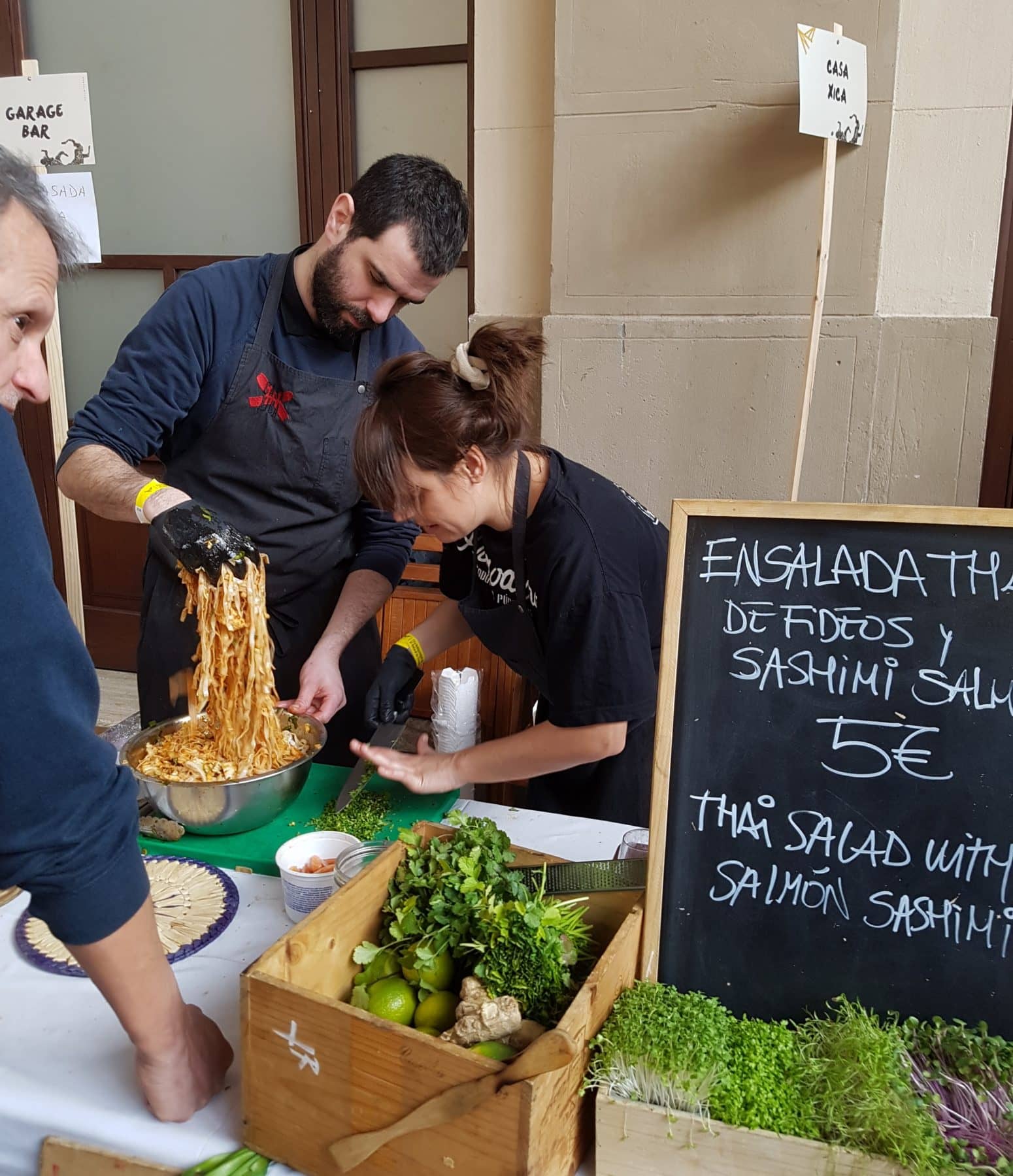
This was my first Vella Terra, but I really want to go back, to be a part of the positive vibe that are found in the city these days. And, as Alejandra Delfino, co-founder of Vella Terra, states, “natural wines are not a passing fad, but rather a trend that has come to stay, and something that will continue to increase demand among wine lovers”. Amen to that, and we could add that while the natural wine has been something of a punk movement, I think it’s right to say that the mainstream is now moving in that direction.
Leave a Comment




 the Axarquía dessert


